

10 Dollars – United States
Non-circulating coins
Commemoration: Legislative Branch
United States
Context
Material
Diameter: 16.5 mm
Weight: 3.11 g
Platinum weight: 3.11 g
Shape: Round
Composition: 99.95% Platinum
Standard: Gold tenth ounce
Technique: Milled
Alignment: Coin alignment
flip
References
KM: #Click to copy to clipboard389
Numista: #101906
Value
Exchange value: 10 USD = $10.00
Bullion value: $0.00
Inflation-adjusted value: 16.44 USD
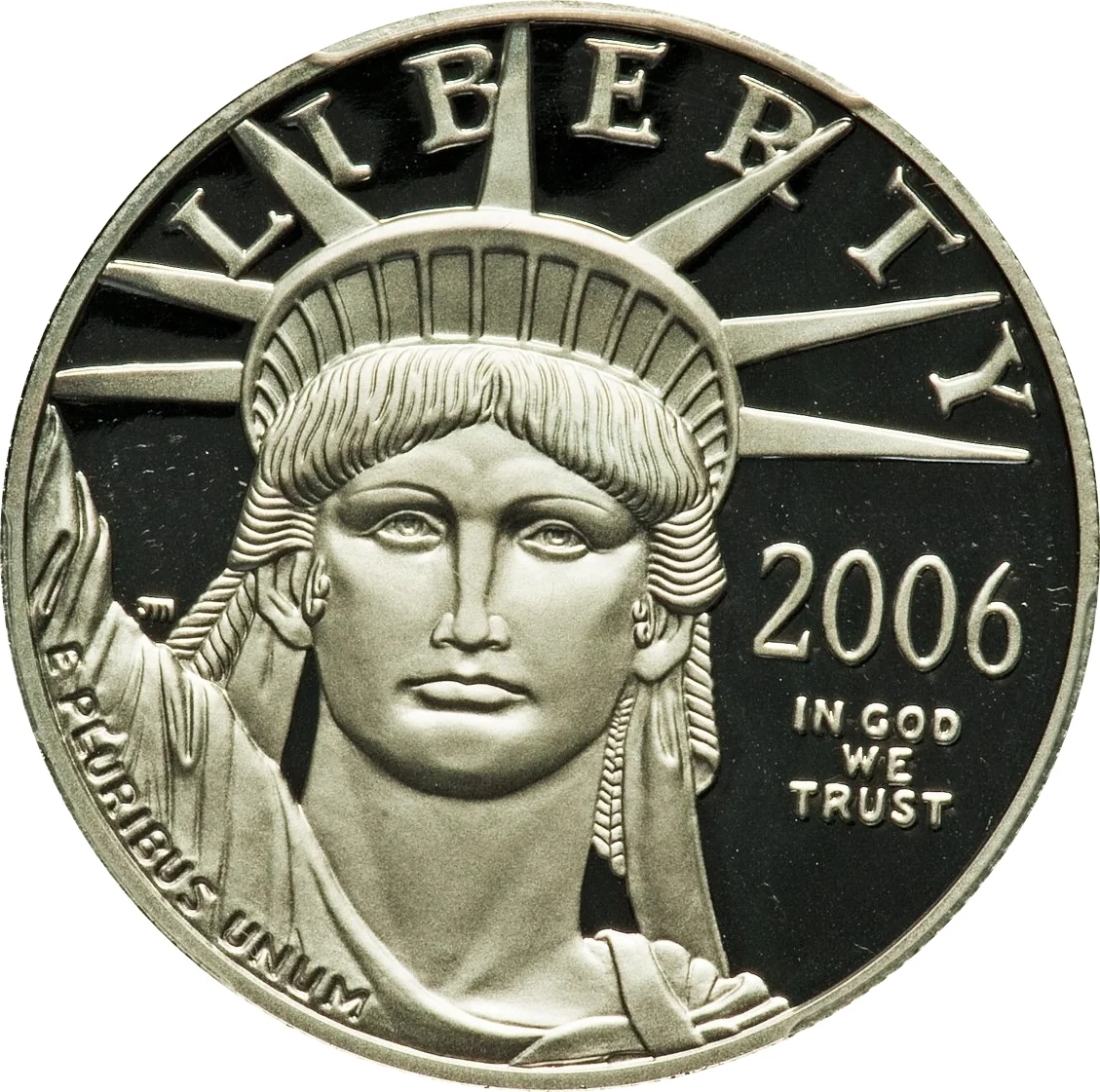
Obverse
Description:
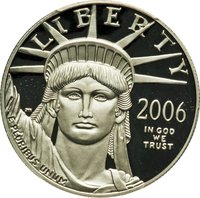
Liberty Enlightening the World
Inscription:
LIBERTY
2006
JM
IN GOD
WE
TRUST
E PLURIBUS UNUM
2006
JM
IN GOD
WE
TRUST
E PLURIBUS UNUM
Script: Latin
Engraver: John M. Mercanti
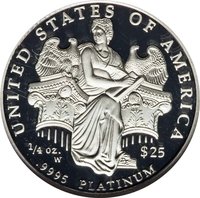
Reverse
Description:
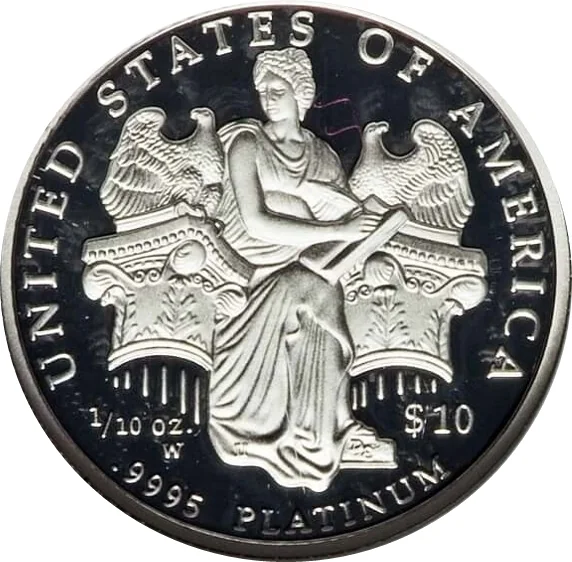
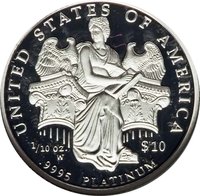
The Legislative Muse, symbolizing law, stands between eagles on Corinthian columns representing the Senate and House.
Inscription:
UNITED STATES OF AMERICA
1/10 oz. W $10
.9995 PLATINUM
1/10 oz. W $10
.9995 PLATINUM
Script: Latin
Engraver: Joel Iskowitz
Edge
Reeded
Mints
| Name | Mark |
|---|---|
| United States Mint of West Point | W |
Historical background
In 2006, the United States currency situation was characterized by a period of relative stability for the U.S. dollar on foreign exchange markets, but underlying concerns about long-term fiscal health were growing. The dollar experienced a modest decline against major currencies like the euro, but this was part of a controlled, multi-year adjustment rather than a crisis. This environment was largely shaped by the Federal Reserve, which, under Chairman Ben Bernanke, had concluded a two-year cycle of interest rate hikes, bringing the federal funds rate to 5.25% by mid-year. This policy aimed to cool an overheating housing market and contain inflationary pressures, which were being fueled by high energy prices.
Domestically, the economy was in a transitional phase. While GDP growth remained positive, the housing market—which had been a primary engine of growth—was showing clear signs of peaking and beginning its downturn. The subprime mortgage crisis was emerging but was not yet recognized as a systemic threat. Inflation hovered around 3-4%, driven largely by rising costs for oil and commodities, which kept the Federal Reserve vigilant about price stability even as growth showed signs of moderating.
Looking outward, the U.S. continued to finance significant current account and trade deficits through substantial capital inflows from foreign investors and central banks, particularly from Asia. This "global savings glut" helped maintain demand for dollar-denominated assets like Treasury bonds, keeping long-term interest rates relatively low despite Fed tightening. However, economists and policymakers increasingly warned that these persistent imbalances—large deficits coupled with rising debt—posed a risk to the dollar's value and global financial stability in the longer term, setting the stage for the severe stresses that would emerge in 2007-2008.
Domestically, the economy was in a transitional phase. While GDP growth remained positive, the housing market—which had been a primary engine of growth—was showing clear signs of peaking and beginning its downturn. The subprime mortgage crisis was emerging but was not yet recognized as a systemic threat. Inflation hovered around 3-4%, driven largely by rising costs for oil and commodities, which kept the Federal Reserve vigilant about price stability even as growth showed signs of moderating.
Looking outward, the U.S. continued to finance significant current account and trade deficits through substantial capital inflows from foreign investors and central banks, particularly from Asia. This "global savings glut" helped maintain demand for dollar-denominated assets like Treasury bonds, keeping long-term interest rates relatively low despite Fed tightening. However, economists and policymakers increasingly warned that these persistent imbalances—large deficits coupled with rising debt—posed a risk to the dollar's value and global financial stability in the longer term, setting the stage for the severe stresses that would emerge in 2007-2008.
✨ Legendary