

1 Cent – Kingdom of Swaziland
Circulating commemorative coins
Commemoration: FAO
Eswatini
Context
Year: 1975
Country: Eswatini 
Issuer: Kingdom of Swaziland
Ruler: Sobhuza II
Currency:
(1974—2018)
Demonetization: 1 February 2016
Total mintage: 2,500,000
Material
References
KM: #Click to copy to clipboard21
Numista: #3338
Value
Exchange value: 0.01 SZL
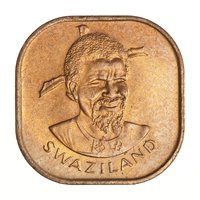
Obverse
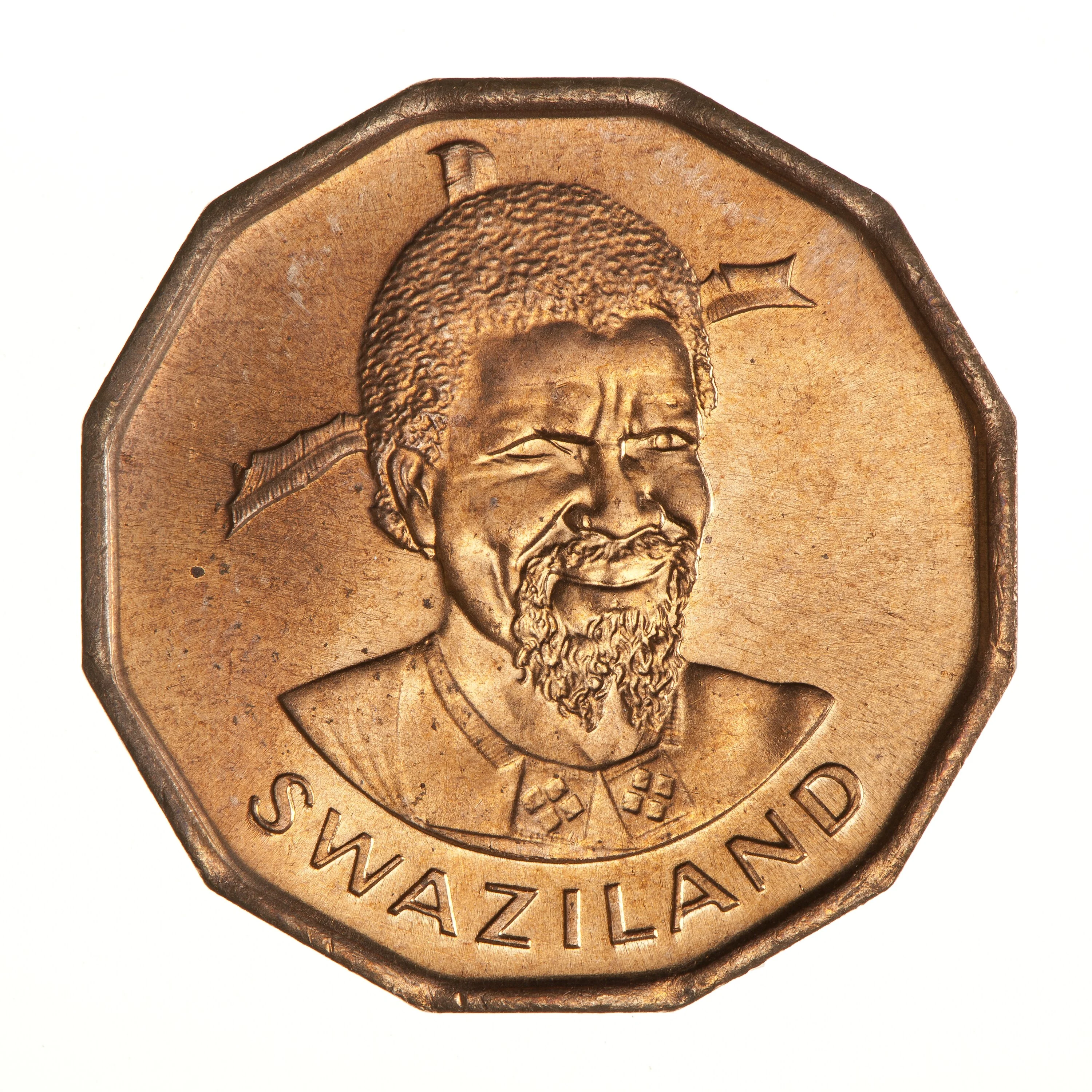
Description:
King Sobhuza II facing right.
Inscription:
SWAZILAND
Script: Latin
Engraver: Michael Rizzello
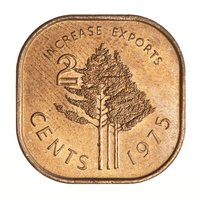
Reverse
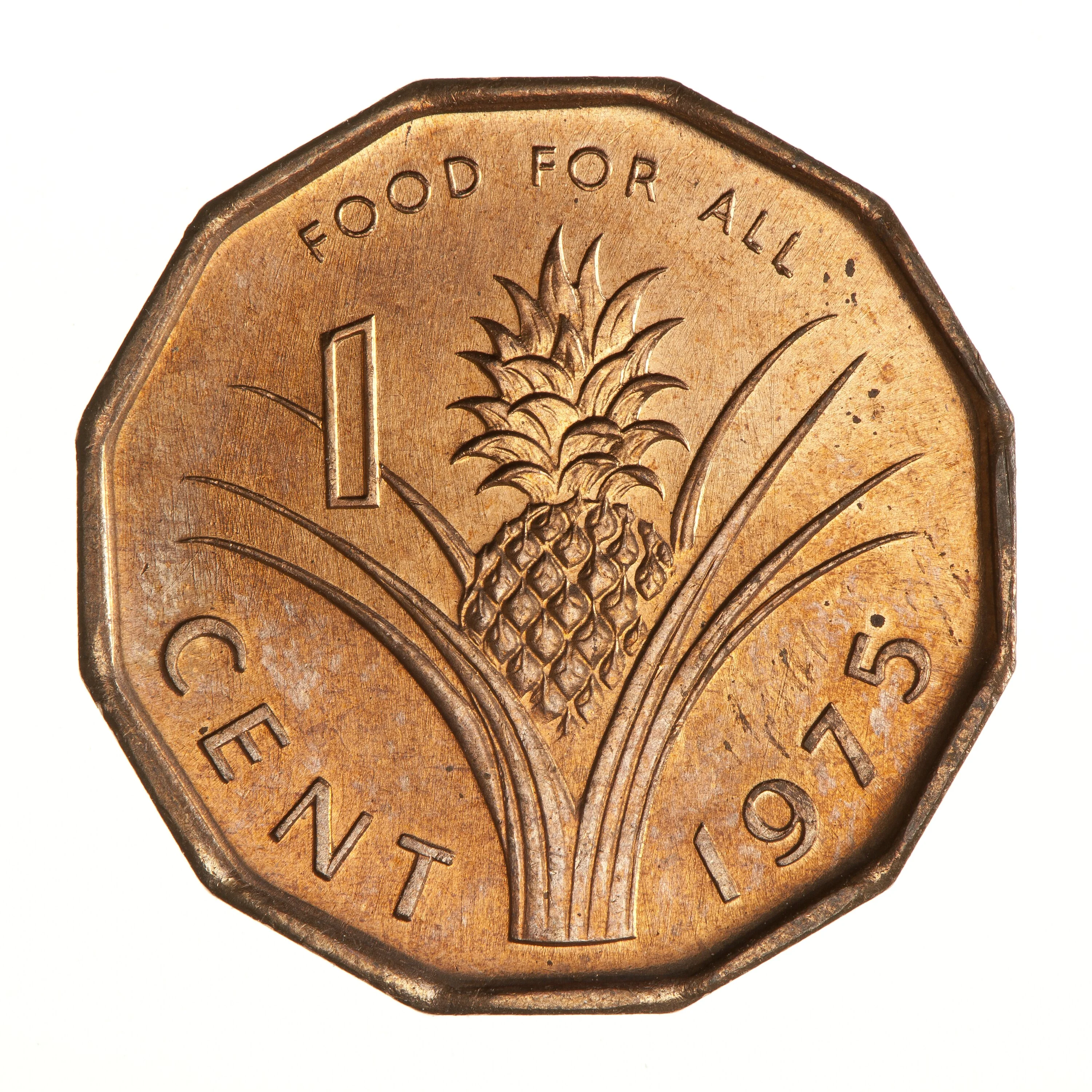
Description:
Pineapple and date flank value, FAO motto above.
Inscription:
FOOD FOR ALL
1 CENT
1975
1 CENT
1975
Script: Latin
Engraver: Michael Rizzello
Edge
Plain
Mints
| Name | Mark |
|---|---|
| Royal Mint | — |
Mintings
| Year | Mint Mark | Mintage | Quality | Collection |
|---|---|---|---|---|
| 1975 | — | 2,500,000 |
Historical background
In 1975, the Kingdom of Swaziland (now Eswatini) operated within a complex regional currency framework that limited its direct monetary sovereignty. The country was a member of the Rand Monetary Area (RMA), an agreement established in 1974 that formally succeeded earlier arrangements with South Africa and Lesotho. Under this system, the South African rand was legal tender in Swaziland and circulated alongside the national currency, the lilangeni (plural: emalangeni), which had been introduced in 1974. The lilangeni was pegged at par (1:1) to the rand, a linkage that ensured stability but effectively ceded control over monetary policy to the South African Reserve Bank.
This arrangement presented both significant advantages and challenges for Swaziland in 1975. The primary benefit was economic stability and seamless trade with its dominant neighbor, South Africa, which accounted for the vast majority of its imports and exports. The fixed parity eliminated exchange rate risk and facilitated cross-border commerce and investment. However, the major drawback was Swaziland's inability to pursue an independent monetary policy tailored to its specific economic conditions. Interest rates and money supply were largely dictated by South Africa's economic needs and its battle against inflation, which might not have aligned with Swaziland's priorities for growth and development.
Therefore, the currency situation in 1975 reflected Swaziland's broader geopolitical and economic reality: a small, landlocked kingdom navigating a path of cautious nation-building while remaining deeply integrated into the South African economic sphere. The dual-currency system with the lilangeni and rand symbolized a pragmatic compromise, securing immediate stability while acknowledging the constraints on full economic autonomy. This framework would persist, evolving into the Common Monetary Area (CMA) in 1986, continuing to define the kingdom's financial landscape for decades.
This arrangement presented both significant advantages and challenges for Swaziland in 1975. The primary benefit was economic stability and seamless trade with its dominant neighbor, South Africa, which accounted for the vast majority of its imports and exports. The fixed parity eliminated exchange rate risk and facilitated cross-border commerce and investment. However, the major drawback was Swaziland's inability to pursue an independent monetary policy tailored to its specific economic conditions. Interest rates and money supply were largely dictated by South Africa's economic needs and its battle against inflation, which might not have aligned with Swaziland's priorities for growth and development.
Therefore, the currency situation in 1975 reflected Swaziland's broader geopolitical and economic reality: a small, landlocked kingdom navigating a path of cautious nation-building while remaining deeply integrated into the South African economic sphere. The dual-currency system with the lilangeni and rand symbolized a pragmatic compromise, securing immediate stability while acknowledging the constraints on full economic autonomy. This framework would persist, evolving into the Common Monetary Area (CMA) in 1986, continuing to define the kingdom's financial landscape for decades.
🌱 Very Common