

2 dollars ($2 circulation coin) – Canada
Add to wishlist
Non-circulating coins
Commemoration: 25th Anniversary of the $2 circulation coin
Canada
Context
Material
References
KM: #
Numista: #333698
Value
Exchange value: 2 CAD
Bullion value: $159.93
Inflation-adjusted value: 2.36 CAD
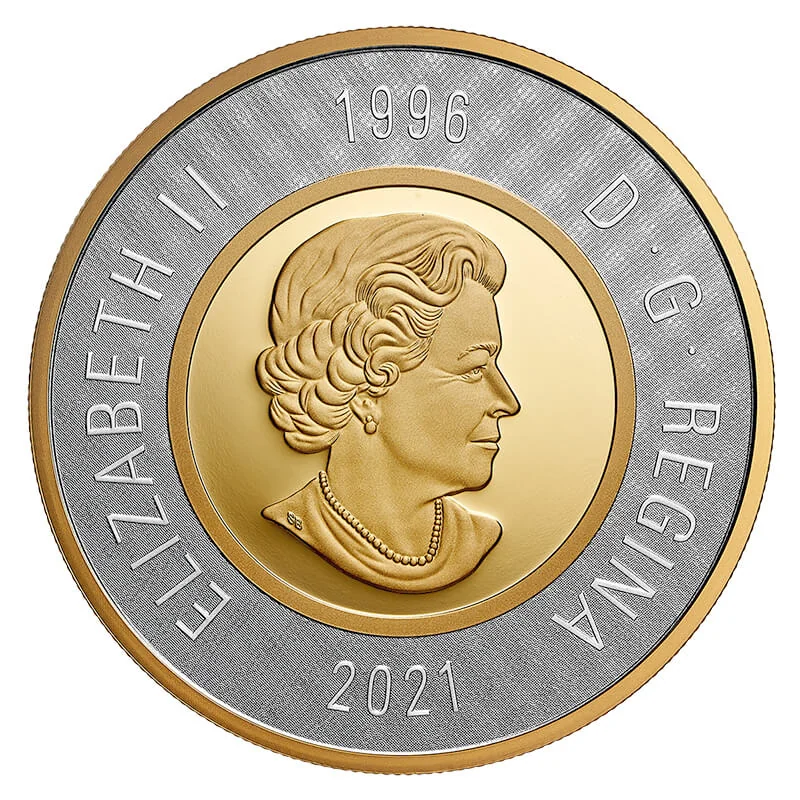
Obverse
Description:
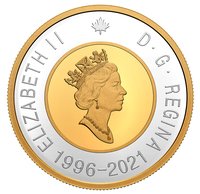
Queen Elizabeth II at 77, facing right, wearing a necklace and earrings.
Inscription:
1996
ELIZABETH II D·G·REGINA
SB
2021
ELIZABETH II D·G·REGINA
SB
2021
Translation:
ELIZABETH II BY THE GRACE OF GOD QUEEN
SB
SB
Script: Latin
Engraver: Susan Taylor
Designer: Susanna Blunt
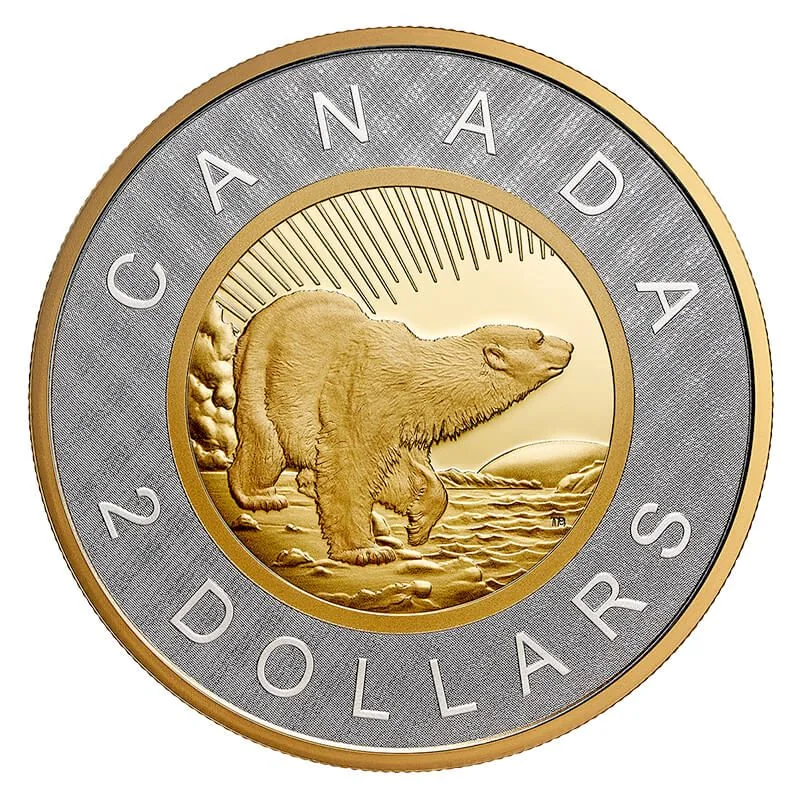
Reverse
Description:
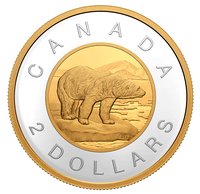
Polar bear on an ice floe, facing right.
Inscription:
CANADA
TB
2 DOLLARS
TB
2 DOLLARS
Script: Latin
Designer: Tony Bianco
Edge
Serrated
Mints
| Name | Mark |
|---|---|
| Royal Canadian Mint of Ottawa | — |
Mintings
| Year | Mint Mark | Mintage | Quality | Collection |
|---|---|---|---|---|
| 2021 | — | 2,500 | Proof |
Historical background
In 2021, Canada's currency situation was primarily defined by the Canadian dollar's ("loonie") significant appreciation against the US dollar, driven by a powerful global commodity rally. As the world emerged from the initial COVID-19 shock, demand for raw materials surged, particularly for oil—a key Canadian export. With crude prices climbing over 50% during the year, the resource-linked loonie strengthened from approximately 1.30 CAD/USD at the start of the year to near 1.20 by mid-year, marking its strongest level in six years. This created a complex economic dynamic, benefiting exporters in the energy sector but posing challenges for manufacturers and tourism by making Canadian goods and services more expensive abroad.
Domestically, the Bank of Canada (BoC) played a crucial role, beginning a gradual shift away from its emergency-level monetary stimulus. In April, it became the first major central bank to signal a reduction in its quantitative easing program, citing a stronger-than-expected recovery. While holding its key interest rate at a historic low of 0.25% throughout 2021 to support continued growth, the BoC's tapering of asset purchases and increasingly hawkish communication were key factors underpinning the currency's strength, as they pointed to earlier rate hikes than anticipated by other central banks, notably the U.S. Federal Reserve.
However, the year was not without headwinds. The currency's rise was tempered at times by concerns over new COVID-19 variants, which threatened the global recovery and commodity demand. Furthermore, persistent above-target inflation, which reached 18-year highs, became a dominant concern by the latter half of the year. This set the stage for a pivotal policy shift, as the BoG signaled it would not wait for inflation to fully return to target before raising rates, a stance that solidified the loonie's position and framed the monetary policy debate heading into 2022.
Domestically, the Bank of Canada (BoC) played a crucial role, beginning a gradual shift away from its emergency-level monetary stimulus. In April, it became the first major central bank to signal a reduction in its quantitative easing program, citing a stronger-than-expected recovery. While holding its key interest rate at a historic low of 0.25% throughout 2021 to support continued growth, the BoC's tapering of asset purchases and increasingly hawkish communication were key factors underpinning the currency's strength, as they pointed to earlier rate hikes than anticipated by other central banks, notably the U.S. Federal Reserve.
However, the year was not without headwinds. The currency's rise was tempered at times by concerns over new COVID-19 variants, which threatened the global recovery and commodity demand. Furthermore, persistent above-target inflation, which reached 18-year highs, became a dominant concern by the latter half of the year. This set the stage for a pivotal policy shift, as the BoG signaled it would not wait for inflation to fully return to target before raising rates, a stance that solidified the loonie's position and framed the monetary policy debate heading into 2022.
✨ Legendary