

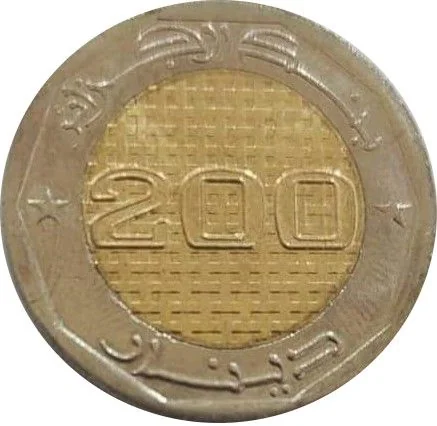
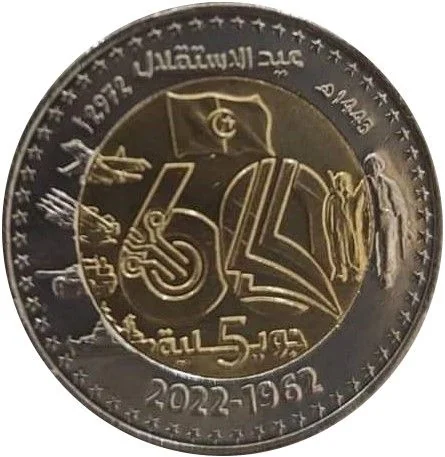
200 dinars (Independence) – Algeria
Add to wishlist
Circulating commemorative coins
Commemoration: 60th Anniversary of Independence
Algeria
Context
Year: 2022
Islamic (Hijri) Year:: 1443
Issuer: Algeria
Issuing organization: Bank of Algeria
Period:
(since 1962)
Currency:
(since 1964)
Material
References
Numista: #332952
Value
Exchange value: 200 DZD
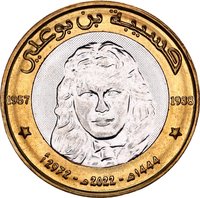
Obverse
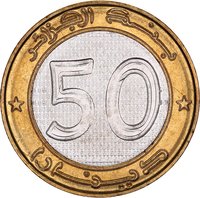
Reverse
Edge
Milled with the inscription
Legend:
200 * 200 * 200 * 200 *
Mintings
| Year | Mint Mark | Mintage | Quality | Collection |
|---|---|---|---|---|
| 2022 | — | — |
Historical background
In 2022, Algeria's currency situation was characterized by a heavily managed exchange rate and persistent pressures on the Algerian dinar (DZD). The official exchange rate was pegged at approximately 145 dinars to the euro and 118 dinars to the US dollar, maintained by the Bank of Algeria through strict capital controls and the allocation of foreign currency from hydrocarbon revenues. This official rate, however, stood in stark contrast to the parallel market rate, where the dinar traded at a significant discount—often exceeding 240 DZD per euro—reflecting a substantial unmet demand for foreign currency for imports and capital flight.
The underlying pressure stemmed from Algeria's continued economic dependence on hydrocarbons, which accounted for over 90% of total export earnings. While high global oil and gas prices in 2022, driven by the war in Ukraine, provided a major boost to foreign exchange reserves (which rose from $44 billion in 2021 to over $62 billion by year's end), the structural issues of a narrow export base and a high import bill remained. The government's longstanding import substitution policies and restrictions on access to foreign currency for "non-essential" goods aimed to conserve reserves but also constrained the private sector and contributed to the premium on the parallel market.
Authorities maintained a firm stance against devaluation, viewing the strong official peg as a matter of national sovereignty and a tool to control inflation for essential imported goods. The focus remained on administrative measures rather than liberalization, including directives for state banks to prioritize foreign currency for specific industrial sectors and continued scrutiny of import licenses. Consequently, 2022 ended with a reinforced duality in the currency market: improved reserve buffers from energy rents provided short-term stability for the official rate, but without significant structural economic diversification, the fundamental pressures on the dinar persisted.
The underlying pressure stemmed from Algeria's continued economic dependence on hydrocarbons, which accounted for over 90% of total export earnings. While high global oil and gas prices in 2022, driven by the war in Ukraine, provided a major boost to foreign exchange reserves (which rose from $44 billion in 2021 to over $62 billion by year's end), the structural issues of a narrow export base and a high import bill remained. The government's longstanding import substitution policies and restrictions on access to foreign currency for "non-essential" goods aimed to conserve reserves but also constrained the private sector and contributed to the premium on the parallel market.
Authorities maintained a firm stance against devaluation, viewing the strong official peg as a matter of national sovereignty and a tool to control inflation for essential imported goods. The focus remained on administrative measures rather than liberalization, including directives for state banks to prioritize foreign currency for specific industrial sectors and continued scrutiny of import licenses. Consequently, 2022 ended with a reinforced duality in the currency market: improved reserve buffers from energy rents provided short-term stability for the official rate, but without significant structural economic diversification, the fundamental pressures on the dinar persisted.
🌱 Fairly Common