

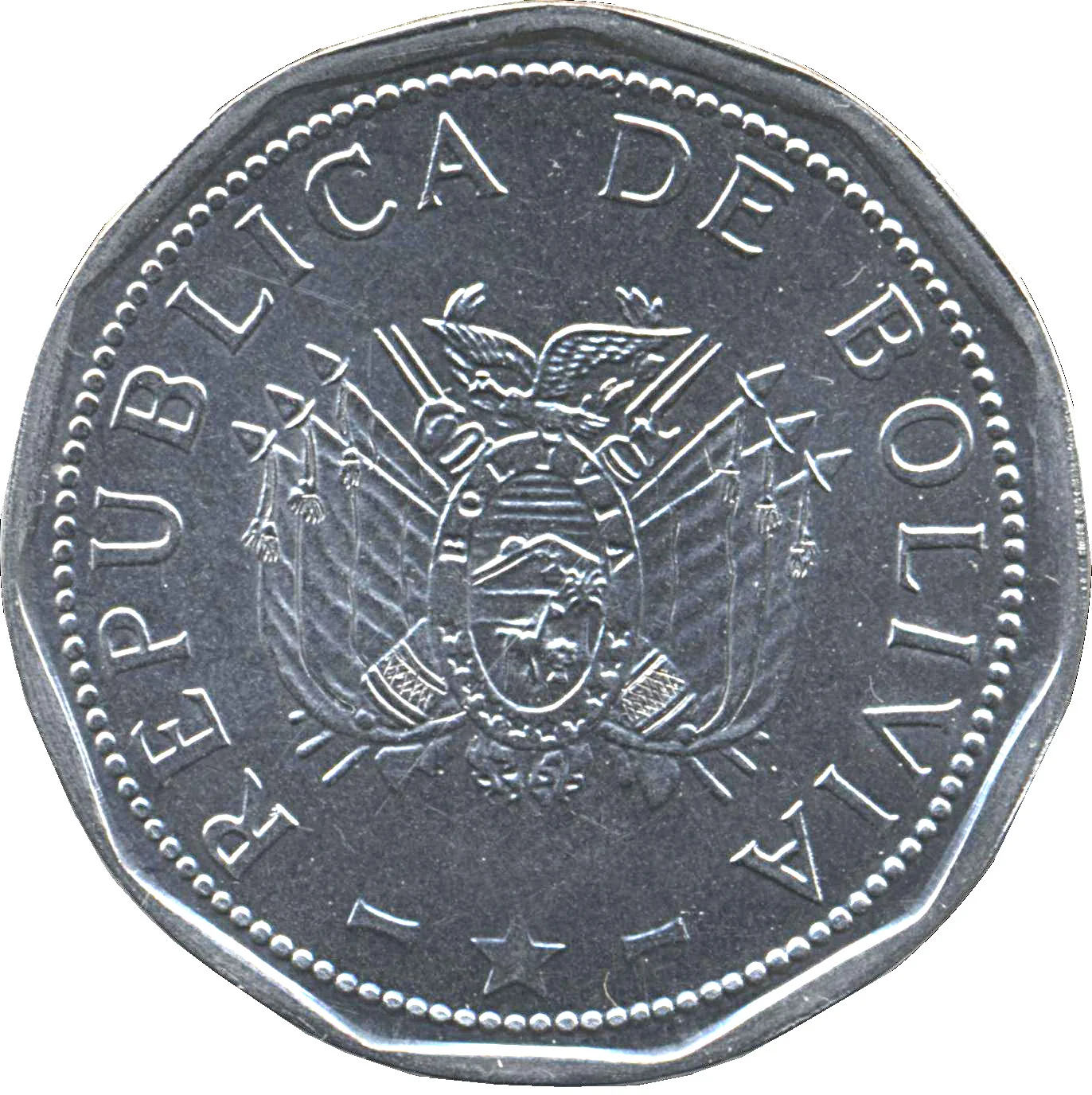
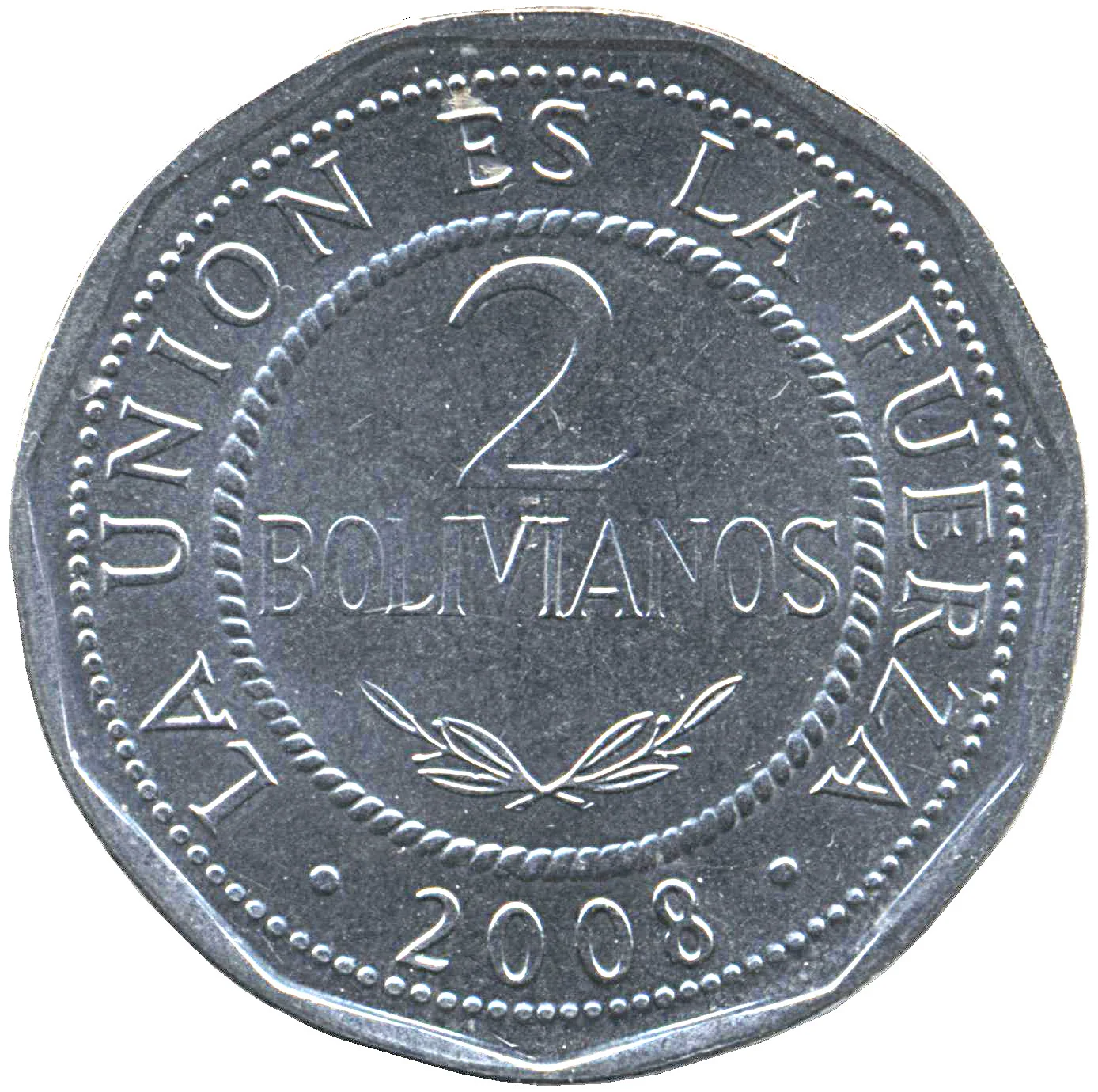
2 bolivianos – Bolivia
Add to wishlist
Bolivia
Context
Years: 1995–2008
Issuer: Bolivia
Period:
(1825—2009)
Currency:
(since 1986)
Total mintage: 29,900,000
Material
Diameter: 29 mm
Weight: 6.4 g
Thickness: 1.4 mm
Shape: Hendecagonal
Composition: Stainless steel
Technique: Milled
Alignment: Coin alignment
flip
References
KM: #
Numista: #13820
Value
Exchange value: 2 BOB
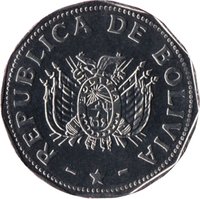
Obverse
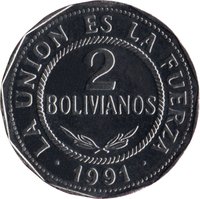
Reverse
Edge
Plain
Mintings
| Year | Mint Mark | Mintage | Quality | Collection |
|---|---|---|---|---|
| 1995 | — | 10,000,000 | ||
| 1997 | — | 11,000,000 | BU | |
| 2008 | — | 8,900,000 |
Historical background
In 1995, Bolivia was in the midst of a period of notable macroeconomic stability, a direct result of the sweeping economic reforms initiated a decade earlier under President Víctor Paz Estenssoro. The cornerstone of this reform package, the "New Economic Policy" of 1985, had successfully halted the hyperinflation that peaked at over 24,000%. By 1995, the country operated under a managed floating exchange rate regime, with the Bolivian boliviano (BOB) demonstrating relative stability against the US dollar, a key achievement for a historically inflation-prone economy. This stability was underpinned by strict fiscal discipline, the liberalization of markets, and the capitalization (privatization) of major state-owned enterprises, which helped build international reserves and restore confidence.
The currency's management was overseen by the Central Bank of Bolivia (BCB), which maintained a policy of targeting a stable real exchange rate to promote non-traditional exports while keeping imported inflation in check. Inflation had been reduced to single digits, a dramatic contrast to the pre-1985 era. However, the economy remained heavily dollarized, a lingering effect of the hyperinflation crisis. A significant portion of savings, loans, and major business transactions were conducted in US dollars, which acted as a parallel store of value and a hedge against any potential loss of faith in the national currency, despite the boliviano's formal stability.
While the currency situation was calm on the surface in 1995, underlying vulnerabilities persisted. Bolivia's economy remained dependent on volatile commodity exports, particularly natural gas and minerals, making it susceptible to external shocks. Furthermore, the social costs of the structural adjustment programs, including widespread poverty and inequality, created political pressures that would later challenge the neoliberal consensus. Thus, 1995 represents a point of achieved monetary stability within a longer, complex journey of economic transformation, where the successes of taming inflation and stabilizing the currency coexisted with deep-seated structural and social challenges.
The currency's management was overseen by the Central Bank of Bolivia (BCB), which maintained a policy of targeting a stable real exchange rate to promote non-traditional exports while keeping imported inflation in check. Inflation had been reduced to single digits, a dramatic contrast to the pre-1985 era. However, the economy remained heavily dollarized, a lingering effect of the hyperinflation crisis. A significant portion of savings, loans, and major business transactions were conducted in US dollars, which acted as a parallel store of value and a hedge against any potential loss of faith in the national currency, despite the boliviano's formal stability.
While the currency situation was calm on the surface in 1995, underlying vulnerabilities persisted. Bolivia's economy remained dependent on volatile commodity exports, particularly natural gas and minerals, making it susceptible to external shocks. Furthermore, the social costs of the structural adjustment programs, including widespread poverty and inequality, created political pressures that would later challenge the neoliberal consensus. Thus, 1995 represents a point of achieved monetary stability within a longer, complex journey of economic transformation, where the successes of taming inflation and stabilizing the currency coexisted with deep-seated structural and social challenges.
🌱 Very Common