

5 euro – San Marino
Add to wishlist
Non-circulating coins
Commemoration: International Year of Planet Earth
San Marino
Context
Material
References
KM: #
Numista: #13816
Value
Exchange value: 5 EUR
Bullion value: $42.55
Obverse
Description:
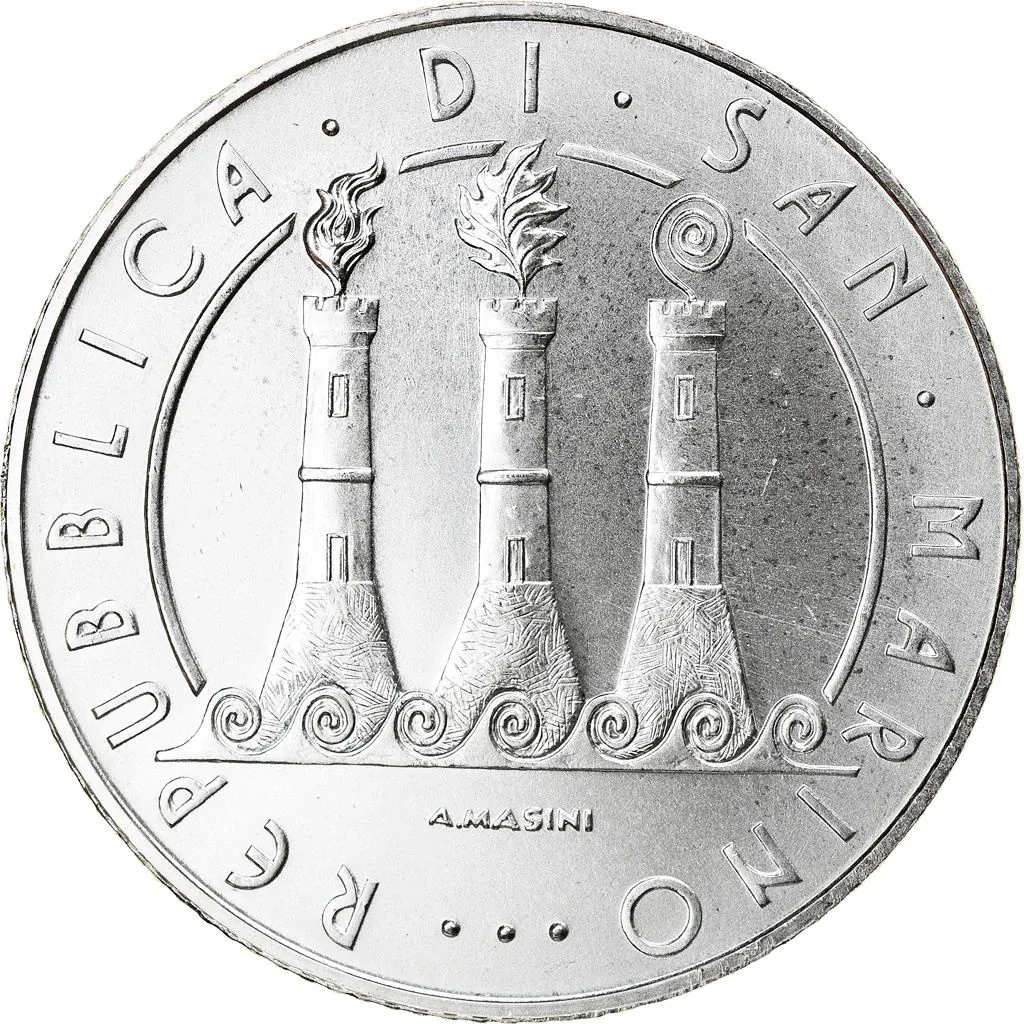
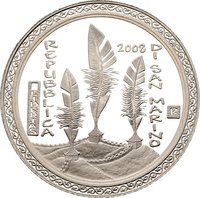
Three crenellated towers, each topped by a symbol: fire, earth, and air. Above them, a planetary arc; below, seven stylized waves.
Inscription:
REPUBBLICA · DI · SAN· MARINO · · ·
A.MASINI
A.MASINI
Translation:
REPUBLIC OF SAN MARINO
A.MASINI
A.MASINI
Script: Latin
Language: Italian
Engraver: Annalisa Masini
Reverse
Description:
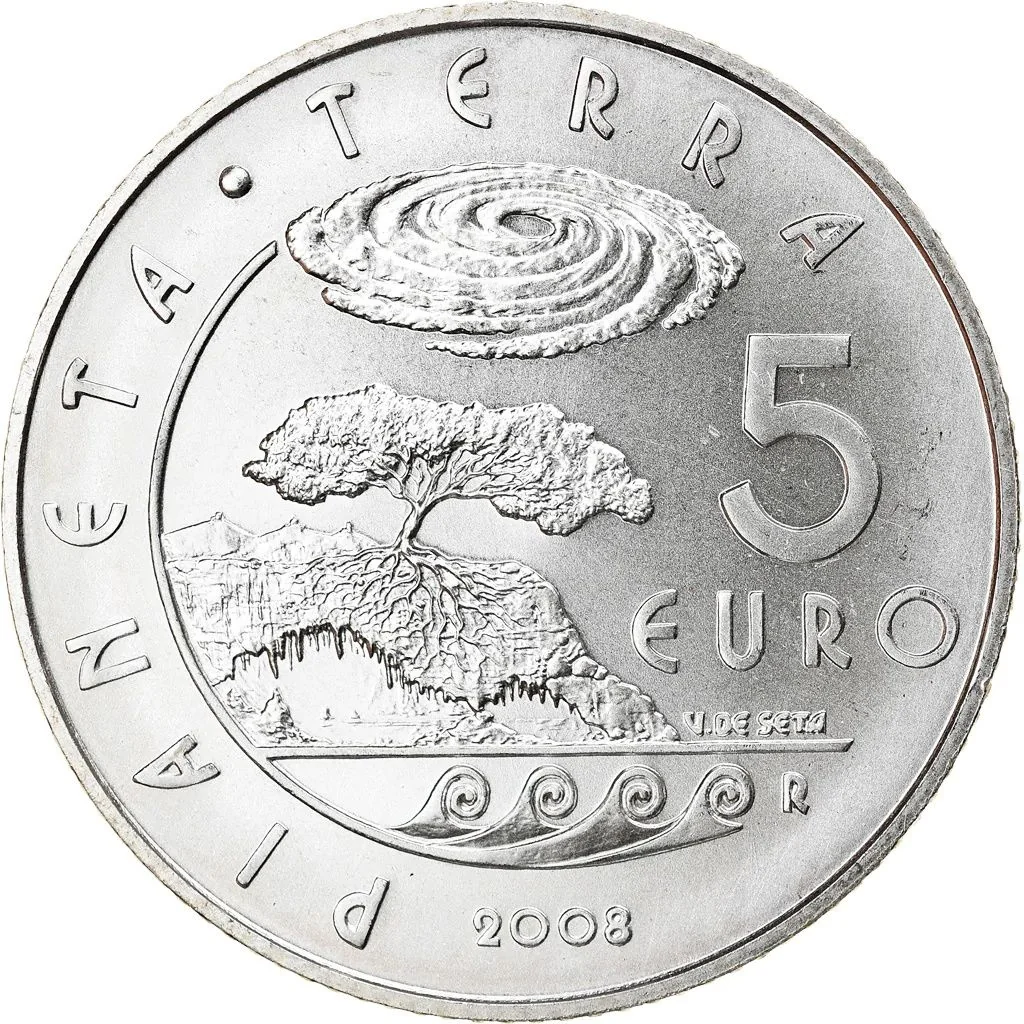
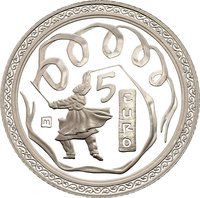
Tree over karst roots with Mount Titano. Planet arc and waves below, hurricane vortex above.
Inscription:
PIANETA · TERRA
5
EURO
V . DE SETA
R
2008
5
EURO
V . DE SETA
R
2008
Translation:
PLANET EARTH
5
EURO
V. DE SETA
R
2008
5
EURO
V. DE SETA
R
2008
Script: Latin
Language: Italian
Engraver: Valerio De Seta
Edge
Reeded
Categories
| Building> Castle or fortification |
| Building> Tower |
| Plant> Tree |
| Sustainability |
| Geography> Mountain |
| Science> Natural phenomenon |
Mints
| Name | Mark |
|---|---|
| Rome | R |
Mintings
| Year | Mint Mark | Mintage | Quality | Collection |
|---|---|---|---|---|
| 2008 | R | 50,000 |
Historical background
In 2008, San Marino's currency situation was fundamentally defined by its longstanding and exclusive use of the euro, despite not being a member of the European Union. This was made possible through a series of formal monetary agreements with Italy and, later, the EU. Since 1991, San Marino had been legally entitled to mint its own limited quantities of San Marino variant euro coins (featuring national designs) as part of a customs union with Italy. This arrangement was solidified and updated with the European Community in 2000, allowing the microstate to adopt the euro as its official currency from its launch in 1999 for electronic transactions and in 2002 for physical notes and coins.
The global financial crisis of 2008 presented a severe external shock to San Marino's economy and, by extension, its monetary stability. The country's traditionally robust banking sector, which accounted for a significant portion of its GDP, faced intense pressure due to its deep integration with the Italian economy and exposure to the international crisis. A liquidity squeeze and growing concerns over banking stability emerged, testing the resilience of the financial system. Crucially, however, the currency itself remained stable because it was the euro, shielded by the monetary policy and credibility of the European Central Bank.
Consequently, while San Marino faced a profound economic and banking crisis in 2008, it did not experience a currency crisis per se. The challenge was not devaluation or exchange rate volatility, but rather the solvency of its domestic banks within the euro framework. The situation underscored both the key benefit of euro adoption—monetary stability during a global storm—and a significant vulnerability: the lack of direct access to the ECB as a lender of last resort, which forced the republic to seek bilateral assistance from Italy to stabilise its financial system in the ensuing years.
The global financial crisis of 2008 presented a severe external shock to San Marino's economy and, by extension, its monetary stability. The country's traditionally robust banking sector, which accounted for a significant portion of its GDP, faced intense pressure due to its deep integration with the Italian economy and exposure to the international crisis. A liquidity squeeze and growing concerns over banking stability emerged, testing the resilience of the financial system. Crucially, however, the currency itself remained stable because it was the euro, shielded by the monetary policy and credibility of the European Central Bank.
Consequently, while San Marino faced a profound economic and banking crisis in 2008, it did not experience a currency crisis per se. The challenge was not devaluation or exchange rate volatility, but rather the solvency of its domestic banks within the euro framework. The situation underscored both the key benefit of euro adoption—monetary stability during a global storm—and a significant vulnerability: the lack of direct access to the ECB as a lender of last resort, which forced the republic to seek bilateral assistance from Italy to stabilise its financial system in the ensuing years.
🌟 Uncommon