

1 dollar (Abraham Lincoln) – United States
Add to wishlist
Non-circulating coins
Commemoration: 200th anniversary of the birth of the 16th President of the United States.
United States
Context
Material
References
KM: #
Numista: #32997
Value
Exchange value: 1 USD = $1.00
Bullion value: $58.84
Inflation-adjusted value: 1.49 USD
Obverse
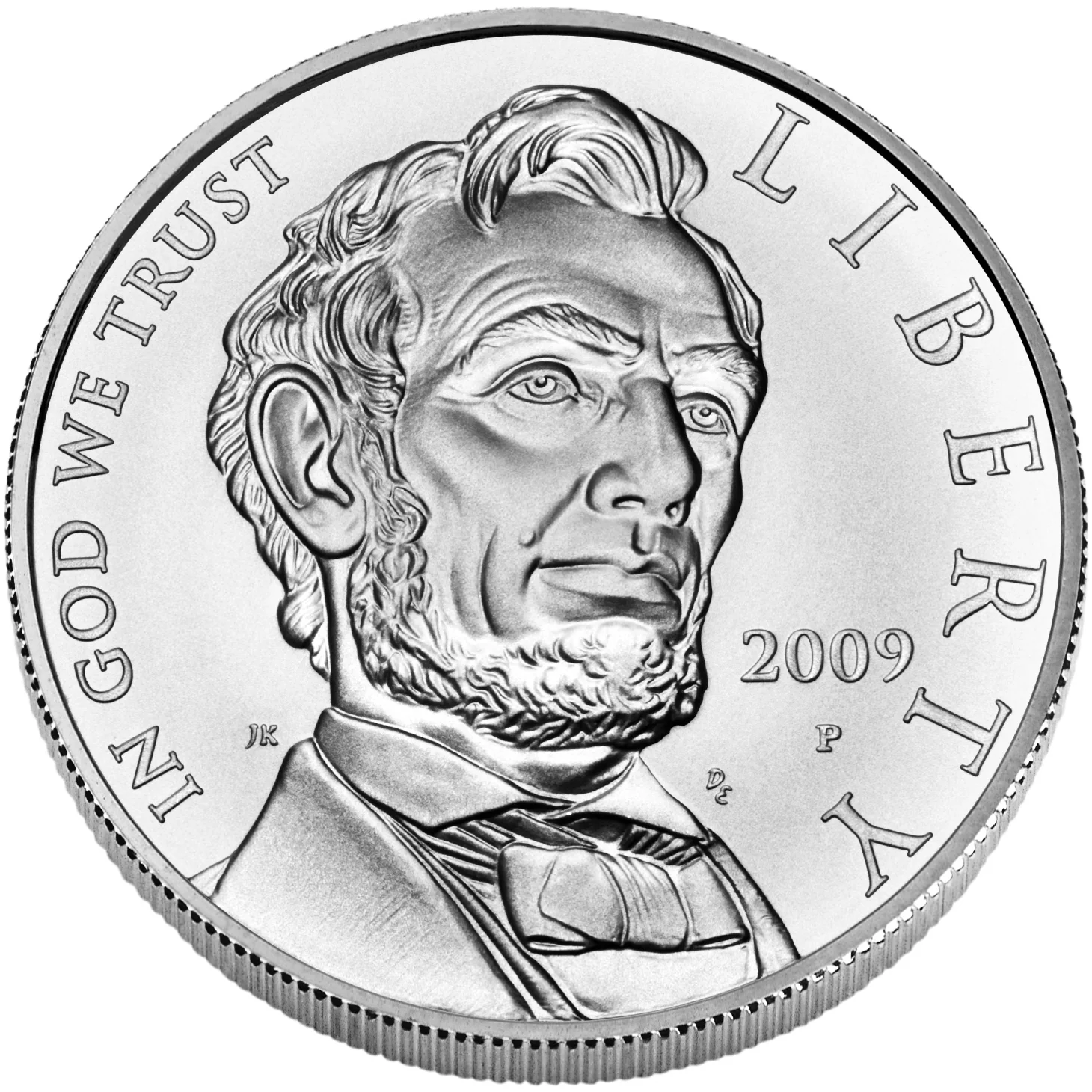
Description:
Portrait of Abraham Lincoln, inspired by Daniel Chester French’s Lincoln Memorial sculpture, symbolizing his strength and resolve.
Inscription:
IN GOD WE TRUST
LIBERTY
2009
P
JK
DE
LIBERTY
2009
P
JK
DE
Script: Latin
Engraver: Don Everhart
Designer: Justin Kunz
Reverse
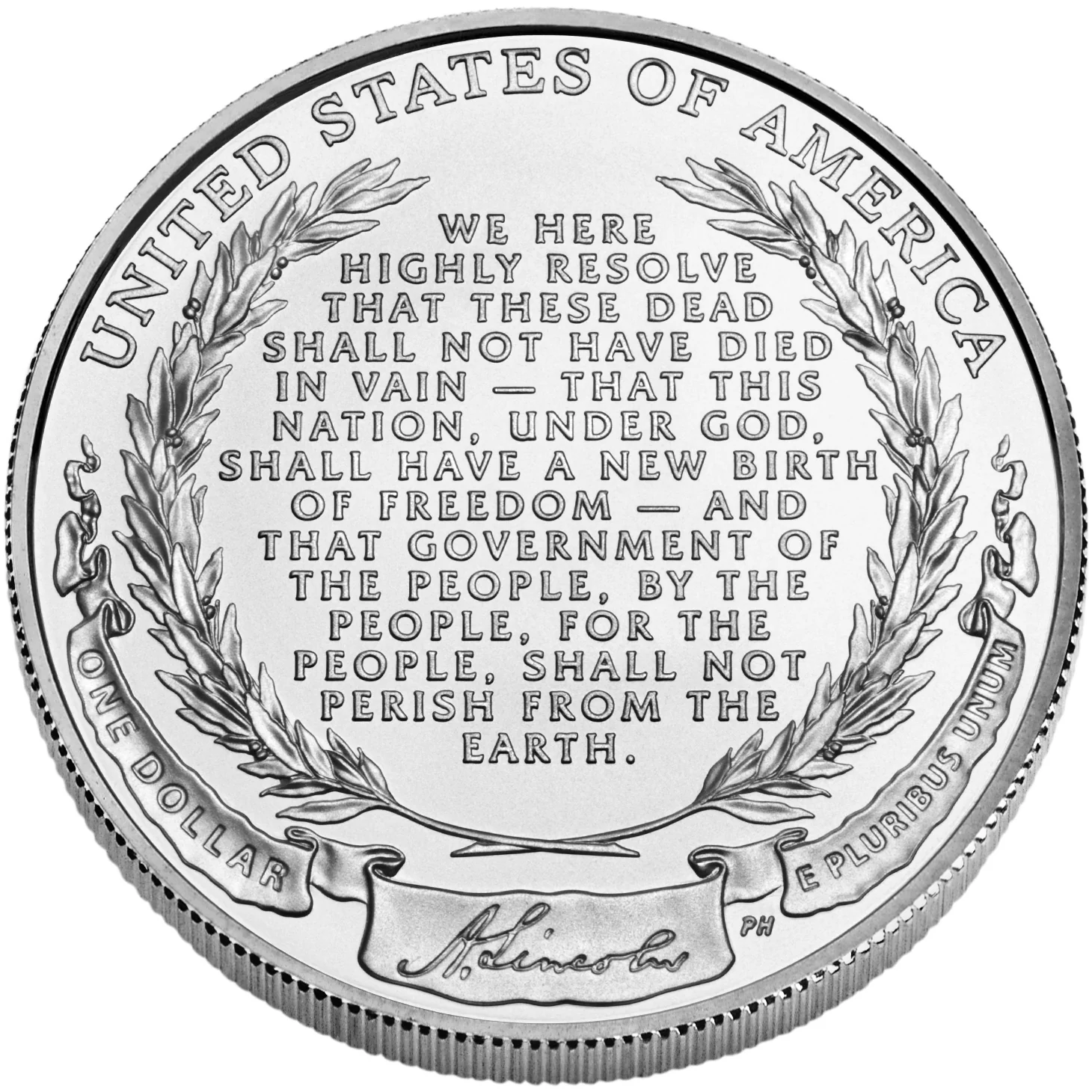
Description:
Lincoln’s last 43 Gettysburg Address words in laurel. Scroll: ONE DOLLAR A LINCOLN E PLURIBUS UNUM.
Inscription:
UNITED STATES OF AMERICA
WE HERE
HIGHLY RESOLVE
THAT THESE DEAD
SHALL NOT HAVE DIED
IN VAIN - THAT THIS
NATION, UNDER GOD,
SHALL HAVE A NEW BIRTH
OF FREEDOM - AND
THAT GOVERNMENT OF
THE PEOPLE, BY THE
PEOPLE, FOR THE
PEOPLE, SHALL NOT
PERISH FROM THE
EARTH.
ONE DOLLAR
A.Lincoln
PH
E PLURIBUS UNUM
WE HERE
HIGHLY RESOLVE
THAT THESE DEAD
SHALL NOT HAVE DIED
IN VAIN - THAT THIS
NATION, UNDER GOD,
SHALL HAVE A NEW BIRTH
OF FREEDOM - AND
THAT GOVERNMENT OF
THE PEOPLE, BY THE
PEOPLE, FOR THE
PEOPLE, SHALL NOT
PERISH FROM THE
EARTH.
ONE DOLLAR
A.Lincoln
PH
E PLURIBUS UNUM
Script: Latin
Engraver: Phebe Hemphill
Edge
Reeded
Categories
| Event> Birth anniversary |
Mints
| Name | Mark |
|---|---|
| United States Mint of Philadelphia | P |
Historical background
The United States entered 2009 in the throes of the Great Recession, a period defined by a severe financial crisis and deep economic contraction. The currency situation was paradoxical: the U.S. dollar experienced a sharp and unexpected surge in value as a global "safe-haven" asset, despite the crisis originating within the American financial system. As global investors fled risky assets and foreign markets, they sought the perceived security of U.S. Treasury bonds, driving demand for dollars and causing it to appreciate significantly against most other major currencies in late 2008 and into early 2009. This "flight to quality" underscored the dollar's enduring role as the world's primary reserve currency, even amid domestic turmoil.
Domestically, the Federal Reserve embarked on an unprecedented monetary policy response known as Quantitative Easing (QE). With conventional interest rates already near zero, the Fed began creating new money to purchase massive quantities of mortgage-backed securities and Treasury bonds. This aimed to inject liquidity into the frozen financial system, lower long-term borrowing costs, and stimulate economic activity. While not directly devaluing the currency, these actions expanded the money supply dramatically, leading to concerns among some economists about long-term inflationary pressures and the potential debasement of the dollar's value.
By the second half of 2009, as extreme panic subsided and tentative signs of global stabilization emerged, the dollar's safe-haven rally began to reverse. Investors started moving capital back into higher-yielding assets and currencies, leading to a broad dollar depreciation. This shift was tacitly welcomed by U.S. authorities, as a weaker dollar helped boost American exports by making them more competitively priced abroad, supporting a key avenue for economic recovery. Thus, the year encapsulated a full cycle for the dollar—from crisis-driven strength to policy-induced weakness—all set against a backdrop of profound economic uncertainty and transformative central bank intervention.
Domestically, the Federal Reserve embarked on an unprecedented monetary policy response known as Quantitative Easing (QE). With conventional interest rates already near zero, the Fed began creating new money to purchase massive quantities of mortgage-backed securities and Treasury bonds. This aimed to inject liquidity into the frozen financial system, lower long-term borrowing costs, and stimulate economic activity. While not directly devaluing the currency, these actions expanded the money supply dramatically, leading to concerns among some economists about long-term inflationary pressures and the potential debasement of the dollar's value.
By the second half of 2009, as extreme panic subsided and tentative signs of global stabilization emerged, the dollar's safe-haven rally began to reverse. Investors started moving capital back into higher-yielding assets and currencies, leading to a broad dollar depreciation. This shift was tacitly welcomed by U.S. authorities, as a weaker dollar helped boost American exports by making them more competitively priced abroad, supporting a key avenue for economic recovery. Thus, the year encapsulated a full cycle for the dollar—from crisis-driven strength to policy-induced weakness—all set against a backdrop of profound economic uncertainty and transformative central bank intervention.
🌟 Uncommon