

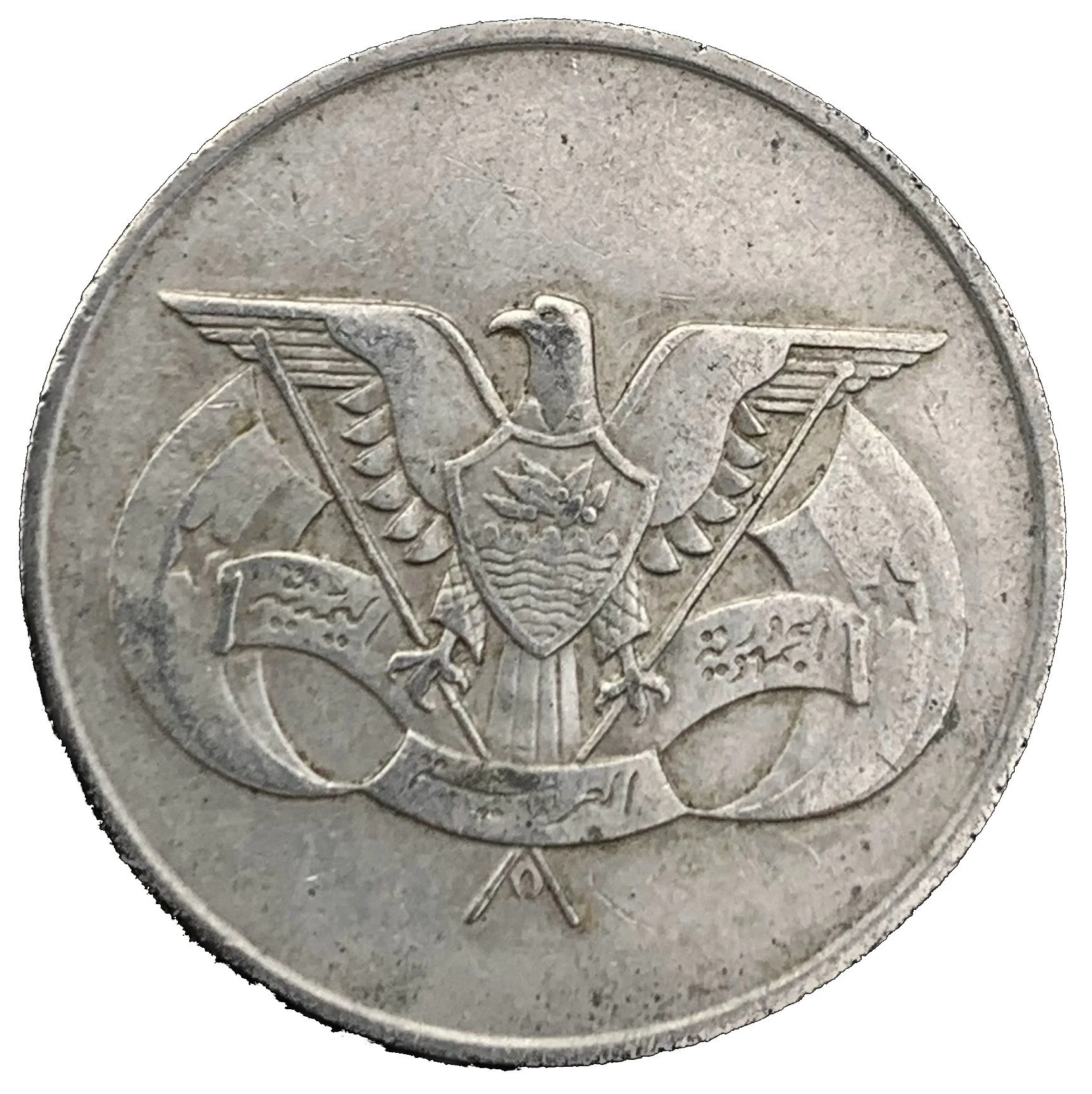
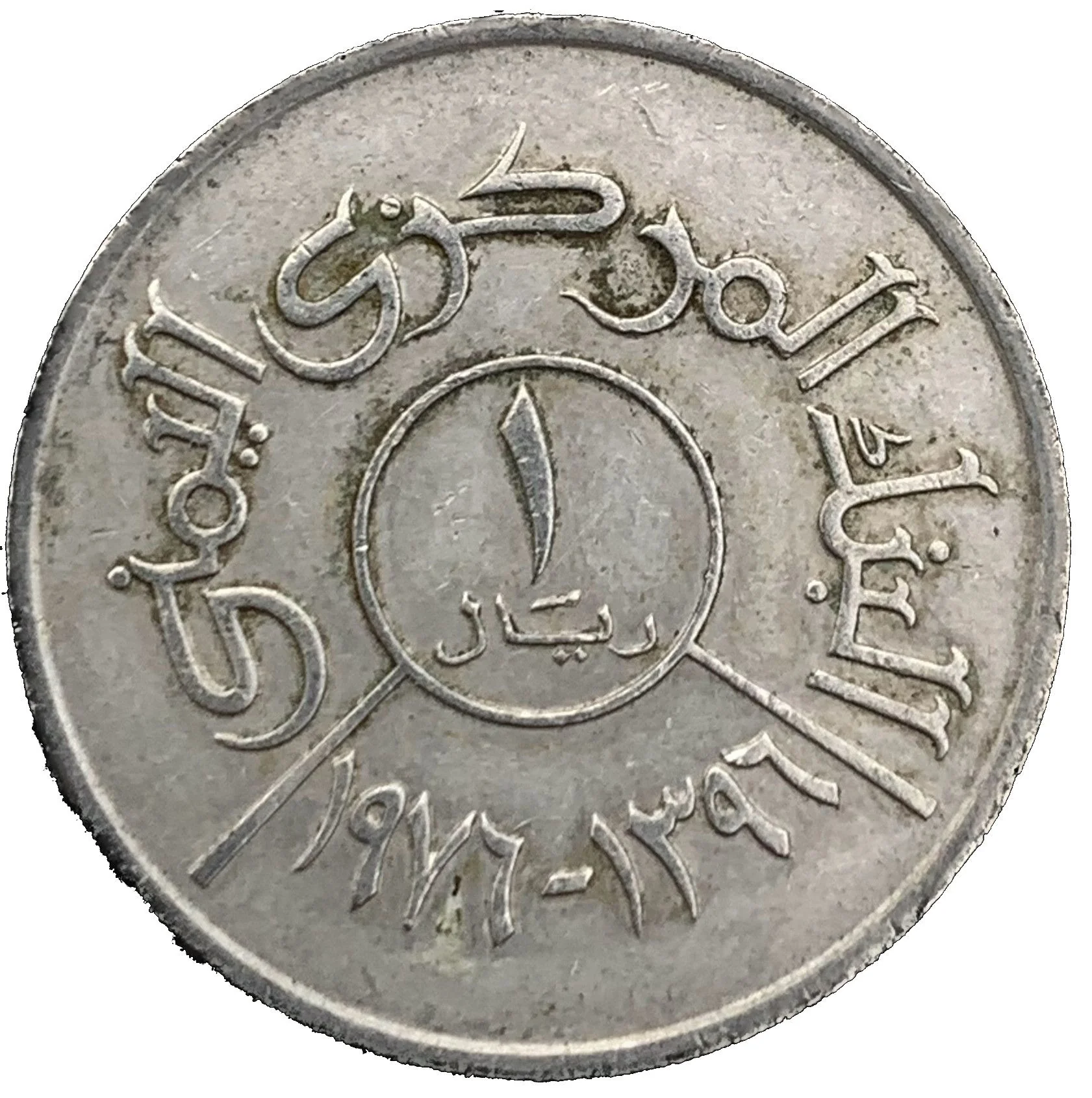
1 rial – North Yemen
Add to wishlist
Yemen
Context
Years: 1976–1985
Country: Yemen
Issuer: North Yemen
Issuing organization: Central Bank of Yemen
Period:
(1962—1990)
Currency:
(1974—1990)
Demonetized: Yes
Total mintage: 7,810,000
Material
References
Y: #
Numista: #6905
Value
Exchange value: 1 YER
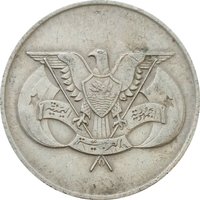
Obverse
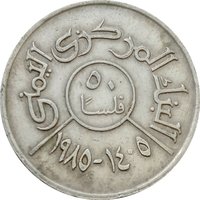
Reverse
Edge
Milled
Mints
| Name | Mark |
|---|---|
| Royal Mint | — |
Mintings
| Year | Mint Mark | Mintage | Quality | Collection |
|---|---|---|---|---|
| 1976 | — | 7,800,000 | ||
| 1980 | — | 10,000 | Proof | |
| 1985 | — | — |
Historical background
In 1976, the currency situation in the Yemen Arab Republic (North Yemen) was characterized by a complex duality. The official currency was the North Yemeni riyal (YAR), which was pegged to the US dollar. However, the economy operated with a significant parallel circulation of the Saudi Arabian riyal (SAR), particularly in the northern and western regions near the border. This was a direct consequence of decades of mass labor migration to Saudi oil fields, with remittances flowing back in the stronger, more stable Saudi currency, which was often preferred for large transactions and as a store of value.
This monetary duality presented both stability and challenges. The peg of the YAR riyal to the dollar, supported by growing remittance income and foreign aid, provided a formal anchor. However, the widespread use of the Saudi riyal undermined the authority of the Sana'a-based central bank and complicated monetary policy. The government tolerated this practice because the influx of hard currency from workers abroad was the primary engine of the economy, financing imports and development projects without requiring sophisticated domestic financial institutions.
By the mid-1970s, the situation was stable but inherently fragmented. The economy was effectively dollarized through the Saudi riyal, shielding it from some domestic pressures but leaving it vulnerable to external shifts in Saudi economic policy and oil prices. This period represented a transitional phase where a traditional, remittance-dependent economy functioned with a dual-currency system, a pragmatic solution that preceded later efforts to strengthen and unify the national monetary system.
This monetary duality presented both stability and challenges. The peg of the YAR riyal to the dollar, supported by growing remittance income and foreign aid, provided a formal anchor. However, the widespread use of the Saudi riyal undermined the authority of the Sana'a-based central bank and complicated monetary policy. The government tolerated this practice because the influx of hard currency from workers abroad was the primary engine of the economy, financing imports and development projects without requiring sophisticated domestic financial institutions.
By the mid-1970s, the situation was stable but inherently fragmented. The economy was effectively dollarized through the Saudi riyal, shielding it from some domestic pressures but leaving it vulnerable to external shifts in Saudi economic policy and oil prices. This period represented a transitional phase where a traditional, remittance-dependent economy functioned with a dual-currency system, a pragmatic solution that preceded later efforts to strengthen and unify the national monetary system.
🌱 Very Common