

20 francs – New Hebrides
Add to wishlist
Vanuatu
Context
Years: 1967–1970
Country: Vanuatu
Issuer: New Hebrides
Period:
(1906—1980)
Currency:
(1921—1982)
Demonetized: Yes
Total mintage: 550,000
Material
References
KM: #
Numista: #329737
Obverse
Description:
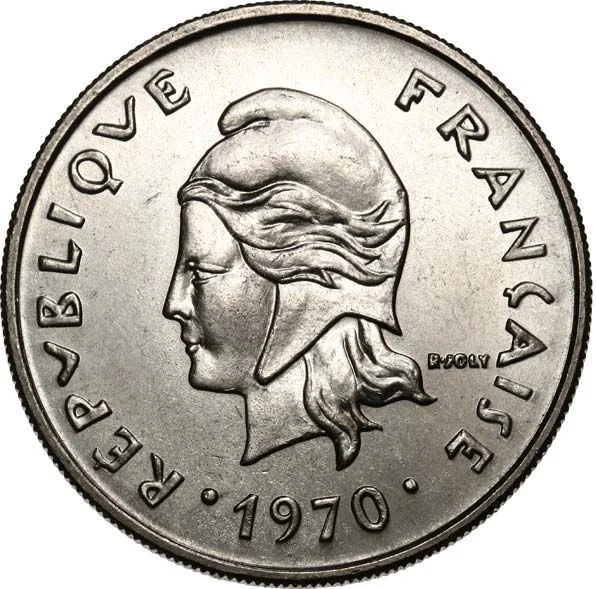
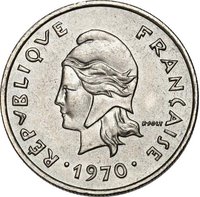
Marianne in profile left, wearing a Phrygian cap.
Inscription:
RÉPUBLIQUE FRANÇAISE
R·JOLY
1970
R·JOLY
1970
Translation:
FRENCH REPUBLIC
R·JOLY
1970
R·JOLY
1970
Script: Latin
Language: French
Engraver: Raymond Joly
Reverse
Description:
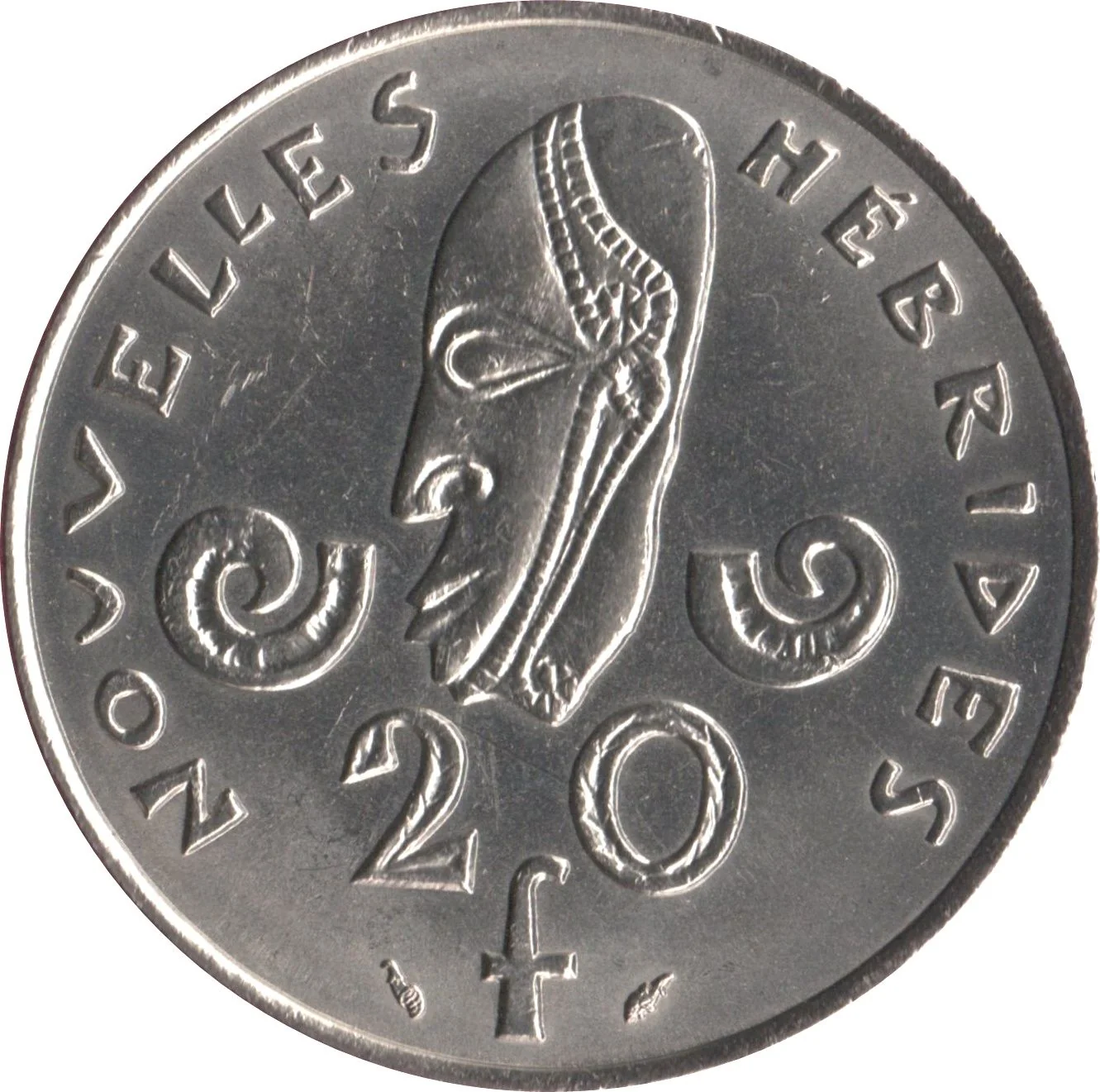
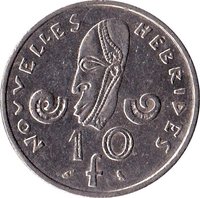
Mask with left-flank designs of lower value.
Inscription:
NOUVELLES HÉBRIDES
20
f
20
f
Translation:
New Hebrides
20
Francs
20
Francs
Script: Latin
Language: French
Engraver: Raymond Joly
Edge
Reeded
Mints
| Name | Mark |
|---|---|
| Monnaie de Paris | — |
Mintings
| Year | Mint Mark | Mintage | Quality | Collection |
|---|---|---|---|---|
| 1967 | — | 250,000 | ||
| 1970 | — | 300,000 |
Historical background
In 1967, the currency situation in the New Hebrides condominium was a unique and tangible reflection of the territory’s unusual Anglo-French joint administration. The archipelago did not issue its own independent currency. Instead, two separate official currencies circulated simultaneously: the Australian pound (A£) and the French Pacific franc (CFP franc). This dual-currency system was a direct consequence of the condominium governance structure, where both British and French administrations operated in parallel, each with their own economic and administrative systems.
The system was facilitated by an official, fixed exchange rate between the two currencies, which was crucial for daily commerce and government operations. This meant that businesses, planters, and islanders could freely use either currency, and prices were often quoted in both. However, the arrangement was not without its complexities. It created practical challenges for accounting and banking, and the economic influence of the two metropolitan powers was uneven. The Australian pound, linked to the sterling area, was dominant in the British sector and plantation economy, while the CFP franc, tied to the French treasury, was prevalent in the French administrative sector and among those with commercial ties to French Pacific territories.
This bifurcated monetary landscape remained in place until the 1980s. The year 1967 therefore represents a point within a long-standing and stable, albeit cumbersome, system. The dual currency was a daily reminder of the condominium’s divided sovereignty, symbolizing both the pragmatic cooperation and the underlying administrative duality that would persist until the move toward independence and the eventual creation of a single national currency, the Vanuatu vatu, in 1982.
The system was facilitated by an official, fixed exchange rate between the two currencies, which was crucial for daily commerce and government operations. This meant that businesses, planters, and islanders could freely use either currency, and prices were often quoted in both. However, the arrangement was not without its complexities. It created practical challenges for accounting and banking, and the economic influence of the two metropolitan powers was uneven. The Australian pound, linked to the sterling area, was dominant in the British sector and plantation economy, while the CFP franc, tied to the French treasury, was prevalent in the French administrative sector and among those with commercial ties to French Pacific territories.
This bifurcated monetary landscape remained in place until the 1980s. The year 1967 therefore represents a point within a long-standing and stable, albeit cumbersome, system. The dual currency was a daily reminder of the condominium’s divided sovereignty, symbolizing both the pragmatic cooperation and the underlying administrative duality that would persist until the move toward independence and the eventual creation of a single national currency, the Vanuatu vatu, in 1982.
🌱 Common