

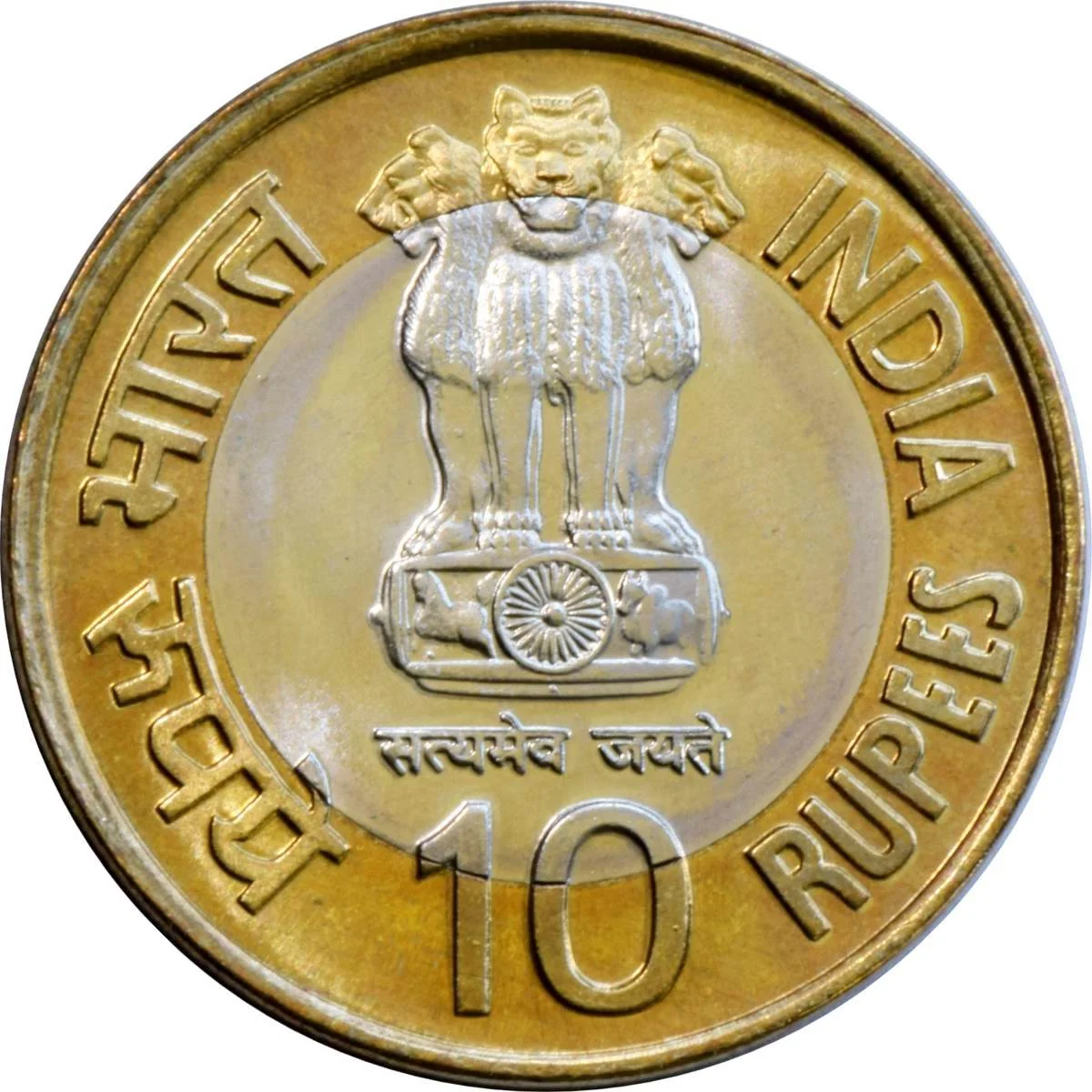
10 Rupees (Gur-ta-Gaddi) – India
Non-circulating coins
Commemoration: 300th Anniversary of Gur-ta-Gaddi
India

Material
Diameter: 27.36 mm
Weight: 7.71 g
Thickness: 1.82 mm
Shape: Round
Standard: Silver quarter ounce
Technique: Milled
Alignment: Medal alignment
flip

References
KM: #Click to copy to clipboard371
Numista: #13791
Value
Exchange value: 10 INR = $0.11
Inflation-adjusted value: 32.02 INR
Obverse
Reverse
Description:
Golden Temple. Date below "Ter-Centenary of Gur-Ta-Gaddi" in Nagari and English. Gurmukhi inscription "Bani Guru Guru He Bani" below.
Inscription:
गुर - ता - गददी की त्रि शताब्दी
TER-CENTENARY OF GUR-TA-GADDI
ਬਾਣੀ ਗੁਰੂ ਗੁਰੂ ਹੈ ਬਾਣੀ
2008
TER-CENTENARY OF GUR-TA-GADDI
ਬਾਣੀ ਗੁਰੂ ਗੁਰੂ ਹੈ ਬਾਣੀ
2008
Translation:
Third Centenary of Gur-Ta-Gaddi
The Word is the Guru, and the Guru is the Word
2008
The Word is the Guru, and the Guru is the Word
2008
Edge
Plain
Mints
| Name | Mark |
|---|---|
| Hyderabad | * |
| Mumbai / Bombay | ♦ |
| Mumbai / Bombay | M |
Historical background
In 2008, India's currency situation was dominated by the severe global financial crisis, which triggered a period of intense volatility for the Indian Rupee (INR). The year began with the rupee appreciating to near 39 against the US dollar, driven by strong capital inflows from foreign institutional investors (FIIs) into a booming stock market. However, this strength proved fleeting. Following the collapse of Lehman Brothers in September, global risk aversion surged, leading to a massive and sudden reversal of capital flows from emerging markets like India. This exodus of foreign capital placed immediate and severe downward pressure on the rupee.
The Reserve Bank of India (RBI) faced a complex policy dilemma. Initially, it intervened in the foreign exchange market to sell dollars and curb the rupee's rapid depreciation, which threatened to spike import costs and fuel inflation. However, this dollar-selling depleted India's foreign exchange reserves, which fell by over $50 billion in the latter half of the year. Simultaneously, the RBI had to shift its focus to managing domestic liquidity and stimulating a slowing economy, leading to interest rate cuts. This monetary easing, while necessary for growth, further reduced the attractiveness of rupee assets, exacerbating the currency's decline. By the end of 2008, the rupee had depreciated sharply, losing over 20% of its value and touching a record low near 52 against the dollar.
The currency turmoil of 2008 exposed structural vulnerabilities in India's economy, particularly its dependence on volatile portfolio flows to finance a widening current account deficit. The crisis underscored the challenges of managing an open economy in a period of global financial contagion, forcing a recalibration of policy towards greater resilience. In response, India later took steps to diversify sources of foreign capital and build stronger forex reserve buffers to better withstand future external shocks.
The Reserve Bank of India (RBI) faced a complex policy dilemma. Initially, it intervened in the foreign exchange market to sell dollars and curb the rupee's rapid depreciation, which threatened to spike import costs and fuel inflation. However, this dollar-selling depleted India's foreign exchange reserves, which fell by over $50 billion in the latter half of the year. Simultaneously, the RBI had to shift its focus to managing domestic liquidity and stimulating a slowing economy, leading to interest rate cuts. This monetary easing, while necessary for growth, further reduced the attractiveness of rupee assets, exacerbating the currency's decline. By the end of 2008, the rupee had depreciated sharply, losing over 20% of its value and touching a record low near 52 against the dollar.
The currency turmoil of 2008 exposed structural vulnerabilities in India's economy, particularly its dependence on volatile portfolio flows to finance a widening current account deficit. The crisis underscored the challenges of managing an open economy in a period of global financial contagion, forcing a recalibration of policy towards greater resilience. In response, India later took steps to diversify sources of foreign capital and build stronger forex reserve buffers to better withstand future external shocks.

🌱 Fairly Common