


Obverse
Description:
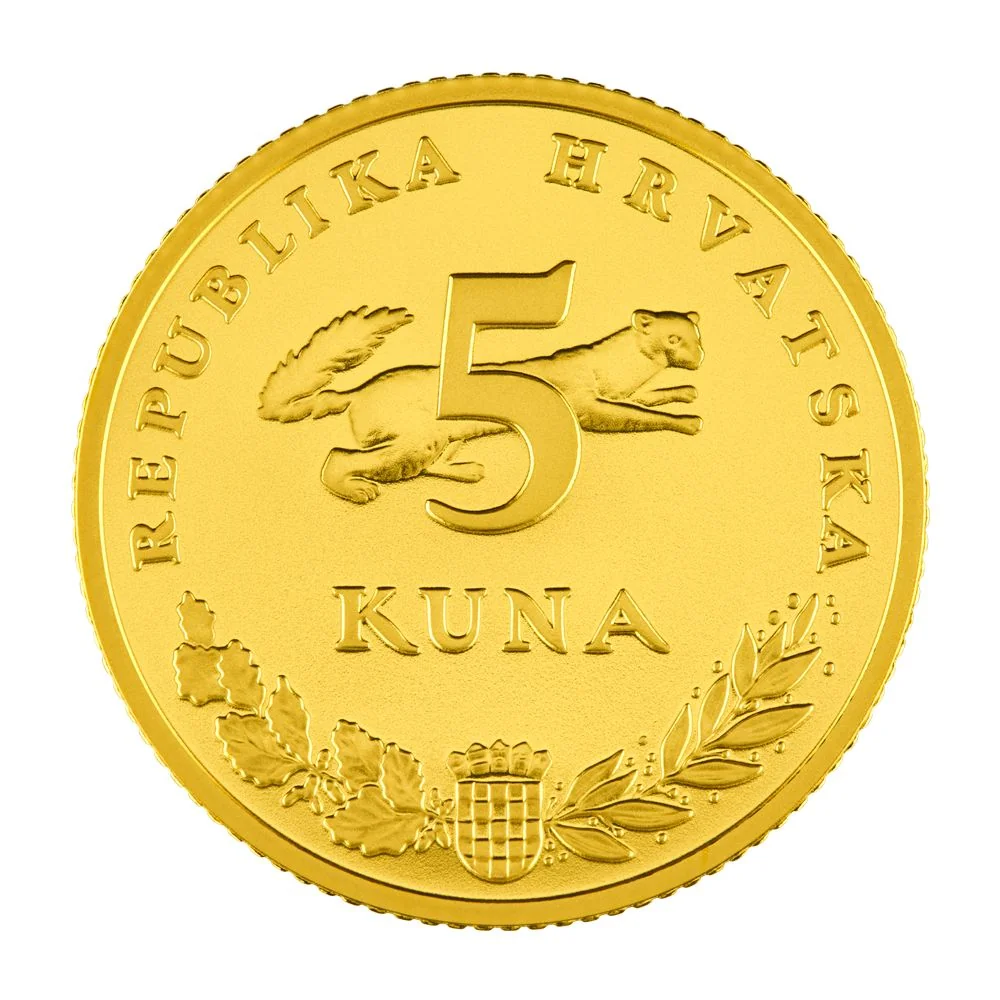
A marten runs right, with "5 KUNA" on its body. "REPUBLIKA HRVATSKA" arcs above, and the national coat of arms below is flanked by a stylized laurel twig on the right and an oak sprig on the left.
Inscription:
REPUBLIKA HRVATSKA
5
KUNA
5
KUNA
Translation:
Republic of Croatia
5
Kuna
5
Kuna
Script: Latin
Language: Croatian
Engraver: Kuzma Kovačić
Reverse
Description:
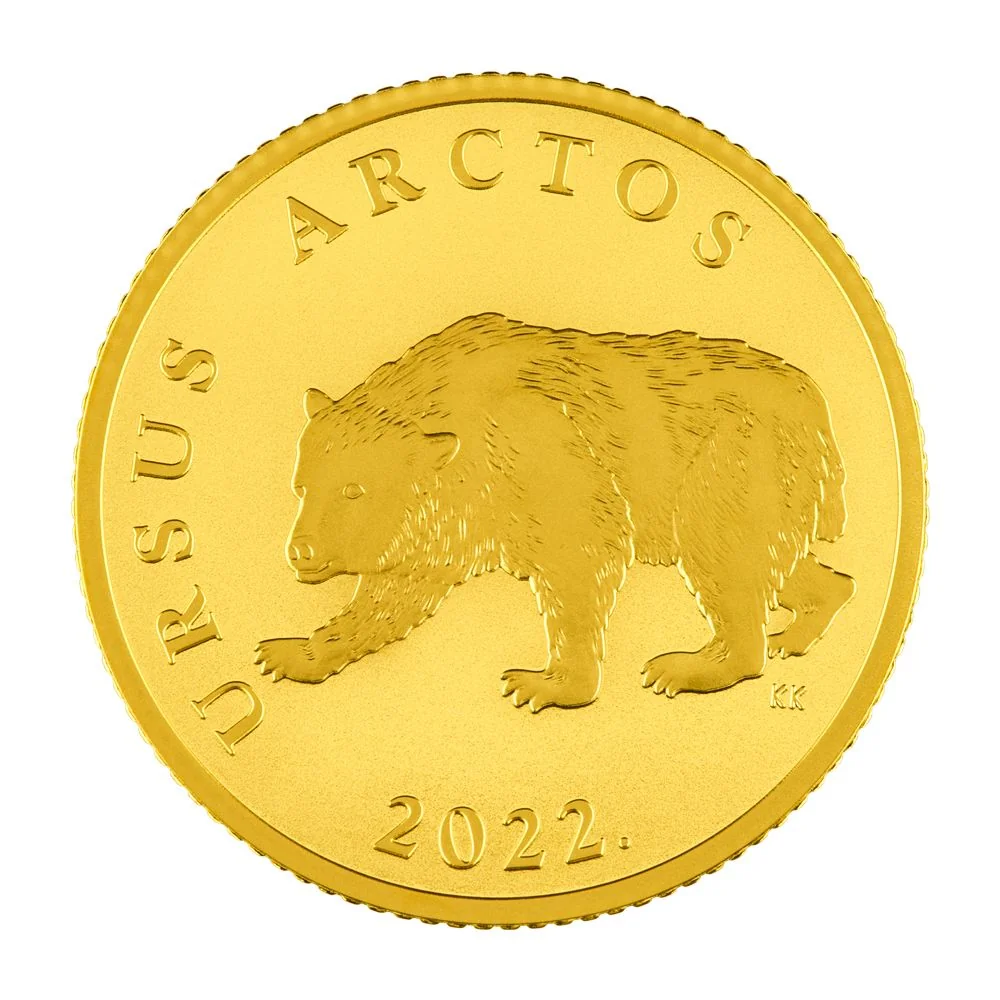
A brown bear faces left in the center, encircled by its Latin name (URSUS ARCTOS). The mint year (2000.) is below, with the signature KK to the right.
Inscription:
URSUS ARCTOS
KK
2022.
KK
2022.
Script: Latin
Engraver: Kuzma Kovačić
Edge
Reeded (100 grooves)
Categories
| Animal> Bear |
| Symbols> Coat of Arms |
Mints
| Name | Mark |
|---|---|
| Croatian Mint | — |
Mintings
| Year | Mint Mark | Mintage | Quality | Collection |
|---|---|---|---|---|
| 2022 | — | 2,022 |
Historical background
In 2022, Croatia was in the final and crucial stage of its journey toward adopting the euro, a process set for completion on January 1, 2023. The year was characterized by intensive technical and legal preparations to replace the national currency, the kuna (HRK), which had been stable since its introduction in 1994. The kuna was pegged to the euro via the ERM II mechanism since 2020, maintaining a central rate of 7.53450 kuna to the euro, which provided stability and minimized exchange rate risk during the transition period.
The domestic economic context for this change was shaped by significant inflationary pressures, largely imported due to the global energy crisis and supply chain disruptions following Russia's invasion of Ukraine. Annual inflation in Croatia averaged 10.8% in 2022, eroding purchasing power. However, the fixed exchange rate to the euro helped prevent a currency-driven inflationary spiral, and the prospect of euro adoption was seen as a long-term shield against currency volatility and a boost for investment and credit rating improvements. Public opinion remained divided, with concerns about potential price rounding and a sentimental attachment to the kuna, but support for the euro generally grew as the benefits for tourism, trade, and financial integration within the EU were emphasized.
Throughout the year, the Croatian National Bank, in close coordination with the European Central Bank and the European Commission, worked on logistical milestones. This included the production and secure distribution of euro banknotes and coins, the mass reprocessing of kuna cash by financial institutions, and a large-scale public information campaign to familiarize citizens with the conversion rate and new currency. By the end of 2022, all systems were in place for the "big switch," marking the end of an era for the kuna and positioning Croatia to enter the Eurozone as its 20th member, aiming for deeper economic integration and monetary stability.
The domestic economic context for this change was shaped by significant inflationary pressures, largely imported due to the global energy crisis and supply chain disruptions following Russia's invasion of Ukraine. Annual inflation in Croatia averaged 10.8% in 2022, eroding purchasing power. However, the fixed exchange rate to the euro helped prevent a currency-driven inflationary spiral, and the prospect of euro adoption was seen as a long-term shield against currency volatility and a boost for investment and credit rating improvements. Public opinion remained divided, with concerns about potential price rounding and a sentimental attachment to the kuna, but support for the euro generally grew as the benefits for tourism, trade, and financial integration within the EU were emphasized.
Throughout the year, the Croatian National Bank, in close coordination with the European Central Bank and the European Commission, worked on logistical milestones. This included the production and secure distribution of euro banknotes and coins, the mass reprocessing of kuna cash by financial institutions, and a large-scale public information campaign to familiarize citizens with the conversion rate and new currency. By the end of 2022, all systems were in place for the "big switch," marking the end of an era for the kuna and positioning Croatia to enter the Eurozone as its 20th member, aiming for deeper economic integration and monetary stability.
✨ Legendary