

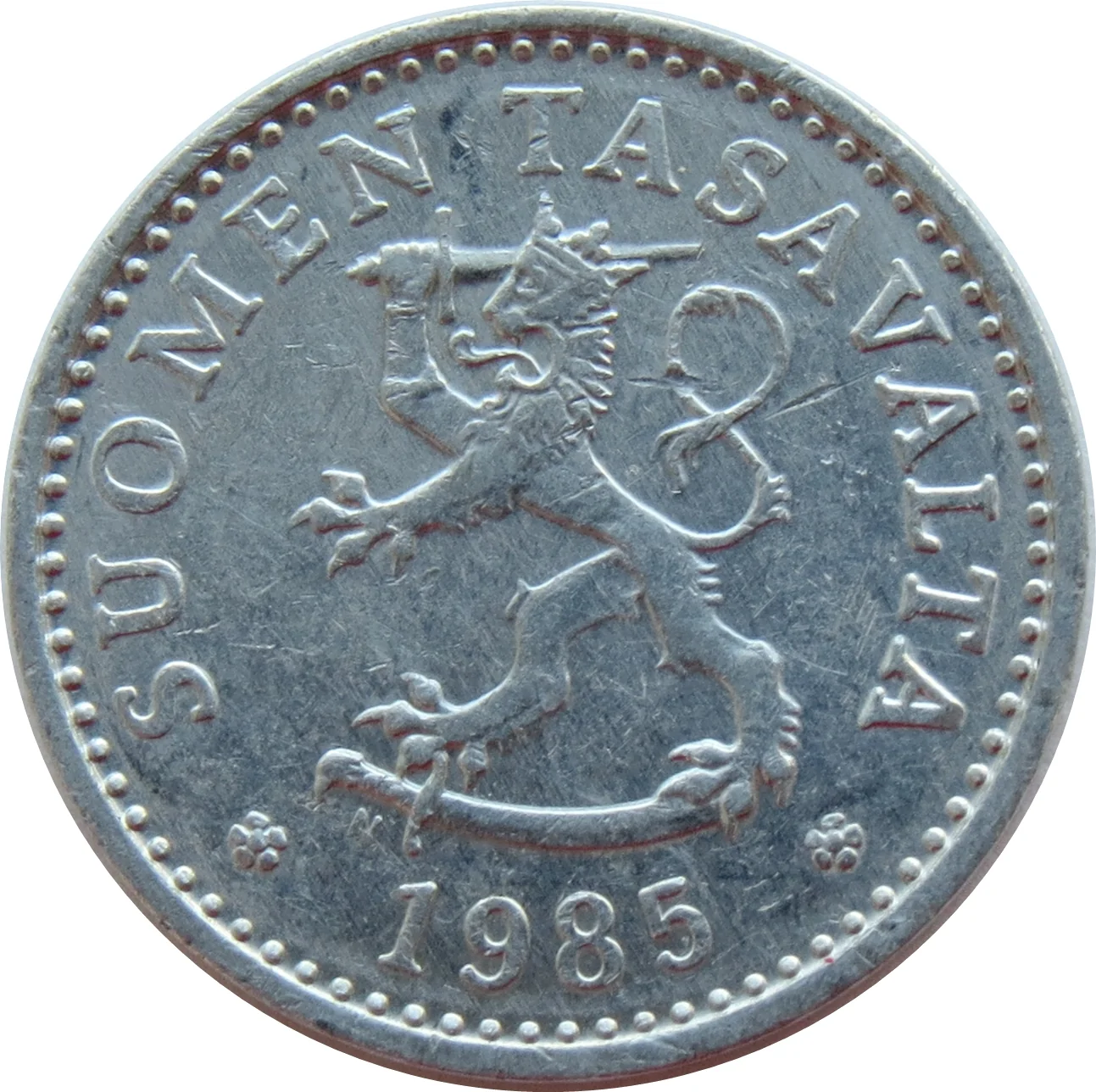
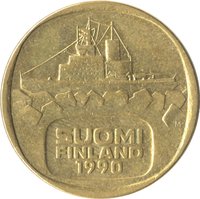
Obverse
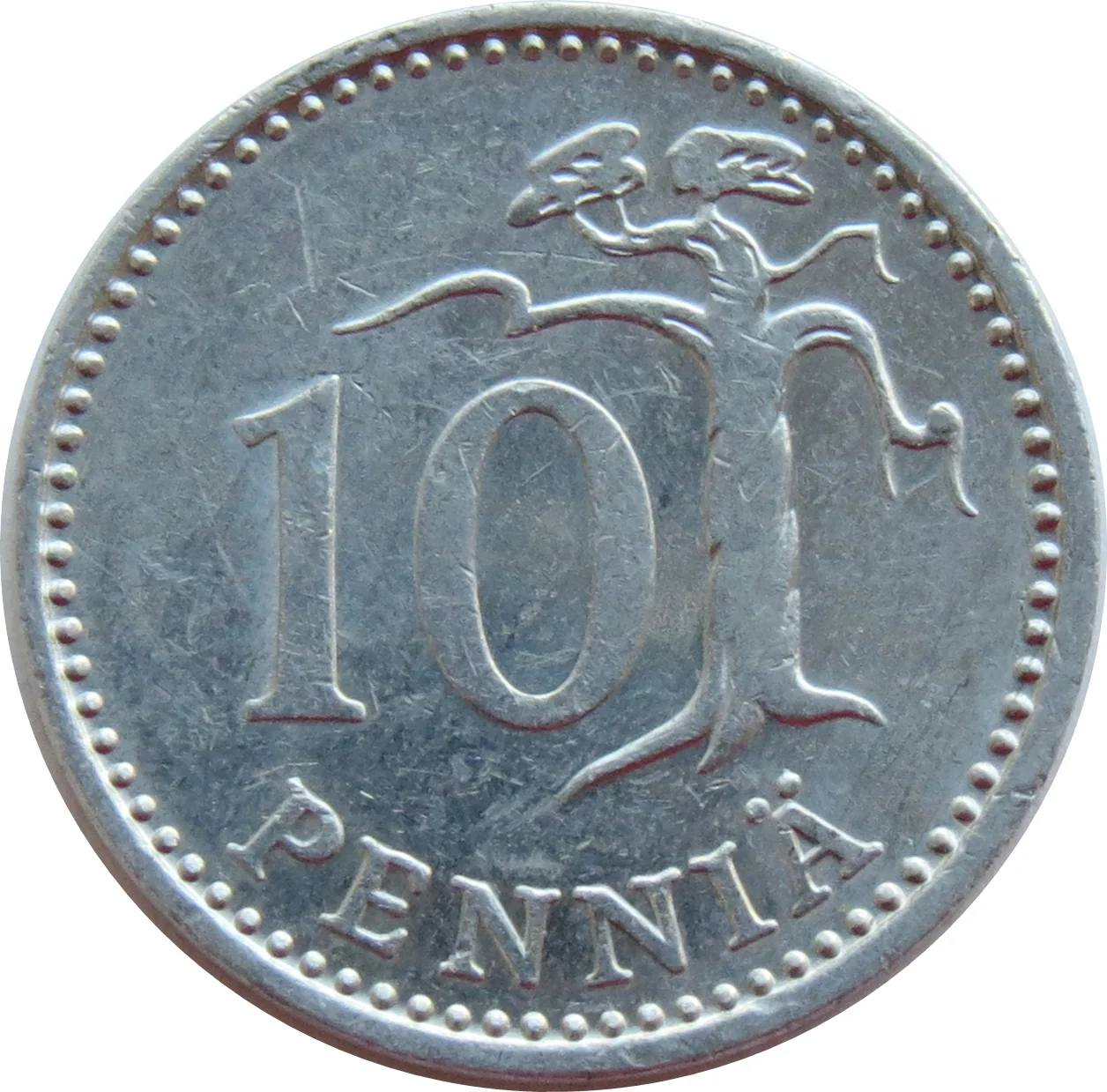
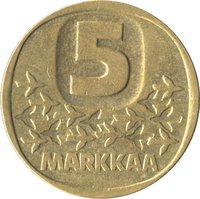
Reverse
Edge
Plain
Categories
| Object> Cold weapons |
| Animal> Feline |
| Plant> Tree |
| Symbols> Coat of Arms |
Mints
| Name | Mark |
|---|---|
| Mint of Finland | — |
Mintings
| Year | Mint Mark | Mintage | Quality | Collection |
|---|---|---|---|---|
| 1983 | — | 6,320,000 | ||
| 1984 | — | 20,061,000 | ||
| 1985 | — | 20,000,000 | ||
| 1986 | — | 15,000,000 | ||
| 1987 | — | 8,654,000 | ||
| 1988 | — | 23,197,000 | ||
| 1989 | — | 2,400,000 | ||
| 1990 | — | 2,254,000 |
Historical background
In 1983, Finland's currency situation was defined by a tightly managed exchange rate regime, with the Finnish markka (FIM) pegged to a trade-weighted currency basket. This basket, introduced in 1977, primarily consisted of the currencies of Finland's major trading partners, heavily weighted towards the Soviet Union (due to significant bilateral trade) and Western European nations like West Germany. The Bank of Finland actively intervened in foreign exchange markets to maintain the peg within a narrow band, a policy aimed at ensuring stability for the crucial export sector and controlling imported inflation.
This period was one of transition and underlying strain. While the peg provided short-term stability, the Finnish economy was grappling with the aftereffects of the oil crises, a loss of competitiveness, and rising inflation compared to its key Western partners. The fixed exchange rate, combined with widespread wage indexation, created a vicious cycle where devaluations to restore competitiveness would feed into higher domestic prices and new wage demands. Consequently, 1983 fell within a decade marked by several controlled devaluations of the markka, the most recent major one occurring in 1982.
Looking ahead, the pressures within this system were mounting. The structure of trade was gradually shifting westward, diminishing the relevance of the Soviet-weighted basket, and the increasing integration of European financial markets made capital controls harder to maintain. The year 1983 thus represented the latter phase of the rigid pegged system, setting the stage for the gradual liberalization and eventual float of the markka that would follow in the late 1980s and early 1990s as Finland moved closer to European integration.
This period was one of transition and underlying strain. While the peg provided short-term stability, the Finnish economy was grappling with the aftereffects of the oil crises, a loss of competitiveness, and rising inflation compared to its key Western partners. The fixed exchange rate, combined with widespread wage indexation, created a vicious cycle where devaluations to restore competitiveness would feed into higher domestic prices and new wage demands. Consequently, 1983 fell within a decade marked by several controlled devaluations of the markka, the most recent major one occurring in 1982.
Looking ahead, the pressures within this system were mounting. The structure of trade was gradually shifting westward, diminishing the relevance of the Soviet-weighted basket, and the increasing integration of European financial markets made capital controls harder to maintain. The year 1983 thus represented the latter phase of the rigid pegged system, setting the stage for the gradual liberalization and eventual float of the markka that would follow in the late 1980s and early 1990s as Finland moved closer to European integration.
🌱 Very Common