

20 rupees – Nepal
Add to wishlist
Non-circulating coins
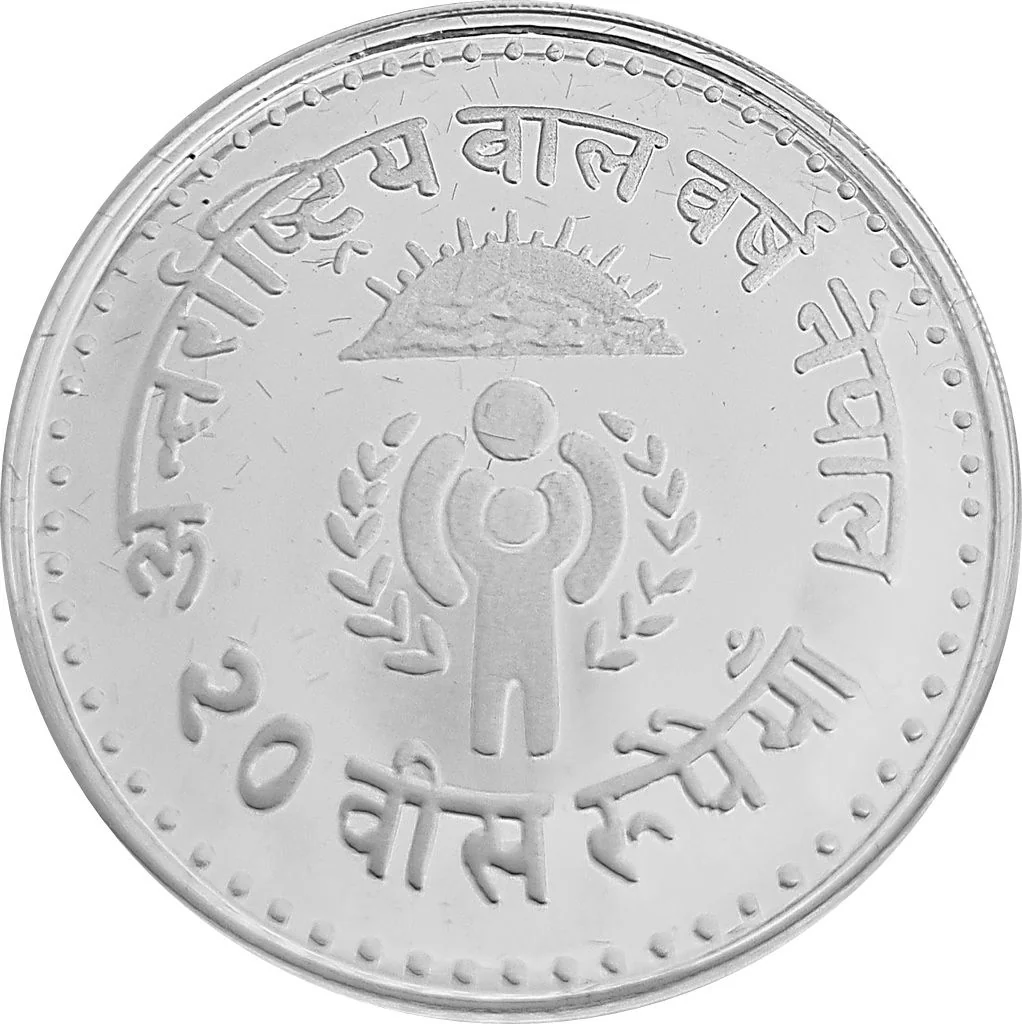
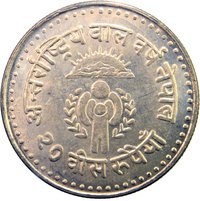
Commemoration: International Year of the Child
Nepal
Context
Year: 1979
Vikram Samvat Year:: 2036
Issuer: Nepal
Ruler: Birendra Bir Bikram Shah
Currency:
(since 1932)
Total mintage: 1,000
Material
References
KM: #
Numista: #328090
Value
Exchange value: 20 NPR
Bullion value: $34.80
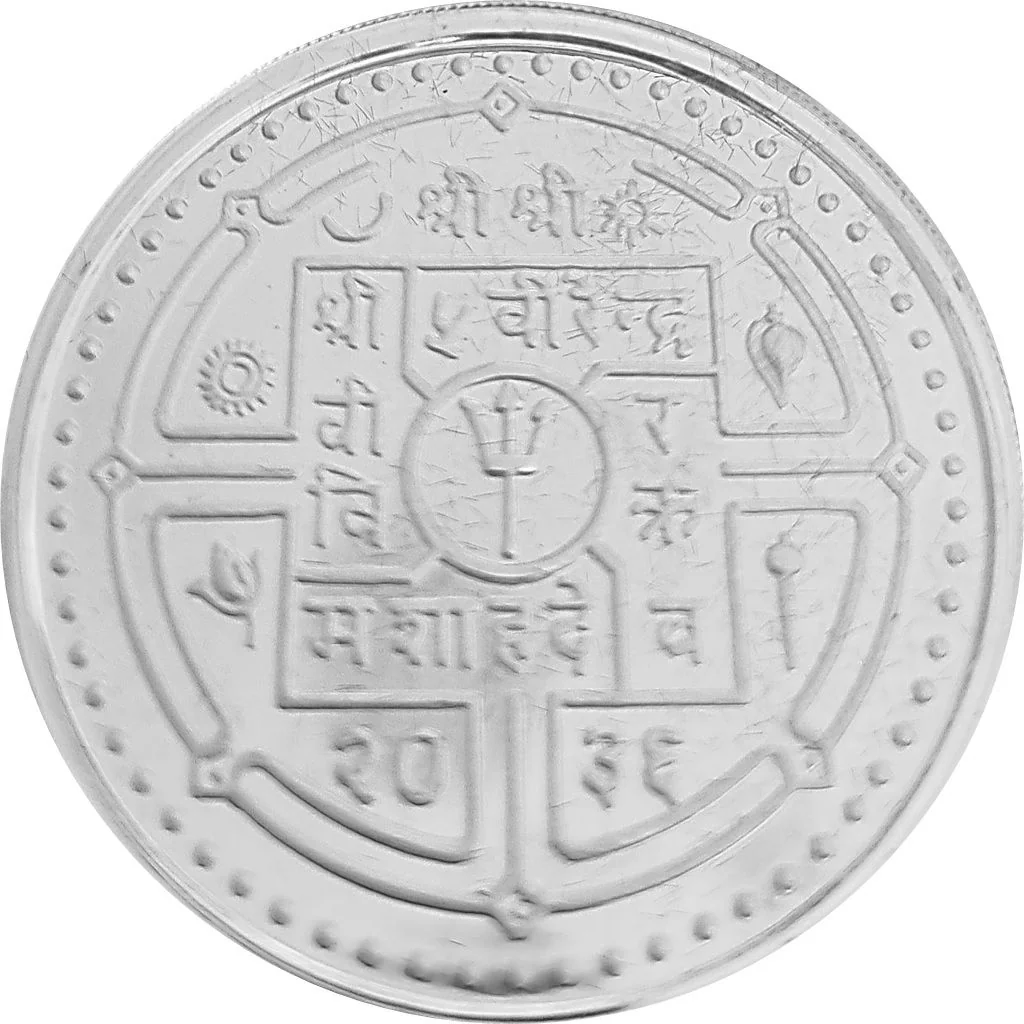
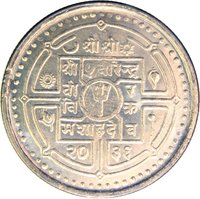
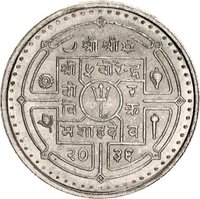
Obverse
Description:
Classic style
Reverse
Description:
Child Year Emblem
Edge
Reeded
Categories
| Organization> UNICEF |
Mints
| Name | Mark |
|---|---|
| Singapore Mint | — |
Mintings
| Year | Mint Mark | Mintage | Quality | Collection |
|---|---|---|---|---|
| 1979 | — | 1,000 | Proof |
Historical background
In 1979, Nepal's currency situation was characterized by a fixed exchange rate regime pegged to the Indian rupee (INR), a legacy of the 1960 Treaty of Trade and Transit. This peg was maintained at a rate of NPR 1.60 = INR 1, creating a de facto currency board system where the Nepalese rupee's value was directly tied to its much larger neighbor's economy. This arrangement facilitated stable trade and cross-border transactions, which were vital for Nepal's landlocked economy, but it also meant Nepal effectively imported India's monetary policy and inflation trends, limiting its own independent macroeconomic tools.
Economically, the period was one of transition and mounting pressure. The fixed peg, while ensuring stability, began to reveal strains as Nepal's economic structure diverged from India's. A growing trade deficit, fueled by increasing imports and limited export diversification, was a persistent concern. Furthermore, the system required sufficient reserves of Indian currency to maintain convertibility, creating vulnerability. The state-led development model of the Panchayat era, coupled with a still predominantly agricultural economy, meant foreign exchange earnings from tourism and remittances were not yet significant enough to dramatically alter the balance.
Politically, 1979 was a year of significant unrest, with widespread pro-democracy protests leading to a national referendum announced for the following year. This political instability cast a shadow over economic management and complicated any potential reforms to the currency system. While the fixed peg remained firmly in place throughout the year, the underlying economic pressures and political upheaval set the stage for future monetary reforms. These would eventually culminate in a major shift in the early 1990s, when Nepal moved to a peg against a basket of currencies and established a more independent central banking framework following the restoration of multi-party democracy.
Economically, the period was one of transition and mounting pressure. The fixed peg, while ensuring stability, began to reveal strains as Nepal's economic structure diverged from India's. A growing trade deficit, fueled by increasing imports and limited export diversification, was a persistent concern. Furthermore, the system required sufficient reserves of Indian currency to maintain convertibility, creating vulnerability. The state-led development model of the Panchayat era, coupled with a still predominantly agricultural economy, meant foreign exchange earnings from tourism and remittances were not yet significant enough to dramatically alter the balance.
Politically, 1979 was a year of significant unrest, with widespread pro-democracy protests leading to a national referendum announced for the following year. This political instability cast a shadow over economic management and complicated any potential reforms to the currency system. While the fixed peg remained firmly in place throughout the year, the underlying economic pressures and political upheaval set the stage for future monetary reforms. These would eventually culminate in a major shift in the early 1990s, when Nepal moved to a peg against a basket of currencies and established a more independent central banking framework following the restoration of multi-party democracy.
✨ Legendary