

20 rupees (Census of Population and Housing) – Sri Lanka
Add to wishlist
Circulating commemorative coins
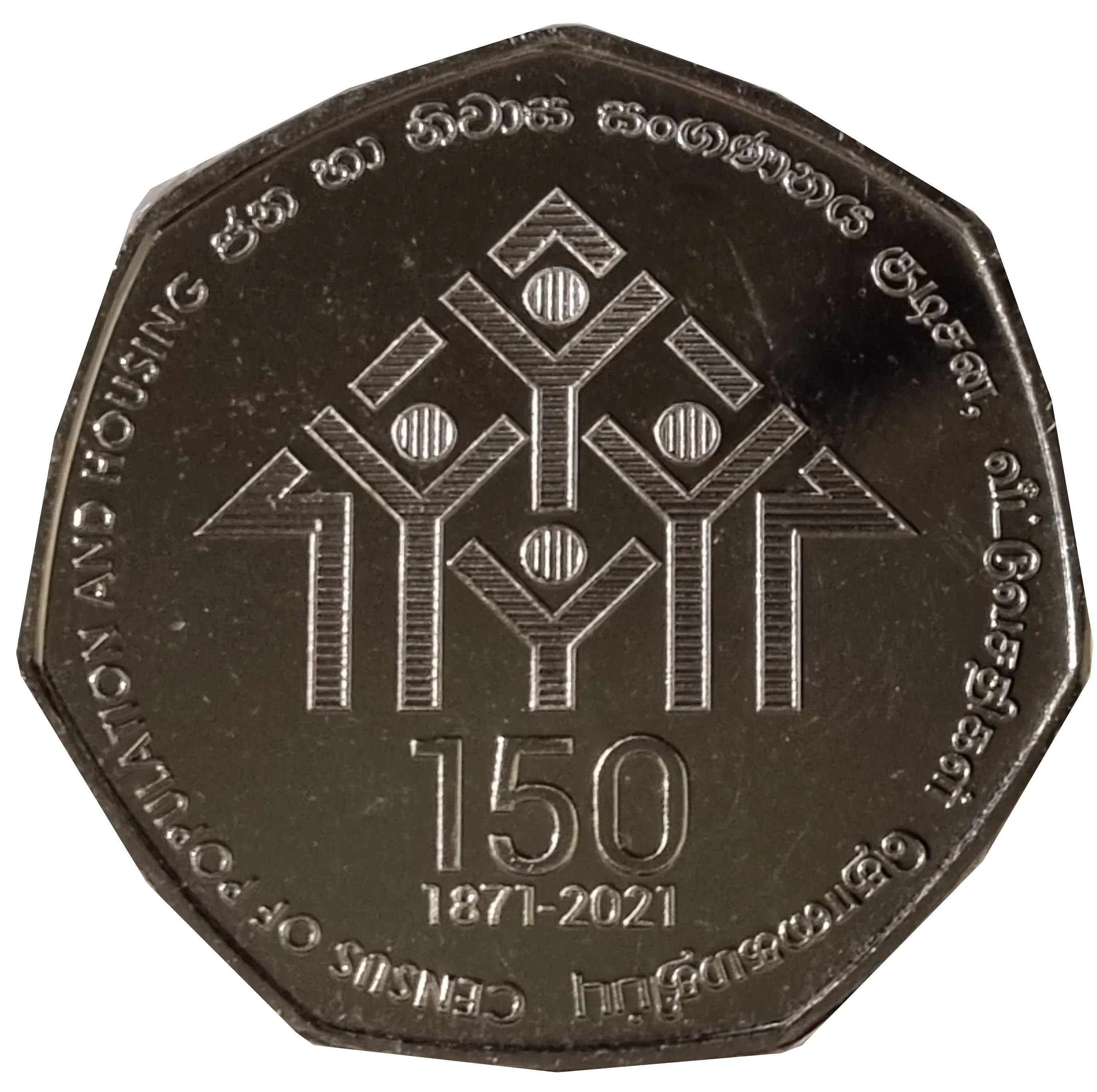
Commemoration: 150th Anniversary of Census of Population and Housing
Sri Lanka
Context
Material
References
KM: #
Numista: #328000
Value
Exchange value: 20 LKR
Obverse
Description:
Census of Population and Housing 150th anniversary logo (1871–2021). Text encircles it in English, Sinhala (ජන හා නිවාස සංගණනය), and Tamil (குடிசன, வீட்டுவசதிகள் தொகைமதிப்பு).
Inscription:
ජන හා නිවාස සංගණනය
குடிசன வீட்டுவசதிகள் தொகைமதிப்பு
CENSUS OF POPULATION AND HOUSING
150
1871-2021
குடிசன வீட்டுவசதிகள் தொகைமதிப்பு
CENSUS OF POPULATION AND HOUSING
150
1871-2021
Translation:
CENSUS OF POPULATION AND HOUSING
150
1871-2021
150
1871-2021
Reverse
Description:
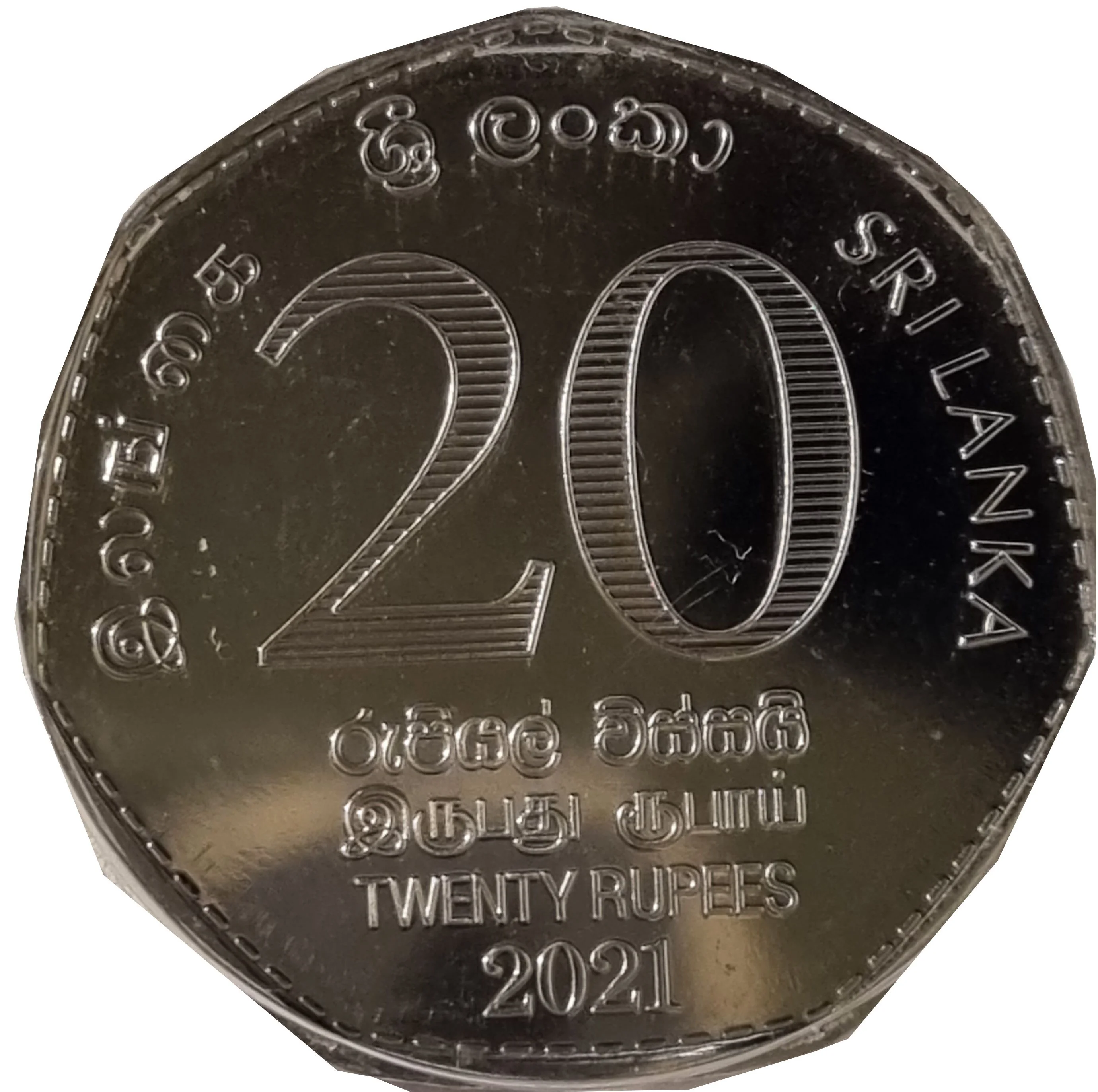
Large numeral 20 with "රුපියල් විස්සයි," "இருபது ரூபாய்," and "TWENTY RUPEES." Peripheral text: "ශ්රී ලංකා," "இலங்கை," "SRI LANKA." Issue year 2021 at bottom.
Inscription:
ශ්රී ලංකා
இலங்கை
SRI LANKA
20
රුපියල් විස්සයි
இருபது ரூபாய்
TWENTY RUPEES
2021
இலங்கை
SRI LANKA
20
රුපියල් විස්සයි
இருபது ரூபாய்
TWENTY RUPEES
2021
Translation:
Sri Lanka
Sri Lanka
SRI LANKA
20
Twenty Rupees
Twenty Rupees
TWENTY RUPEES
2021
Sri Lanka
SRI LANKA
20
Twenty Rupees
Twenty Rupees
TWENTY RUPEES
2021
Edge
Plain
Mintings
| Year | Mint Mark | Mintage | Quality | Collection |
|---|---|---|---|---|
| 2021 | — | 2,000,000 |
Historical background
In 2021, Sri Lanka’s currency situation deteriorated into a severe crisis, marked by a critical shortage of foreign exchange reserves. The government’s 2019 tax cuts, combined with the devastating impact of the COVID-19 pandemic on tourism and remittances, had drastically reduced the country’s dollar inflows. Meanwhile, high foreign debt repayments and a controversial ban on chemical fertilizers that hurt agricultural exports continued to drain reserves. By mid-2021, reserves had plummeted to levels insufficient to cover even two months of imports, leading to shortages of essential goods like fuel, medicine, and food.
Authorities attempted to defend the Sri Lankan Rupee (LKR) through strict import controls and a fixed exchange rate peg of approximately 200 LKR to the US dollar. However, this official rate became unsustainable, creating a vast disparity with the thriving black market where the rupee traded significantly weaker. The Central Bank of Sri Lanka’s (CBSL) efforts to prop up the currency by selling dollars further depleted reserves, while money printing to finance the fiscal deficit fueled domestic inflation. This policy mix created a classic balance of payments crisis, eroding investor confidence and leading to credit rating downgrades that locked the country out of international capital markets.
The situation culminated in a decisive moment in March 2022, when the CBSL finally allowed the rupee to float, leading to a dramatic devaluation. While this official action fell in 2022, it was the direct and inevitable result of the unsustainable currency pressures that had built throughout 2021. The year therefore set the stage for Sri Lanka’s declaration of sovereign default in April 2022, as the depleted reserves and unmanageable debt made it impossible to maintain currency stability or meet international obligations.
Authorities attempted to defend the Sri Lankan Rupee (LKR) through strict import controls and a fixed exchange rate peg of approximately 200 LKR to the US dollar. However, this official rate became unsustainable, creating a vast disparity with the thriving black market where the rupee traded significantly weaker. The Central Bank of Sri Lanka’s (CBSL) efforts to prop up the currency by selling dollars further depleted reserves, while money printing to finance the fiscal deficit fueled domestic inflation. This policy mix created a classic balance of payments crisis, eroding investor confidence and leading to credit rating downgrades that locked the country out of international capital markets.
The situation culminated in a decisive moment in March 2022, when the CBSL finally allowed the rupee to float, leading to a dramatic devaluation. While this official action fell in 2022, it was the direct and inevitable result of the unsustainable currency pressures that had built throughout 2021. The year therefore set the stage for Sri Lanka’s declaration of sovereign default in April 2022, as the depleted reserves and unmanageable debt made it impossible to maintain currency stability or meet international obligations.
🌱 Fairly Common