

5 dinars (Habib Bourguiba's death) – Tunisia
Add to wishlist
Circulating commemorative coins
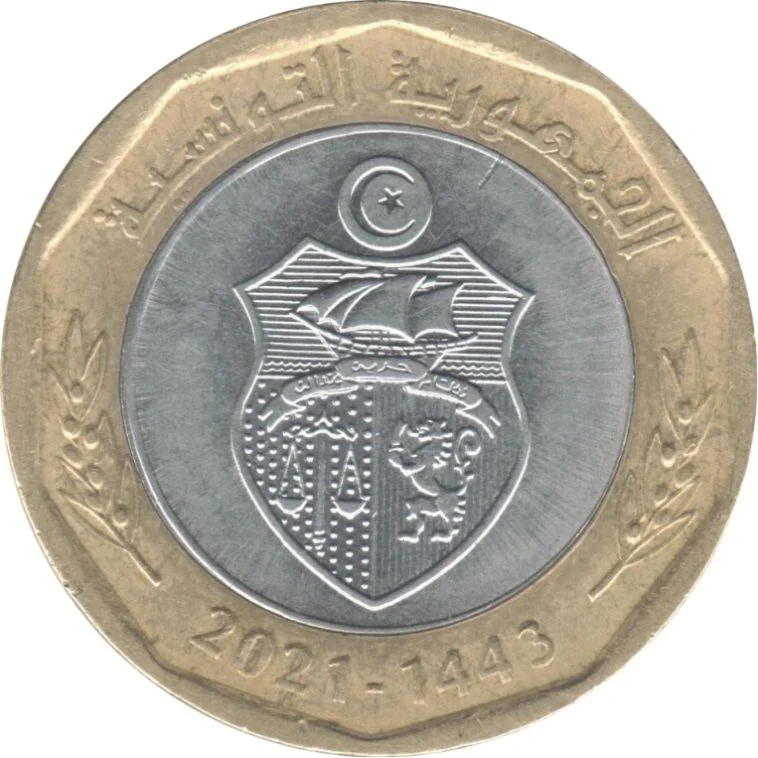
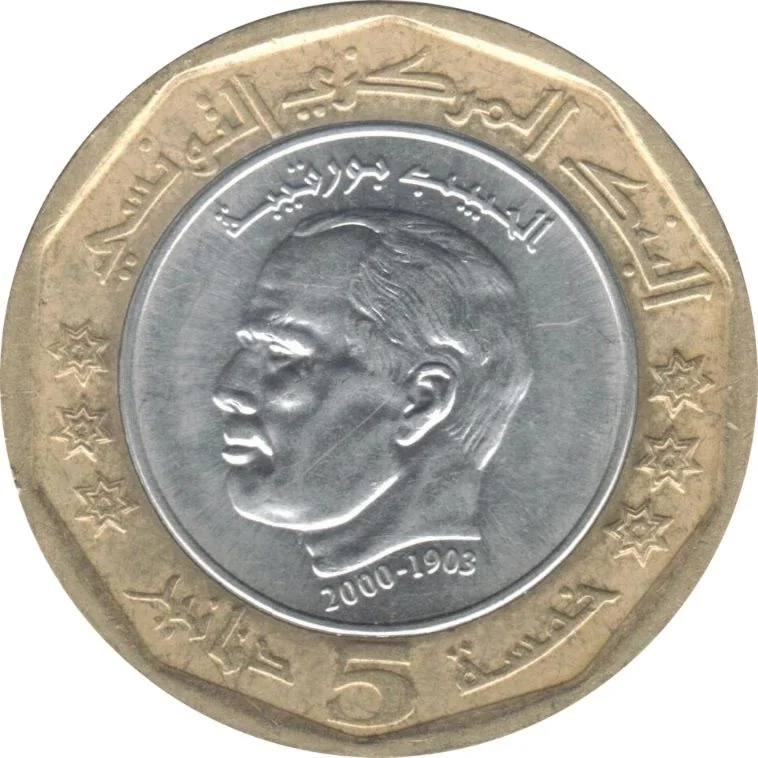
Commemoration: 22nd anniversary of the death of President Habib Bourguiba
Tunisia
Context
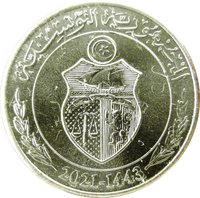
Year: 2021
Islamic (Hijri) Year:: 1443
Issuer: Tunisia
Period:
(since 1957)
Currency:
(since 1958)
Total mintage: 25,000,000
Material
References
KM: #
Numista: #327288
Value
Exchange value: 5 TND
Obverse
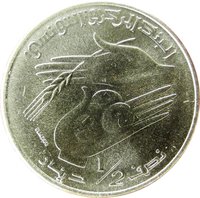
Reverse
Edge
Alternatively reeded and smooth in 6 sections.
Categories
| Person> Politician |
| Event> Death anniversary |
| Symbols> Coat of Arms |
Mintings
| Year | Mint Mark | Mintage | Quality | Collection |
|---|---|---|---|---|
| 2021 | — | 25,000,000 |
Historical background
In 2021, Tunisia faced a severe and protracted currency crisis, marked by a significant depreciation of the Tunisian dinar (TND) and critical shortages of foreign exchange reserves. The dinar had been under managed float for years, but pressures intensified due to longstanding structural issues: a large and inefficient public sector, weak economic growth, high unemployment, and chronic trade and budget deficits. These problems were severely exacerbated by the COVID-19 pandemic, which devastated the vital tourism sector and disrupted supply chains, leading to a sharp decline in remittances and exports. Consequently, the dinar lost approximately 8% of its value against major currencies in 2021, continuing a multi-year decline that eroded purchasing power and increased the cost of essential imports like food, medicine, and energy.
The currency depreciation directly fueled a sharp rise in inflation, which climbed to over 6% by the end of the year, squeezing household incomes and triggering social unrest. The Central Bank of Tunisia's foreign currency reserves fell to precarious levels, covering only a few months of imports, prompting strict import restrictions and capital controls to prevent a full-blown balance of payments crisis. Businesses struggled to access foreign currency to pay for imported raw materials and equipment, causing production delays and further hampering economic recovery. This environment created a cycle where economic stagnation and political instability reinforced each other, discouraging the foreign investment desperately needed to stabilize the economy.
Underlying the economic turmoil was a profound political deadlock following President Kais Saied's suspension of parliament and assumption of executive powers in July 2021. This political crisis stalled negotiations with the International Monetary Fund (IMF) for a crucial bailout loan, which was seen as essential to restore international confidence, unlock other financing, and support necessary reforms. Without an IMF agreement and with global credit ratings downgraded, Tunisia's access to international debt markets became more costly and limited. Thus, the 2021 currency situation was not merely a financial issue but a symptom of a deeper political-economic impasse, setting the stage for even greater challenges in 2022.
The currency depreciation directly fueled a sharp rise in inflation, which climbed to over 6% by the end of the year, squeezing household incomes and triggering social unrest. The Central Bank of Tunisia's foreign currency reserves fell to precarious levels, covering only a few months of imports, prompting strict import restrictions and capital controls to prevent a full-blown balance of payments crisis. Businesses struggled to access foreign currency to pay for imported raw materials and equipment, causing production delays and further hampering economic recovery. This environment created a cycle where economic stagnation and political instability reinforced each other, discouraging the foreign investment desperately needed to stabilize the economy.
Underlying the economic turmoil was a profound political deadlock following President Kais Saied's suspension of parliament and assumption of executive powers in July 2021. This political crisis stalled negotiations with the International Monetary Fund (IMF) for a crucial bailout loan, which was seen as essential to restore international confidence, unlock other financing, and support necessary reforms. Without an IMF agreement and with global credit ratings downgraded, Tunisia's access to international debt markets became more costly and limited. Thus, the 2021 currency situation was not merely a financial issue but a symptom of a deeper political-economic impasse, setting the stage for even greater challenges in 2022.
🌟 Uncommon