

1 rupee – Nepal
Add to wishlist
Nepal
Context
Material
References
Numista: #325218
Value
Exchange value: 1 NPR
Obverse
Description:
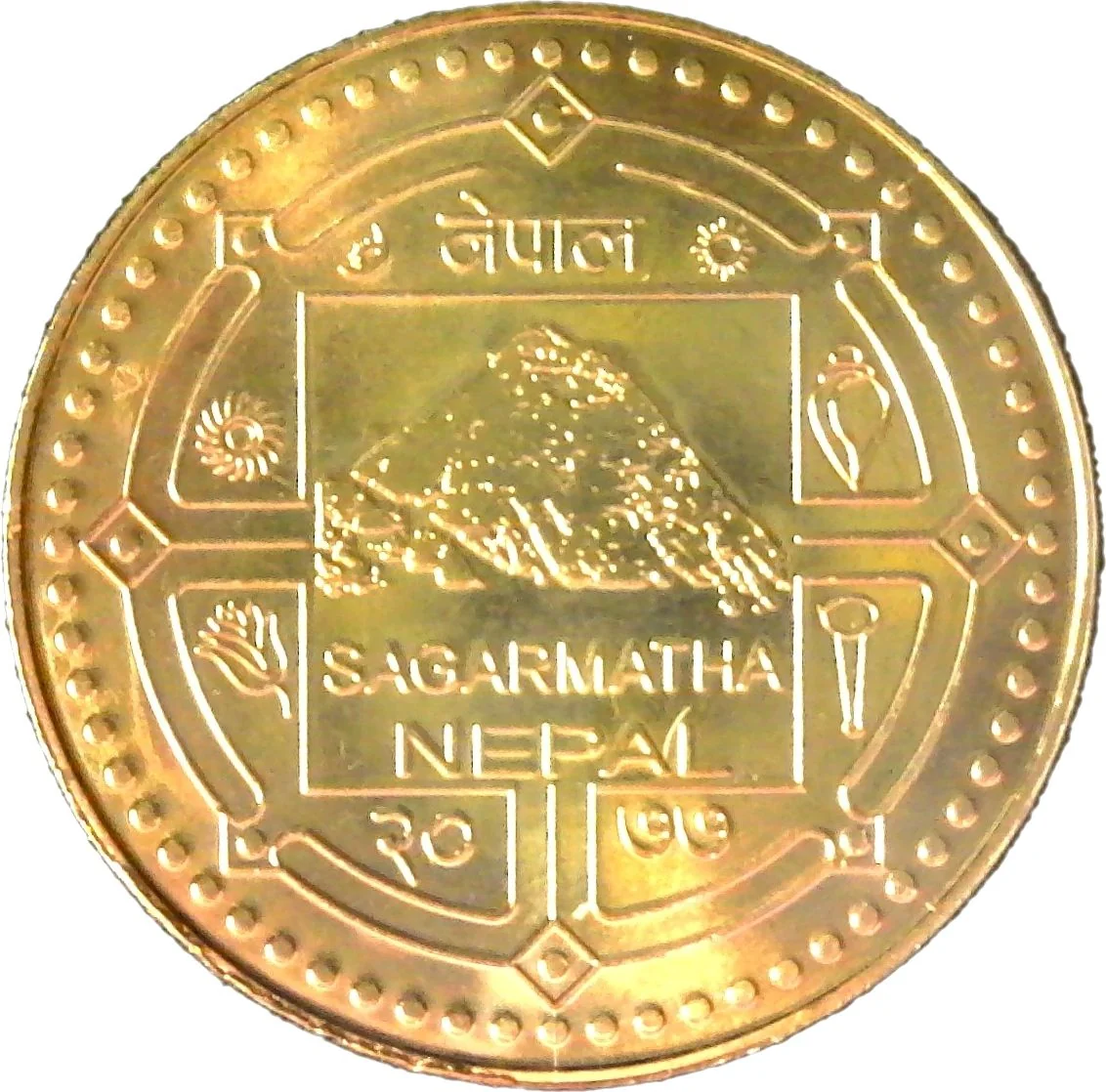
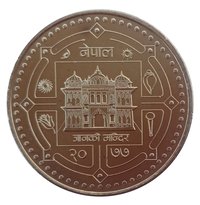
Mount Everest in the center. Above it, "Nepal" in Devanagari. Below the mountain, its Nepali name in Latin script, then "Nepal." The Vikram Samvat year is at the bottom.
Inscription:
नेपाल
Sagarmatha
Nepal
१०७७
Sagarmatha
Nepal
१०७७
Translation:
Nepal
Sagarmatha
Nepal
1077
Sagarmatha
Nepal
1077
Scripts: Devanagari, Latin
Reverse
Description:
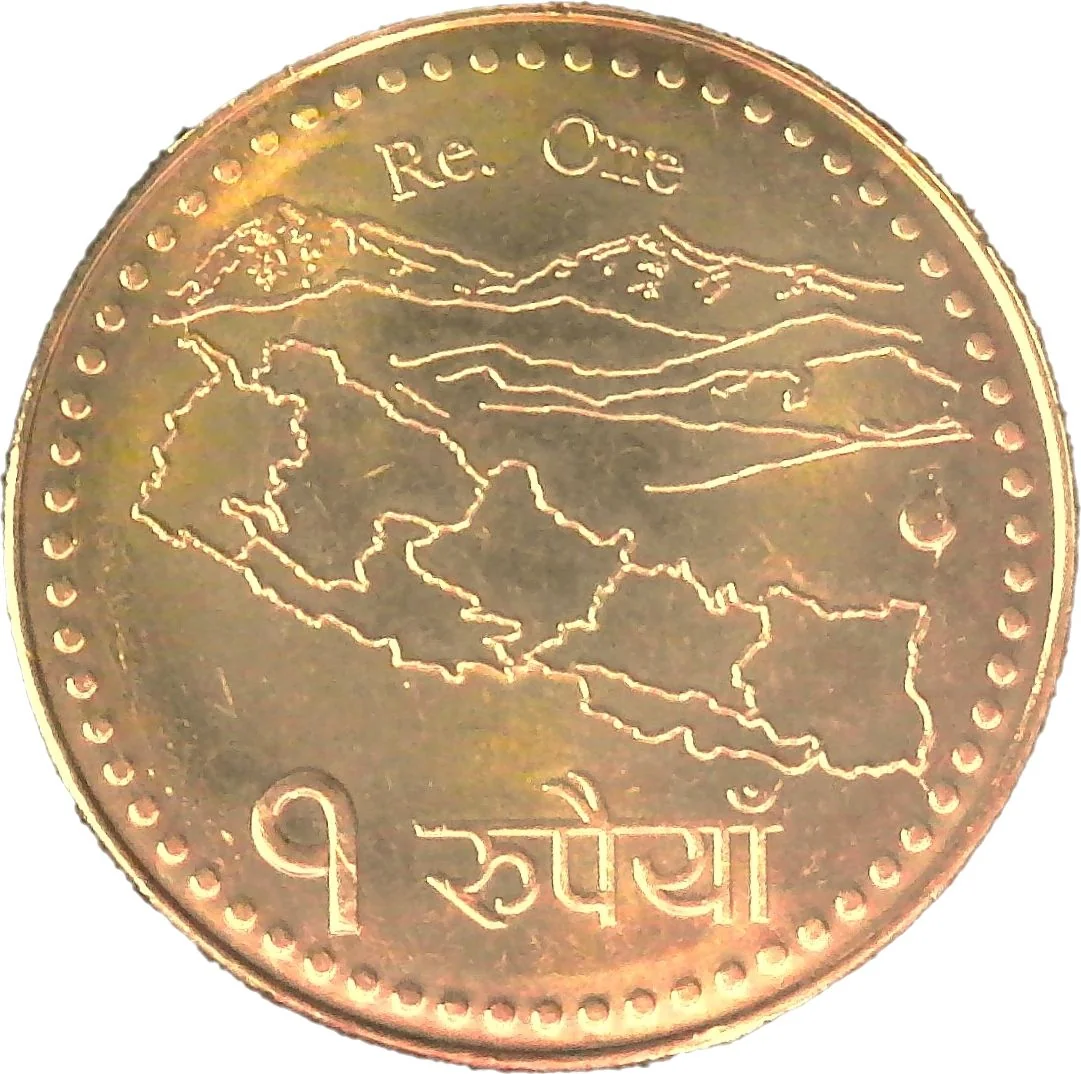
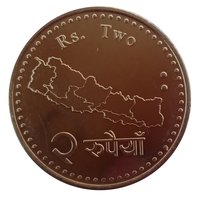
Nepal's outline, divided into states, with mountains behind it. English text above, Devanagari below. A Braille dot (for 1) is to the right.
Inscription:
Rs. One
१ रुपैया
१ रुपैया
Translation:
One Rupee
Edge
Plain
Mints
| Name | Mark |
|---|---|
| Mint of Poland | — |
Mintings
| Year | Mint Mark | Mintage | Quality | Collection |
|---|---|---|---|---|
| 2020 | — | — |
Historical background
In 2020, Nepal's currency situation was primarily shaped by the severe economic shock of the COVID-19 pandemic. The nationwide lockdown, imposed from late March, brought economic activity to a near standstill, crippling key foreign currency earners like tourism, remittances, and trade. This led to a sharp contraction in the supply of US dollars and other hard currencies, putting significant pressure on the Nepalese Rupee (NPR). Despite being pegged to the Indian Rupee (INR), which itself faced depreciation pressures, Nepal Rastra Bank (NRB) had to actively intervene in the foreign exchange market and impose strict import restrictions to conserve dwindling foreign exchange reserves.
The central bank's response was multifaceted. To stem the outflow of dollars, NRB tightened letters of credit for importing non-essential and luxury goods, including vehicles, cosmetics, and certain foods. Simultaneously, it encouraged remittance inflows through formal channels by offering incentives to banks and migrants. These measures, while necessary for stability, had the side effect of slowing business activity and contributing to potential shortages of goods. By mid-2020, the gross foreign exchange reserves, though still adequate for about 10 months of import cover, showed a declining trend, raising concerns about the peg's sustainability if the crisis prolonged.
Overall, the year highlighted the vulnerability of Nepal's small, import-dependent, and remittance-reliant economy to external shocks. The currency situation in 2020 was a story of managed stability achieved through defensive controls rather than organic market strength. It underscored the critical challenge of maintaining external sector stability while facing a dramatic fall in income from tourism and potential fluctuations in remittance flows from millions of Nepalis working abroad, whose jobs were also threatened by the global pandemic.
The central bank's response was multifaceted. To stem the outflow of dollars, NRB tightened letters of credit for importing non-essential and luxury goods, including vehicles, cosmetics, and certain foods. Simultaneously, it encouraged remittance inflows through formal channels by offering incentives to banks and migrants. These measures, while necessary for stability, had the side effect of slowing business activity and contributing to potential shortages of goods. By mid-2020, the gross foreign exchange reserves, though still adequate for about 10 months of import cover, showed a declining trend, raising concerns about the peg's sustainability if the crisis prolonged.
Overall, the year highlighted the vulnerability of Nepal's small, import-dependent, and remittance-reliant economy to external shocks. The currency situation in 2020 was a story of managed stability achieved through defensive controls rather than organic market strength. It underscored the critical challenge of maintaining external sector stability while facing a dramatic fall in income from tourism and potential fluctuations in remittance flows from millions of Nepalis working abroad, whose jobs were also threatened by the global pandemic.
🌱 Fairly Common