

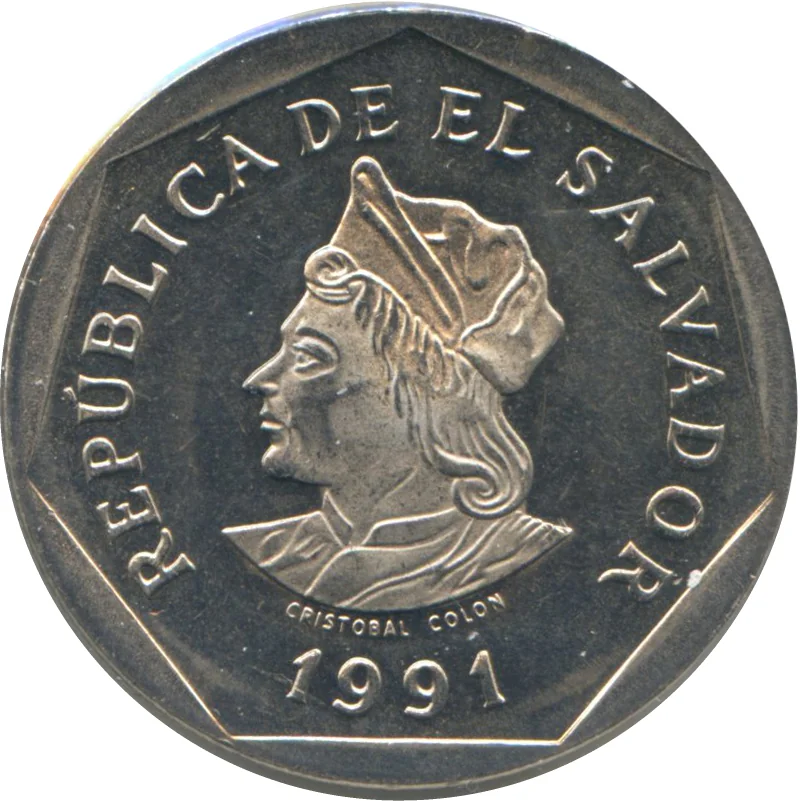
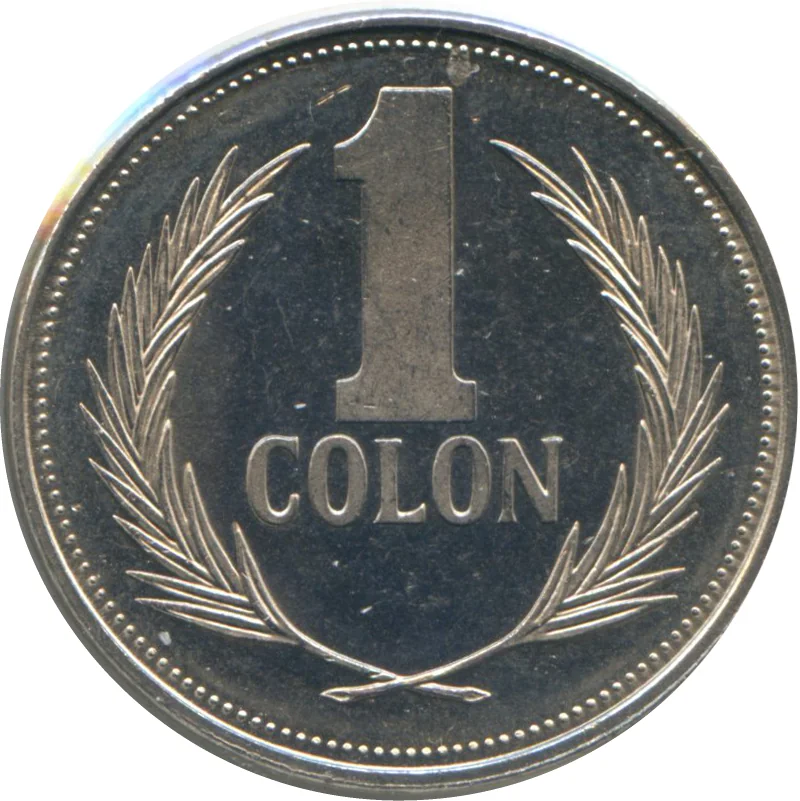
1 colón – El Salvador
Add to wishlist
El Salvador
Context
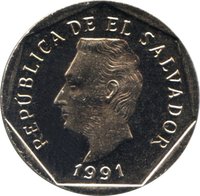
Year: 1991
Issuer: El Salvador
Issuing organization: Central Reserve Bank of El Salvador
Period:
(since 1841)
Currency:
(since 1892)
Demonetization: 1 January 2001
Material
References
KM: #
Numista: #10238
Value
Exchange value: 1 SVC
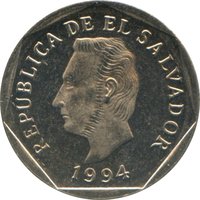
Obverse
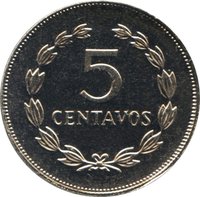
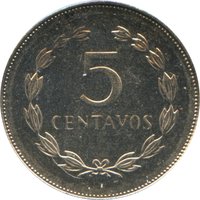
Reverse
Edge
Reeded
Mints
| Name | Mark |
|---|---|
| VDM Metals / Vereinigte Deutsche Metallwerke | — |
Mintings
| Year | Mint Mark | Mintage | Quality | Collection |
|---|---|---|---|---|
| 1991 | — | — |
Historical background
In 1991, El Salvador's currency situation was defined by a rigid dual-system, a legacy of economic instability and civil war. The official currency was the colón, issued by the Central Reserve Bank. However, it circulated alongside the US dollar, which had become a de facto parallel currency due to high inflation and a loss of public confidence in the colón during the 1980s. This unofficial dollarization was a market-driven response to economic turmoil, providing a stable store of value and medium of exchange, particularly for large transactions and savings, while the colón remained in use for everyday small purchases.
The government maintained a fixed exchange rate regime, pegging the colón to the US dollar at 8.75 colones per dollar. This peg, established in the late 1980s, was a cornerstone of economic stabilization efforts aimed at curbing hyperinflation and restoring monetary order. While successful in providing nominal stability, the fixed rate was often criticized for being overvalued. This overvaluation hurt the competitiveness of Salvadoran exports, exacerbated a growing trade deficit, and created persistent pressure on the country's foreign reserves as the central bank intervened to maintain the peg.
Thus, the 1991 currency landscape was one of managed stability masking underlying strains. The coexistence of the colón and dollar reflected a lack of full confidence in the national currency, while the fixed exchange rate imposed significant constraints on monetary policy and economic adjustment. This fragile equilibrium would persist throughout the 1990s, setting the stage for the formal and complete dollarization that would be abruptly adopted a decade later in 2001.
The government maintained a fixed exchange rate regime, pegging the colón to the US dollar at 8.75 colones per dollar. This peg, established in the late 1980s, was a cornerstone of economic stabilization efforts aimed at curbing hyperinflation and restoring monetary order. While successful in providing nominal stability, the fixed rate was often criticized for being overvalued. This overvaluation hurt the competitiveness of Salvadoran exports, exacerbated a growing trade deficit, and created persistent pressure on the country's foreign reserves as the central bank intervened to maintain the peg.
Thus, the 1991 currency landscape was one of managed stability masking underlying strains. The coexistence of the colón and dollar reflected a lack of full confidence in the national currency, while the fixed exchange rate imposed significant constraints on monetary policy and economic adjustment. This fragile equilibrium would persist throughout the 1990s, setting the stage for the formal and complete dollarization that would be abruptly adopted a decade later in 2001.
🌱 Common