

Fiji
Context
Material
Diameter: 22 mm
Weight: 3.24 g
Thickness: 1 mm
Shape: Round with a round hole
Composition: Copper-nickel
Technique: Milled
Alignment: Medal alignment
flip
References
KM: #Click to copy to clipboard14
Numista: #32396
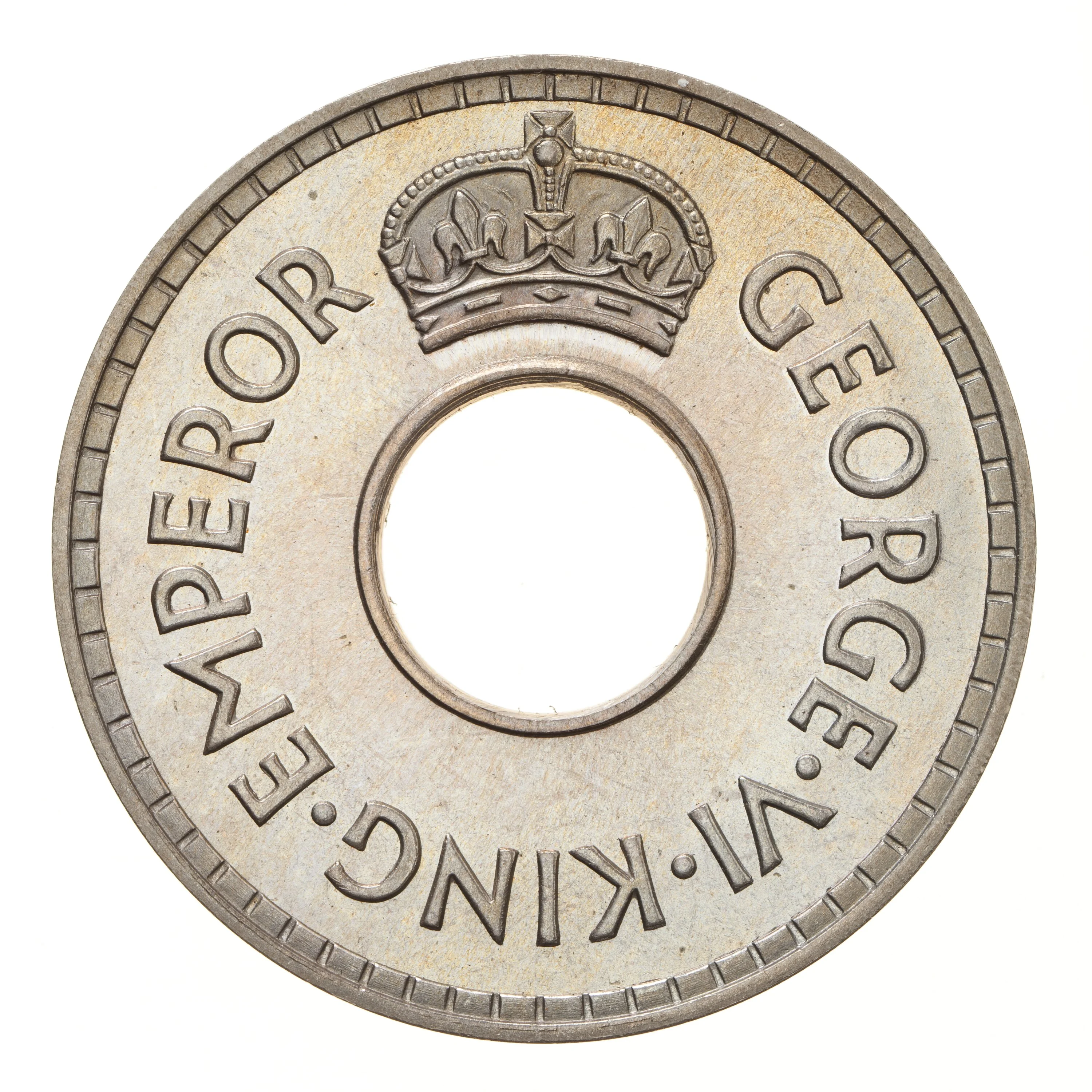
Obverse
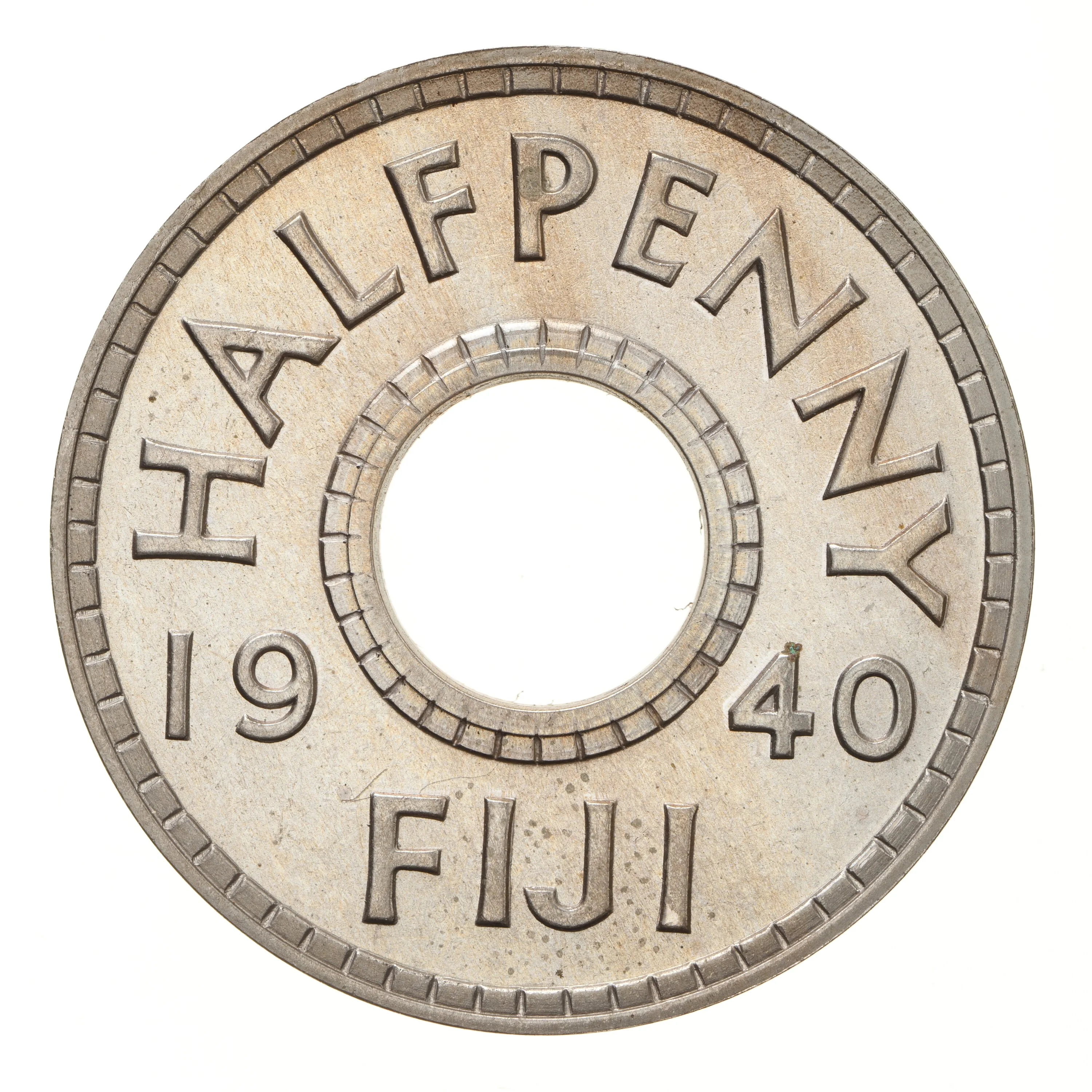
Reverse
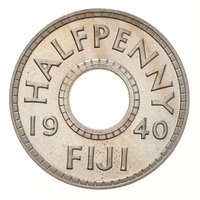
Description:
Date flanking center hole, denomination above.
Inscription:
HALFPENNY
1941
FIJI
1941
FIJI
Script: Latin
Edge
Plain
Mints
| Name | Mark |
|---|---|
| Royal Mint (Tower Hill) | — |
Mintings
| Year | Mint Mark | Mintage | Quality | Collection |
|---|---|---|---|---|
| 1940 | — | 24,000 | ||
| 1940 | — | — | Proof | |
| 1941 | — | 96,000 | ||
| 1941 | — | — | Proof |
Historical background
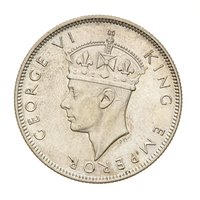
In 1940, Fiji's currency situation was firmly under the control of the British colonial administration, operating within the sterling area. The official currency was the Fiji pound (£F), which was pegged at par with the British pound sterling. This meant that banknotes and coins issued for Fiji could, in theory, be exchanged on a one-to-one basis with UK currency, ensuring monetary stability and facilitating trade with the Empire. The physical currency in circulation consisted of notes issued by the government and coins minted by the Royal Mint in London, featuring British symbolism and the profile of King George VI.
The economy was heavily geared towards supporting the Allied war effort following the outbreak of World War II. Sugar, Fiji's primary export, was sold to the United Kingdom under long-term contracts, generating sterling credits. This wartime context introduced strains, however, as imports were severely restricted due to shipping shortages and the diversion of resources to military needs. While the peg to sterling remained stable, the population began to experience inflation and shortages of consumer goods, as the currency's purchasing power was affected by the limited availability of imports.
Administratively, the currency was managed by the Fiji Board of Currency, established in 1934, which operated under the authority of the colonial government. There was no central bank; instead, the government held its sterling reserves in London, against which the local currency was issued. This system ensured convertibility but meant Fiji's money supply was directly tied to its sterling reserves and the economic policies of the United Kingdom. The situation in 1940 was thus one of formal stability under the sterling peg, but with underlying wartime pressures that would lead to more significant economic changes in the years to follow.
The economy was heavily geared towards supporting the Allied war effort following the outbreak of World War II. Sugar, Fiji's primary export, was sold to the United Kingdom under long-term contracts, generating sterling credits. This wartime context introduced strains, however, as imports were severely restricted due to shipping shortages and the diversion of resources to military needs. While the peg to sterling remained stable, the population began to experience inflation and shortages of consumer goods, as the currency's purchasing power was affected by the limited availability of imports.
Administratively, the currency was managed by the Fiji Board of Currency, established in 1934, which operated under the authority of the colonial government. There was no central bank; instead, the government held its sterling reserves in London, against which the local currency was issued. This system ensured convertibility but meant Fiji's money supply was directly tied to its sterling reserves and the economic policies of the United Kingdom. The situation in 1940 was thus one of formal stability under the sterling peg, but with underlying wartime pressures that would lead to more significant economic changes in the years to follow.
🌱 Fairly Common