

2000 forint (János Pilinszky) – Hungary
Add to wishlist
Non-circulating coins
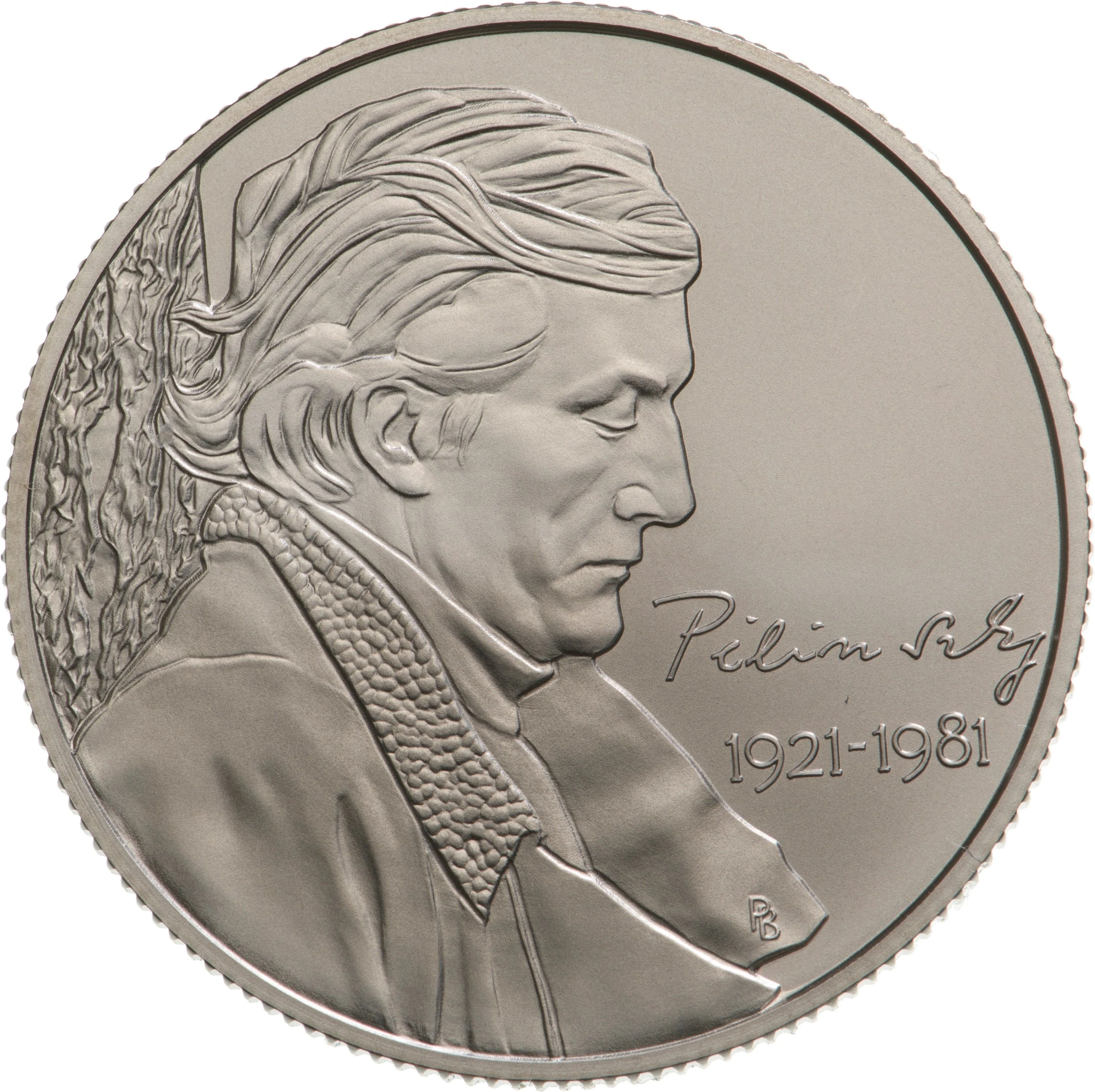
Commemoration: 100th anniversary of the birth of János Pilinszky
Hungary
Context
Year: 2021
Issuer: Hungary
Issuing organization: Magyar Pénzverő
Period:
(since 1989)
Currency:
(since 1946)
Total mintage: 4,000
Material
Diameter: 38.61 mm
Weight: 30.8 g
Shape: Round
Composition: Copper-nickel
Standard: Silver ounce
Technique: Milled
Alignment: Medal alignment
flip
References
Numista: #323798
Value
Exchange value: 2000 HUF
Inflation-adjusted value: 3011.94 HUF
Obverse
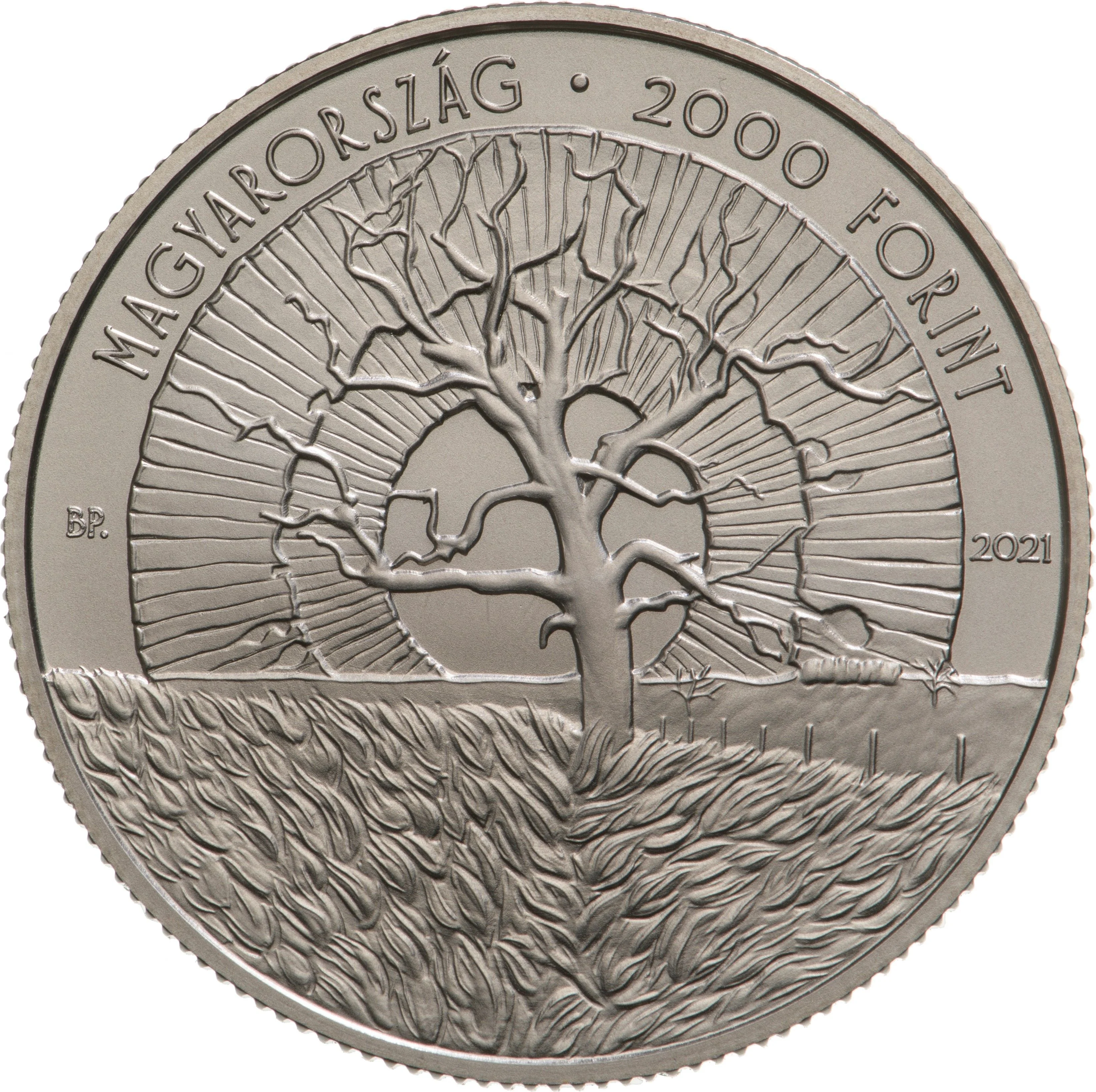
Description:
Tree.
Inscription:
MAGYARORSZÁG . 2000 FORINT
BP.
2021
BP.
2021
Translation:
MAGYARORSZÁG . 2000 FORINT
BP.
2021
Translation:
HUNGARY . 2000 FORINT
BP.
2021
BP.
2021
Translation:
HUNGARY . 2000 FORINT
BP.
2021
Script: Latin
Language: Hungarian
Designer: Pelcz Balázs
Reverse
Edge
Reeded
Categories
| Art> Literature |
| Event> Birth anniversary |
| Plant> Tree |
Mints
| Name | Mark |
|---|---|
| Hungarian mint | BP |
Mintings
| Year | Mint Mark | Mintage | Quality | Collection |
|---|---|---|---|---|
| 2021 | BP | 4,000 | BU |
Historical background
In 2021, Hungary's currency, the forint (HUF), operated within a complex environment shaped by monetary policy divergence and post-pandemic recovery. The National Bank of Hungary (MNB), under Governor György Matolcsy, maintained a relatively dovish stance for much of the year, keeping its base rate at a historic low of 0.60% until June. This policy, aimed at supporting economic rebound, contributed to the forint being one of the region's weaker performers. However, rising global and domestic inflation—which surged well above the MNB's target—began to exert significant pressure, forcing a pivotal shift in strategy.
The turning point came in the summer, as the MNB initiated a cycle of interest rate hikes to combat inflation, which would eventually exceed 7% by year's end. Starting in June, the central bank raised its base rate in a series of aggressive moves, increasing it to 3.30% by December. This hawkish pivot was a direct response to soaring price growth, driven by supply chain disruptions, rising energy costs, and strong domestic demand fueled by fiscal stimulus. Despite these hikes, the forint remained volatile, sensitive to global risk sentiment and the pace of policy tightening compared to other major central banks.
Throughout 2021, the currency was also influenced by protracted negotiations with the European Union over the release of pandemic recovery funds, which were conditional on addressing rule-of-law concerns. This political-economic uncertainty added a layer of risk premium, occasionally weakening the forint. By the year's close, the MNB's commitment to fighting inflation had become the dominant narrative, setting the stage for continued monetary tightening into 2022, with the forint's stability heavily tied to the central bank's credibility in this ongoing battle.
The turning point came in the summer, as the MNB initiated a cycle of interest rate hikes to combat inflation, which would eventually exceed 7% by year's end. Starting in June, the central bank raised its base rate in a series of aggressive moves, increasing it to 3.30% by December. This hawkish pivot was a direct response to soaring price growth, driven by supply chain disruptions, rising energy costs, and strong domestic demand fueled by fiscal stimulus. Despite these hikes, the forint remained volatile, sensitive to global risk sentiment and the pace of policy tightening compared to other major central banks.
Throughout 2021, the currency was also influenced by protracted negotiations with the European Union over the release of pandemic recovery funds, which were conditional on addressing rule-of-law concerns. This political-economic uncertainty added a layer of risk premium, occasionally weakening the forint. By the year's close, the MNB's commitment to fighting inflation had become the dominant narrative, setting the stage for continued monetary tightening into 2022, with the forint's stability heavily tied to the central bank's credibility in this ongoing battle.
💎 Very Rare