

Peru
Context
Material
References
KM: #Click to copy to clipboard187
Numista: #32272
Value
Exchange value: 0.01 PEH
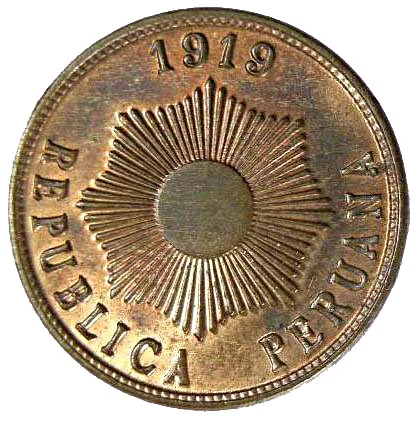
Obverse
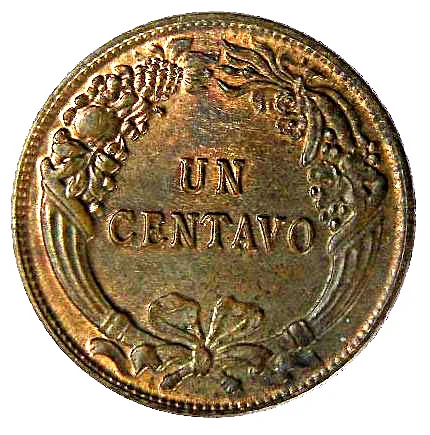
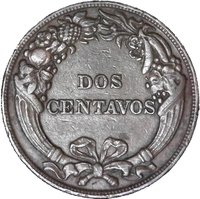
Reverse
Edge
Plain
Mints
| Name | Mark |
|---|---|
| United States Mint of Philadelphia | — |
Mintings
| Year | Mint Mark | Mintage | Quality | Collection |
|---|---|---|---|---|
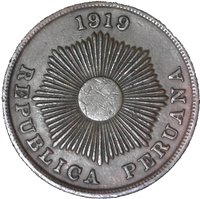
| 1919 | — | 4,000,000 |
Historical background
In 1919, Peru’s currency situation was characterized by the dominance of the Libra Peruana de Oro (Peruvian Gold Pound), a currency pegged to and fully convertible into British sterling. This system, established in 1897 under the gold standard, had brought a period of notable monetary stability and was crucial for facilitating foreign trade, particularly for the nation’s key exports like copper, cotton, and sugar. The fixed exchange rate fostered confidence among international creditors and investors, which was vital for a primary-export economy deeply integrated into global markets.
However, this stability was increasingly strained by the profound economic dislocations of World War I (1914-1918). While the war initially boosted demand for Peru’s raw materials, it also caused severe disruptions to international shipping and finance. Crucially, the global conflict led to a dramatic outflow of gold reserves as imports became scarce and expensive, undermining the metallic backing of the currency. By the war’s end, the system was fragile, operating with a thin margin of reserves and vulnerable to external shocks.
The situation came to a head in 1919 itself. The postwar international economic turbulence, combined with a sharp decline in export prices and rising government deficits under President José Pardo, exhausted the nation's ability to maintain convertibility. Consequently, in December 1919, the government was forced to suspend the gold standard, abandoning the fixed parity of the Libra Peruana. This pivotal move marked the end of a quarter-century of formal gold convertibility and ushered in a new era of a managed, inconvertible paper currency, setting the stage for the monetary challenges and debates of the 1920s.
However, this stability was increasingly strained by the profound economic dislocations of World War I (1914-1918). While the war initially boosted demand for Peru’s raw materials, it also caused severe disruptions to international shipping and finance. Crucially, the global conflict led to a dramatic outflow of gold reserves as imports became scarce and expensive, undermining the metallic backing of the currency. By the war’s end, the system was fragile, operating with a thin margin of reserves and vulnerable to external shocks.
The situation came to a head in 1919 itself. The postwar international economic turbulence, combined with a sharp decline in export prices and rising government deficits under President José Pardo, exhausted the nation's ability to maintain convertibility. Consequently, in December 1919, the government was forced to suspend the gold standard, abandoning the fixed parity of the Libra Peruana. This pivotal move marked the end of a quarter-century of formal gold convertibility and ushered in a new era of a managed, inconvertible paper currency, setting the stage for the monetary challenges and debates of the 1920s.
🌱 Fairly Common