

50 pounds – Malta
Add to wishlist
Non-circulating coins
Commemoration: The Maltese Balcony
Malta
Context
Year: 1975
Issuer: Malta
Issuing organization: Central Bank of Malta
Period:
(since 1974)
Currency:
(1972—2007)
Demonetized: Yes
Total mintage: 5,500
Material
References
KM: #
Numista: #322580
Value
Exchange value: 50 MTL
Bullion value: $2139.13
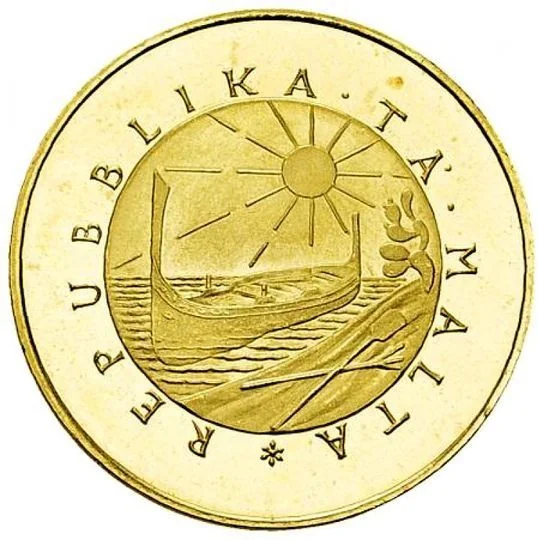
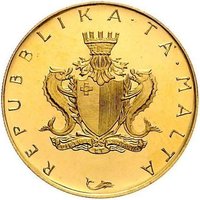
Obverse
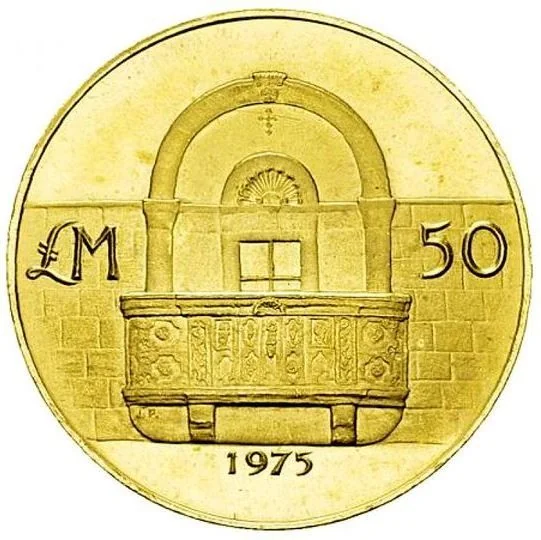
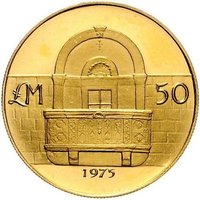
Reverse
Description:
Ornamental stone balcony.
Inscription:
£M 50
1975
1975
Script: Latin
Designer and engraver: Pietro Giampaoli
Edge
Mints
| Name | Mark |
|---|---|
| Malta Mint | — |
Mintings
| Year | Mint Mark | Mintage | Quality | Collection |
|---|---|---|---|---|
| 1975 | — | 5,500 |
Historical background
In 1975, Malta's currency situation was defined by its recent independence and the lingering influence of its colonial past. The nation was still using the Maltese pound (MTL), which was pegged at par with the British pound sterling. This peg, a legacy of British rule which ended in 1964, meant Malta's monetary policy and currency stability were heavily tied to the United Kingdom's economy. The Central Bank of Malta, established in 1968, managed this peg, holding sterling as its primary foreign reserve asset.
However, the global economic turbulence of the early 1970s, particularly the breakdown of the Bretton Woods system and a sterling crisis in 1972, forced a significant change. To reduce vulnerability, Malta severed the direct one-to-one peg with sterling in 1972, opting instead to peg the Maltese pound to a basket of currencies of its major trading partners. By 1975, this basket was weighted towards the US dollar, the Deutsche Mark, and sterling, reflecting a strategic shift towards economic diversification and European markets under Prime Minister Dom Mintoff's Labour government.
Consequently, the currency landscape in 1975 was one of transition and cautious sovereignty. The Maltese pound remained stable under its new managed basket peg, which helped control inflation and facilitate trade. This move symbolised Malta's broader political and economic realignment away from the UK, as the nation actively pursued new partnerships and a more independent monetary path, setting the stage for its future integration into the European financial system.
However, the global economic turbulence of the early 1970s, particularly the breakdown of the Bretton Woods system and a sterling crisis in 1972, forced a significant change. To reduce vulnerability, Malta severed the direct one-to-one peg with sterling in 1972, opting instead to peg the Maltese pound to a basket of currencies of its major trading partners. By 1975, this basket was weighted towards the US dollar, the Deutsche Mark, and sterling, reflecting a strategic shift towards economic diversification and European markets under Prime Minister Dom Mintoff's Labour government.
Consequently, the currency landscape in 1975 was one of transition and cautious sovereignty. The Maltese pound remained stable under its new managed basket peg, which helped control inflation and facilitate trade. This move symbolised Malta's broader political and economic realignment away from the UK, as the nation actively pursued new partnerships and a more independent monetary path, setting the stage for its future integration into the European financial system.
✨ Legendary