

1 rand – South Africa
Add to wishlist
Circulating commemorative coins
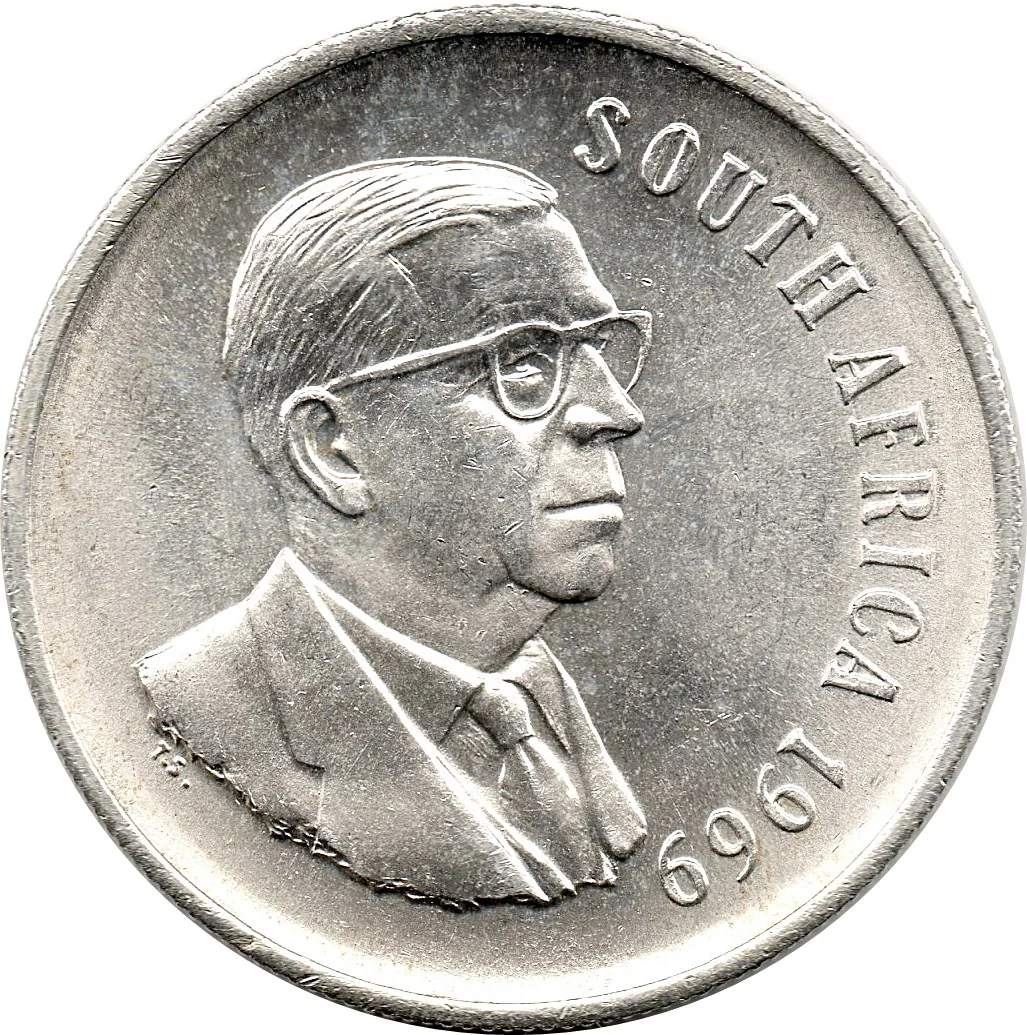
Commemoration: The end of Theophilus Ebenhaezer Dönges' presidency
South Africa
Context
Material
References
KM: #
Numista: #32253
Value
Exchange value: 1 ZAR
Bullion value: $30.66
Inflation-adjusted value: 95.19 ZAR
Obverse
Description:
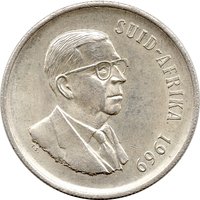
Dr. T.E. Dönges bust right. English text.
Inscription:
SOUTH AFRICA 1969
T.S.
T.S.
Script: Latin
Engraver: Tommy Sasseen
Reverse
Description:
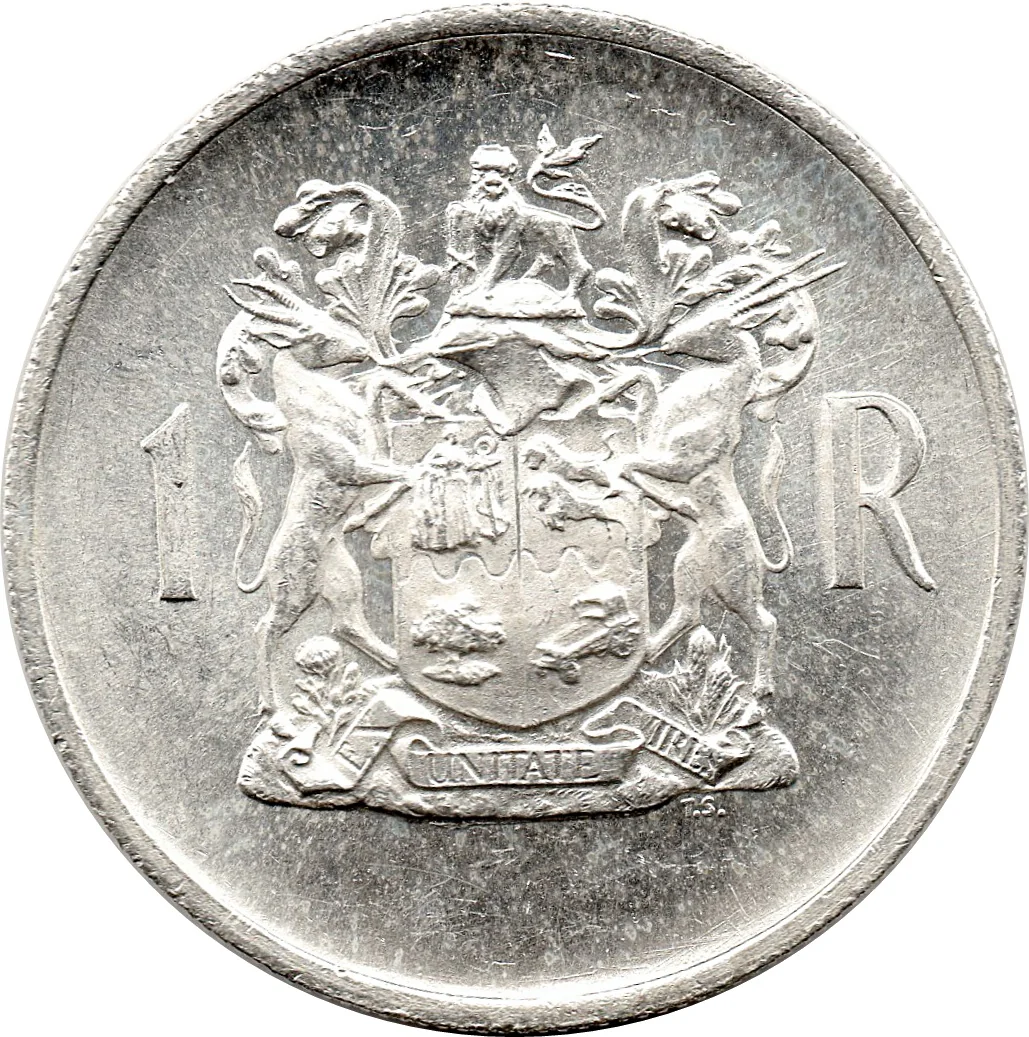
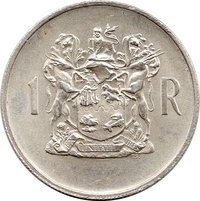
National arms between value
Inscription:
1 R
EX UNITATE VIRES
T.S.
EX UNITATE VIRES
T.S.
Translation:
From unity, strength.
Script: Latin
Language: Latin
Engraver: Tommy Sasseen
Edge
Reeded
Categories
| Symbols> Coat of Arms |
| Person> Politician |
Mints
| Name | Mark |
|---|---|
| Pretoria | — |
Mintings
| Year | Mint Mark | Mintage | Quality | Collection |
|---|---|---|---|---|
| 1969 | — | 506,000 | ||
| 1969 | — | 10 | Proof |
Historical background
In 1969, South Africa’s currency situation was defined by its position within the Bretton Woods system of fixed exchange rates, but under significant political and economic strain. The South African Rand, introduced in 1961, was pegged to the US Dollar at a rate of R1 = $1.40. This peg provided a degree of stability for international trade, which was crucial for an economy heavily dependent on gold and mineral exports. However, the stability was increasingly precarious, as the country faced mounting international isolation due to the apartheid regime, leading to capital outflows and pressure on foreign reserves.
The economy was profoundly influenced by the price of gold, as South Africa was the world’s largest producer. The monetary system was uniquely structured around this, with the South African Reserve Bank (SARB) required to purchase all domestically produced gold at the fixed official price. This created a complex duality: while the official price was $35 per ounce, a thriving private gold market offered a higher price, incentivizing speculation and smuggling. The government and SARB maintained strict exchange controls, instituted in the early 1960s, to prevent capital flight and protect the currency's peg, but these controls also isolated the financial system.
Ultimately, 1969 sat on the cusp of major change. While the Rand’s formal peg held, the global Bretton Woods system was beginning to unravel, and pressure on the South African economy was building. The following year, in 1970, the inherent tensions would force a revaluation of the Rand to R1 = $1.33, a move aimed at bolstering reserves but also a recognition of external pressures. Thus, the 1969 currency environment was one of managed stability, underpinned by gold and controls, yet acutely vulnerable to the twin forces of global financial shifts and intensifying political condemnation.
The economy was profoundly influenced by the price of gold, as South Africa was the world’s largest producer. The monetary system was uniquely structured around this, with the South African Reserve Bank (SARB) required to purchase all domestically produced gold at the fixed official price. This created a complex duality: while the official price was $35 per ounce, a thriving private gold market offered a higher price, incentivizing speculation and smuggling. The government and SARB maintained strict exchange controls, instituted in the early 1960s, to prevent capital flight and protect the currency's peg, but these controls also isolated the financial system.
Ultimately, 1969 sat on the cusp of major change. While the Rand’s formal peg held, the global Bretton Woods system was beginning to unravel, and pressure on the South African economy was building. The following year, in 1970, the inherent tensions would force a revaluation of the Rand to R1 = $1.33, a move aimed at bolstering reserves but also a recognition of external pressures. Thus, the 1969 currency environment was one of managed stability, underpinned by gold and controls, yet acutely vulnerable to the twin forces of global financial shifts and intensifying political condemnation.
🌱 Fairly Common