

5 leva – Bulgaria
Add to wishlist
Bulgaria
Context
Year: 1892
Issuer: Bulgaria
Ruler: Ferdinand I
Currency:
(1881—1952)
Demonetized: Yes
Total mintage: 1,017,375
Material
References
KM: #
Numista: #32250
Value
Bullion value: $55.79
Obverse
Description:
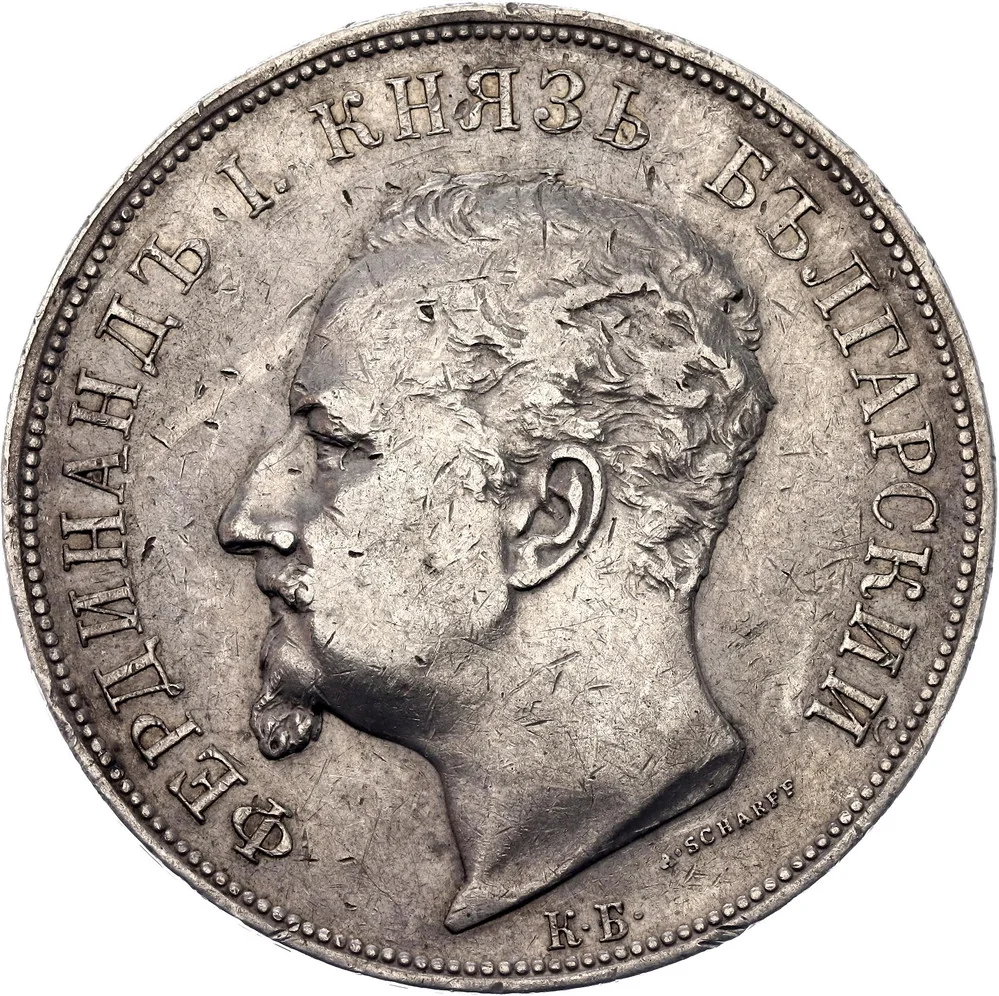
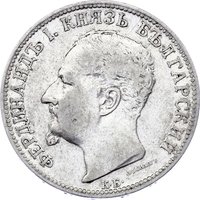
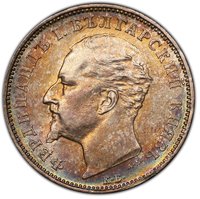
Bust of Ferdinand I with encircling lettering.
Inscription:
ФЕРДИНАНДЪ I . КНЯЗЬ БЪЛГАРСКИЙ
A.SCHARFF
К∙Б∙
A.SCHARFF
К∙Б∙
Translation:
FERDINAND I, PRINCE OF BULGARIAN
A. SCHARFF
K∙B∙
A. SCHARFF
K∙B∙
Script: Cyrillic
Engraver: Anton Scharff
Reverse
Description:
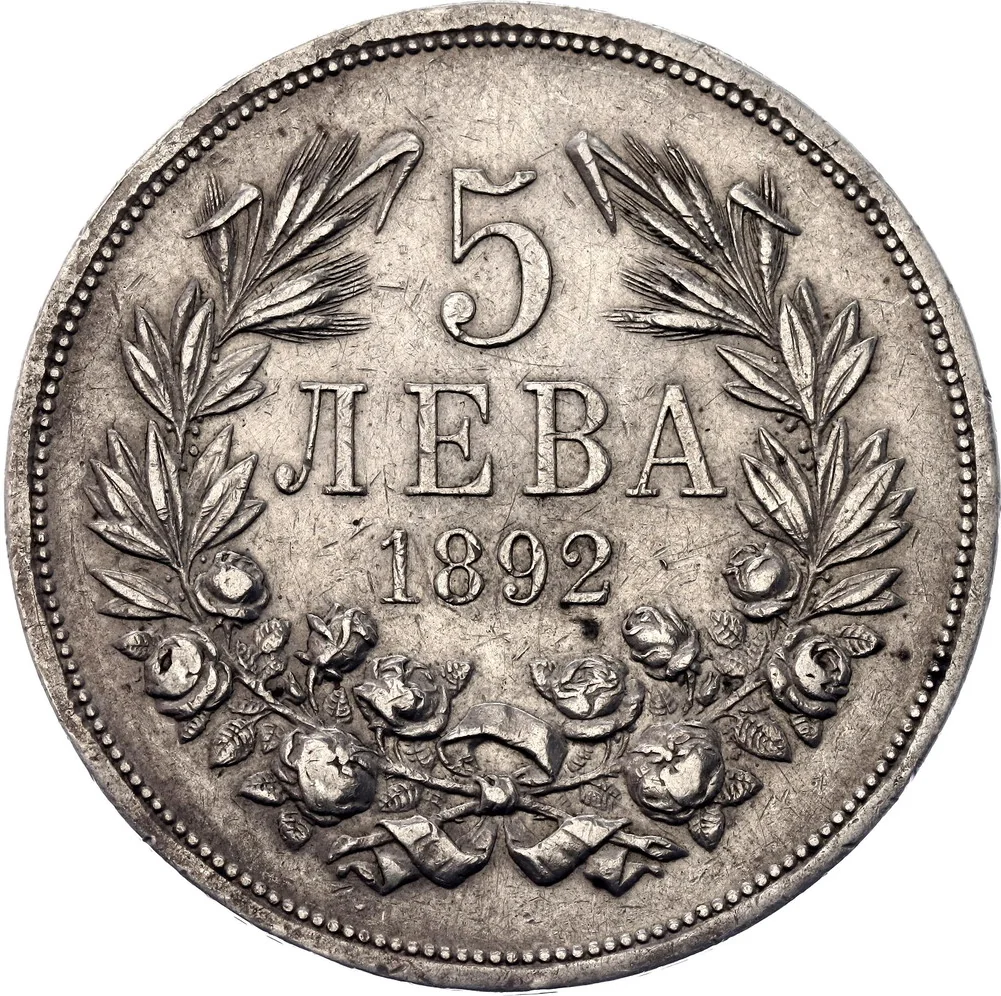
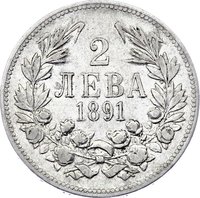
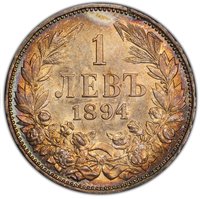
Denomination above date in wreath.
Inscription:
5
ЛЕВА
1892
ЛЕВА
1892
Translation:
LEVA
1892
1892
Script: Cyrillic
Language: Bulgarian
Engraver: Anton Scharff
Edge
Smooth with inscription
Legend:
* БОЖЕ ПАЗИ БЪЛГАРИЯ
Translation:
God Save Bulgaria
Language: Bulgarian
Categories
| Symbols> Coat of Arms |
| Person> Monarch |
Mints
| Name | Mark |
|---|---|
| Kremnica | — |
Mintings
| Year | Mint Mark | Mintage | Quality | Collection |
|---|---|---|---|---|
| 1892 | КБ | 1,001,375 | ||
| 1892 | КБ | 16,000 | Proof |
Historical background
In 1892, Bulgaria existed under a complex and transitional monetary system, a legacy of its recent emergence from Ottoman rule. The nation lacked a unified national currency, leading to a circulation of diverse metallic coins. These included Ottoman lira and kuruş, Russian rubles, French francs, British sovereigns, and various Austrian and Italian coins, creating a chaotic environment for trade and state finance. This multiplicity of currencies reflected Bulgaria's geopolitical position and the competing economic influences in the Balkans, hindering economic sovereignty and stability.
The government, under Prime Minister Stefan Stambolov, was actively pursuing monetary reform to address this confusion and foster modern statehood. The cornerstone of this effort was the Bulgarian Lev, established by the Law on the Minting of Bulgarian Coin in 1880. However, by 1892, the lev was primarily a unit of account and silver coinage, not yet a dominant circulating paper currency. The critical step taken that year was the founding of the Bulgarian National Bank (Българска народна банка), which received the exclusive right to issue banknotes. This institution was tasked with introducing a stable paper currency to gradually replace the foreign coinage in circulation.
Therefore, the currency situation in 1892 was one of deliberate change from fragmentation toward consolidation. The state was laying the institutional groundwork for a modern monetary system through the new National Bank, aiming to replace the impractical mosaic of foreign coins with a managed national currency. This transition was a key part of Bulgaria's broader project of post-liberation state-building, seeking economic independence and integration into European financial networks, though the full realization of a unified currency would still take several more years.
The government, under Prime Minister Stefan Stambolov, was actively pursuing monetary reform to address this confusion and foster modern statehood. The cornerstone of this effort was the Bulgarian Lev, established by the Law on the Minting of Bulgarian Coin in 1880. However, by 1892, the lev was primarily a unit of account and silver coinage, not yet a dominant circulating paper currency. The critical step taken that year was the founding of the Bulgarian National Bank (Българска народна банка), which received the exclusive right to issue banknotes. This institution was tasked with introducing a stable paper currency to gradually replace the foreign coinage in circulation.
Therefore, the currency situation in 1892 was one of deliberate change from fragmentation toward consolidation. The state was laying the institutional groundwork for a modern monetary system through the new National Bank, aiming to replace the impractical mosaic of foreign coins with a managed national currency. This transition was a key part of Bulgaria's broader project of post-liberation state-building, seeking economic independence and integration into European financial networks, though the full realization of a unified currency would still take several more years.
🌱 Fairly Common