

5 centavos – Bolivia
Add to wishlist
Bolivia
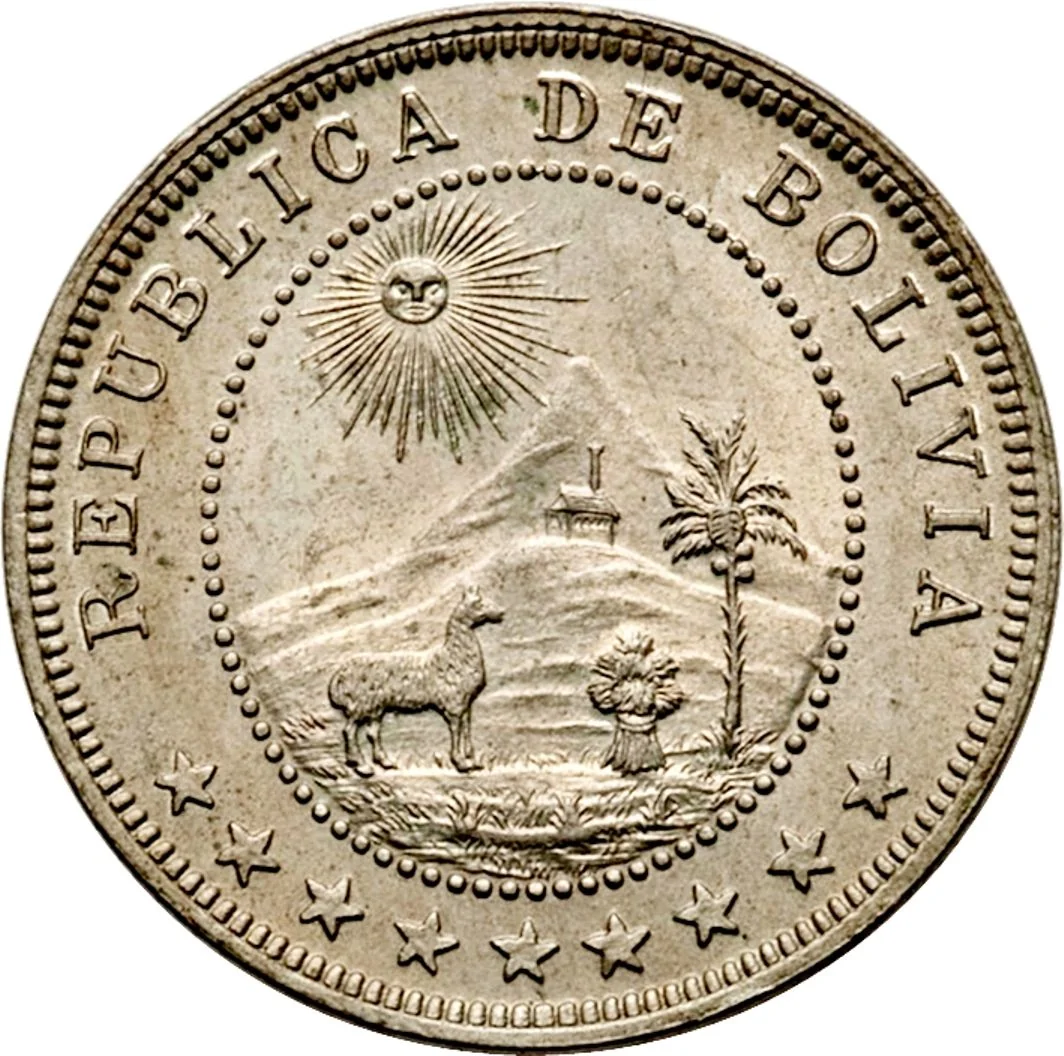
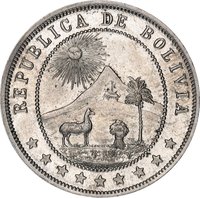
Obverse
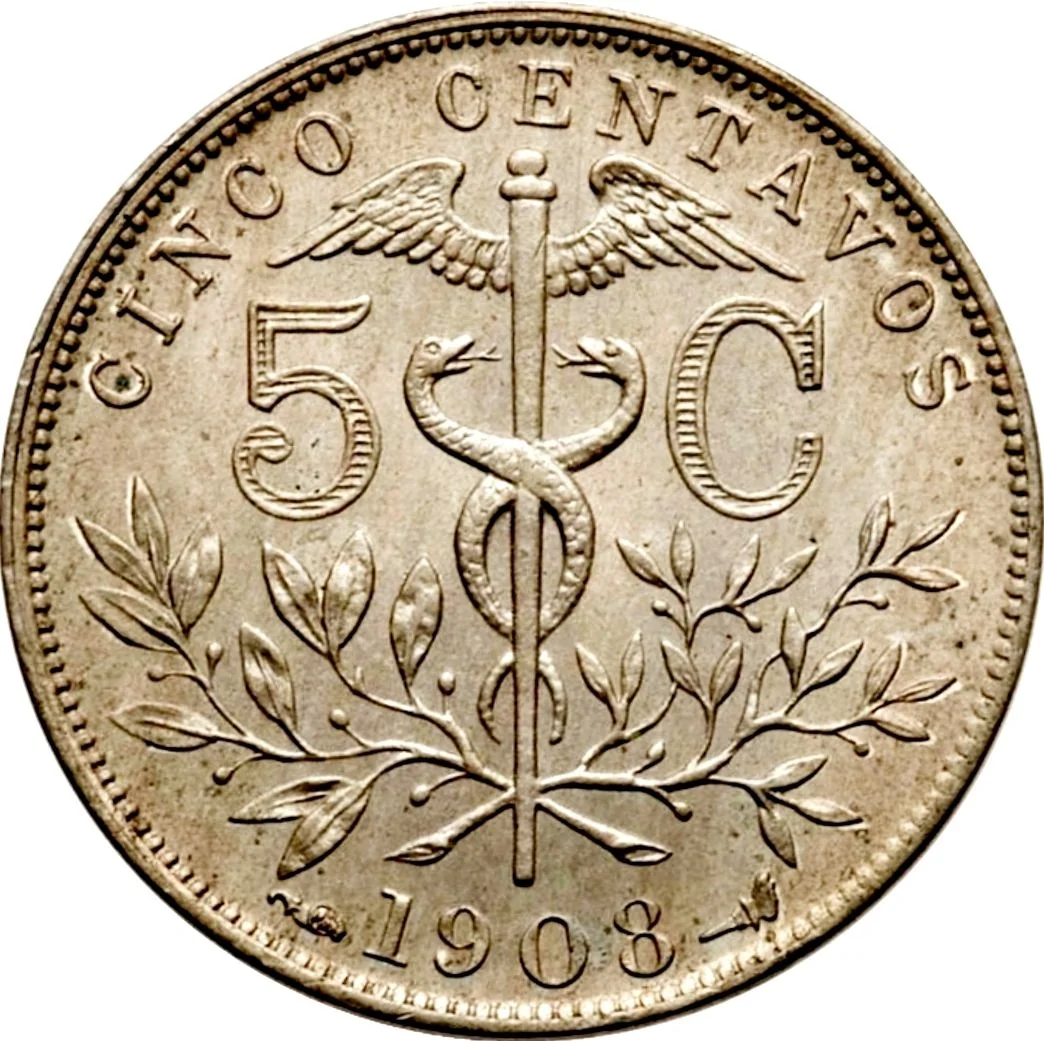
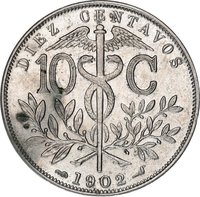
Reverse
Edge
Plain
Categories
| Plant> Tree |
| Symbol> Caduceus |
| Symbols> Coat of Arms |
| Symbol> Sun |
| Animal> Camel |
| Geography> Mountain |
Mints
| Name | Mark |
|---|---|
| Heaton and Sons / The Mint Birmingham | — |
| Monnaie de Paris | — |
Mintings
| Year | Mint Mark | Mintage | Quality | Collection |
|---|---|---|---|---|
| 1893 | — | 2,500,000 | ||
| 1893 | — | — | Proof | |
| 1895 | — | 2,000,000 | ||
| 1897 | — | 1,500,000 | ||
| 1899 | — | 2,000,000 | ||
| 1902 | — | 2,000,000 | ||
| 1907 | — | 2,000,000 | ||
| 1908 | — | 3,000,000 | ||
| 1909 | — | 4,000,000 | ||
| 1918 | — | 530,000 | ||
| 1919 | — | 4,370,000 |
Historical background
In 1893, Bolivia's currency situation was characterized by the persistent instability of the boliviano, a silver standard currency that had been introduced in 1864. The global decline in the price of silver, which began in the 1870s, had severely devalued the boliviano against gold-backed currencies like the British pound and the U.S. dollar. This depreciation created chronic fiscal problems for the government, as it struggled to service foreign debts contracted in gold and led to inflationary pressures that eroded domestic purchasing power. The situation was further complicated by the aftermath of the War of the Pacific (1879-1884), which had devastated the national economy and deprived Bolivia of its nitrate-rich coastal territory, a key potential source of revenue.
The administration of President Mariano Baptista (1892-1896) attempted to address this monetary crisis. In 1893, his government was actively negotiating with foreign creditors to restructure the nation's substantial external debt, a direct consequence of the silver depreciation. Domestically, there were debates and legislative efforts aimed at monetary reform, including proposals to move toward a gold exchange standard or to create a more robust national bank to control currency issuance. However, these measures faced significant political and economic hurdles, including opposition from silver mining interests in Potosí, who benefited from a weak currency that made their exports more competitive.
Consequently, the currency landscape in 1893 was one of transition and uncertainty. While the government sought international financial stability and a firmer currency, the boliviano remained in a state of de facto devaluation. The economy was still heavily reliant on silver exports, and the circulating currency consisted of a mix of Bolivian coins, Peruvian soles, and other foreign currencies, reflecting the region's integrated but unstable monetary environment. This period set the stage for more definitive reforms later in the decade, culminating in the creation of the Gold Standard Monetary Law of 1895.
The administration of President Mariano Baptista (1892-1896) attempted to address this monetary crisis. In 1893, his government was actively negotiating with foreign creditors to restructure the nation's substantial external debt, a direct consequence of the silver depreciation. Domestically, there were debates and legislative efforts aimed at monetary reform, including proposals to move toward a gold exchange standard or to create a more robust national bank to control currency issuance. However, these measures faced significant political and economic hurdles, including opposition from silver mining interests in Potosí, who benefited from a weak currency that made their exports more competitive.
Consequently, the currency landscape in 1893 was one of transition and uncertainty. While the government sought international financial stability and a firmer currency, the boliviano remained in a state of de facto devaluation. The economy was still heavily reliant on silver exports, and the circulating currency consisted of a mix of Bolivian coins, Peruvian soles, and other foreign currencies, reflecting the region's integrated but unstable monetary environment. This period set the stage for more definitive reforms later in the decade, culminating in the creation of the Gold Standard Monetary Law of 1895.
🌱 Common