

1 Dollar – Bermuda
United Kingdom
Context
Years: 1988–1997
Country: United Kingdom 
Issuer: Bermuda 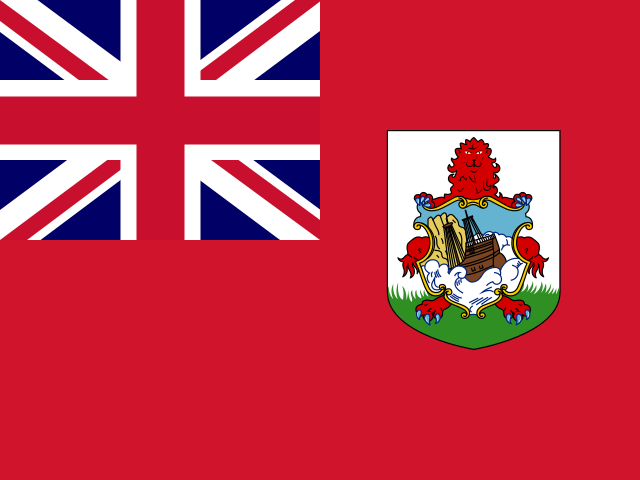
Ruler: Elizabeth II
Currency:
(since 1970)
Total mintage: 2,915,000
Material
Diameter: 26.2 mm
Weight: 7.56 g
Thickness: 1.6 mm
Shape: Round
Composition: Nickel brass
Magnetic: No
Technique: Milled
Alignment: Medal alignment
flip
References
KM: #Click to copy to clipboard56
Numista: #3218
Value
Exchange value: 1 BMD
Inflation-adjusted value: 3.59 BMD
Obverse
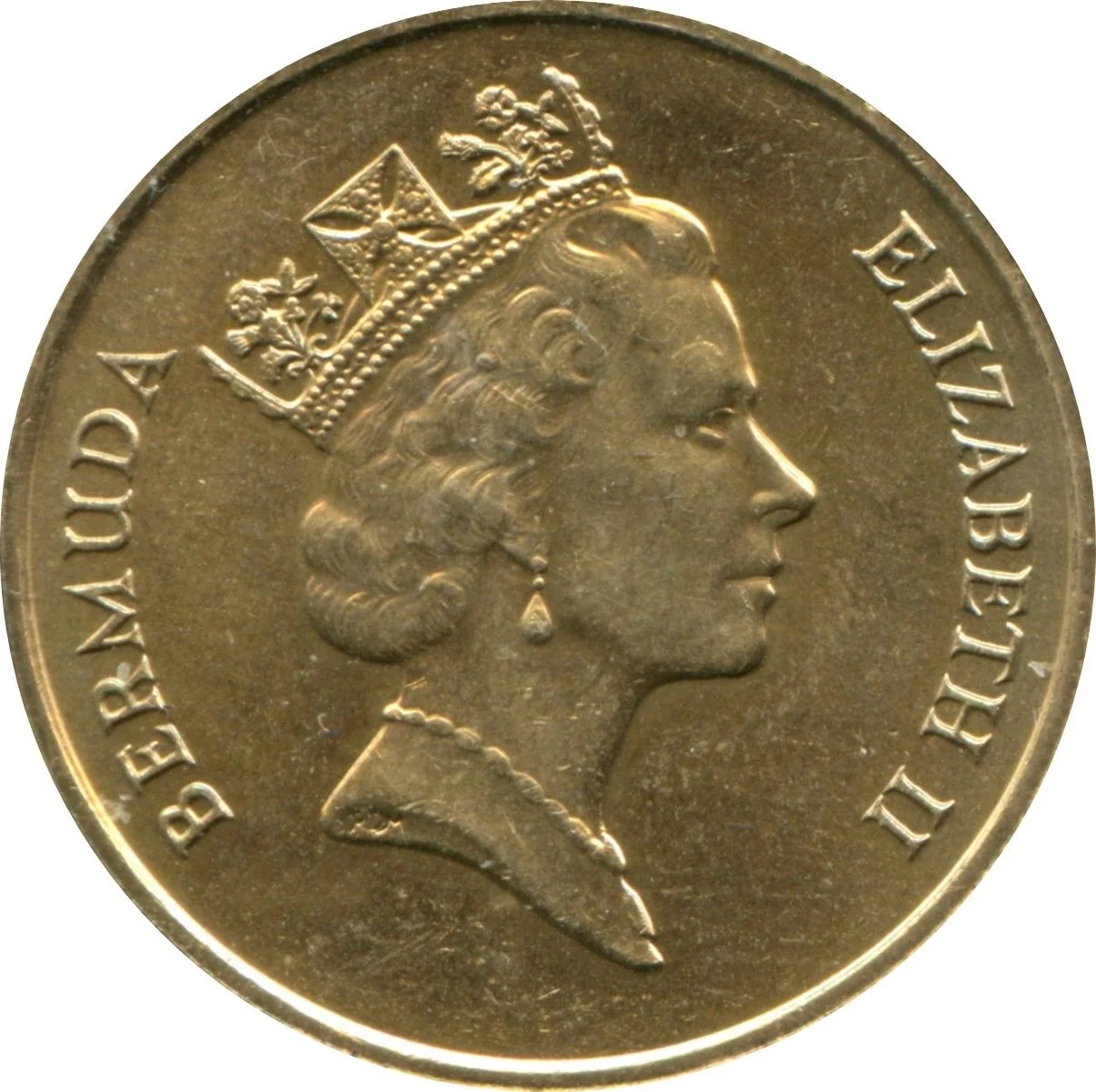
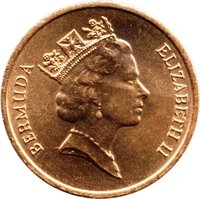
Description:
Queen Elizabeth II facing right.
Inscription:
BERMUDA ELIZABETH II
RDM
RDM
Translation:
BERMUDA ELIZABETH II
QUEEN
QUEEN
Script: Latin
Engraver: Raphael David Maklouf
Reverse
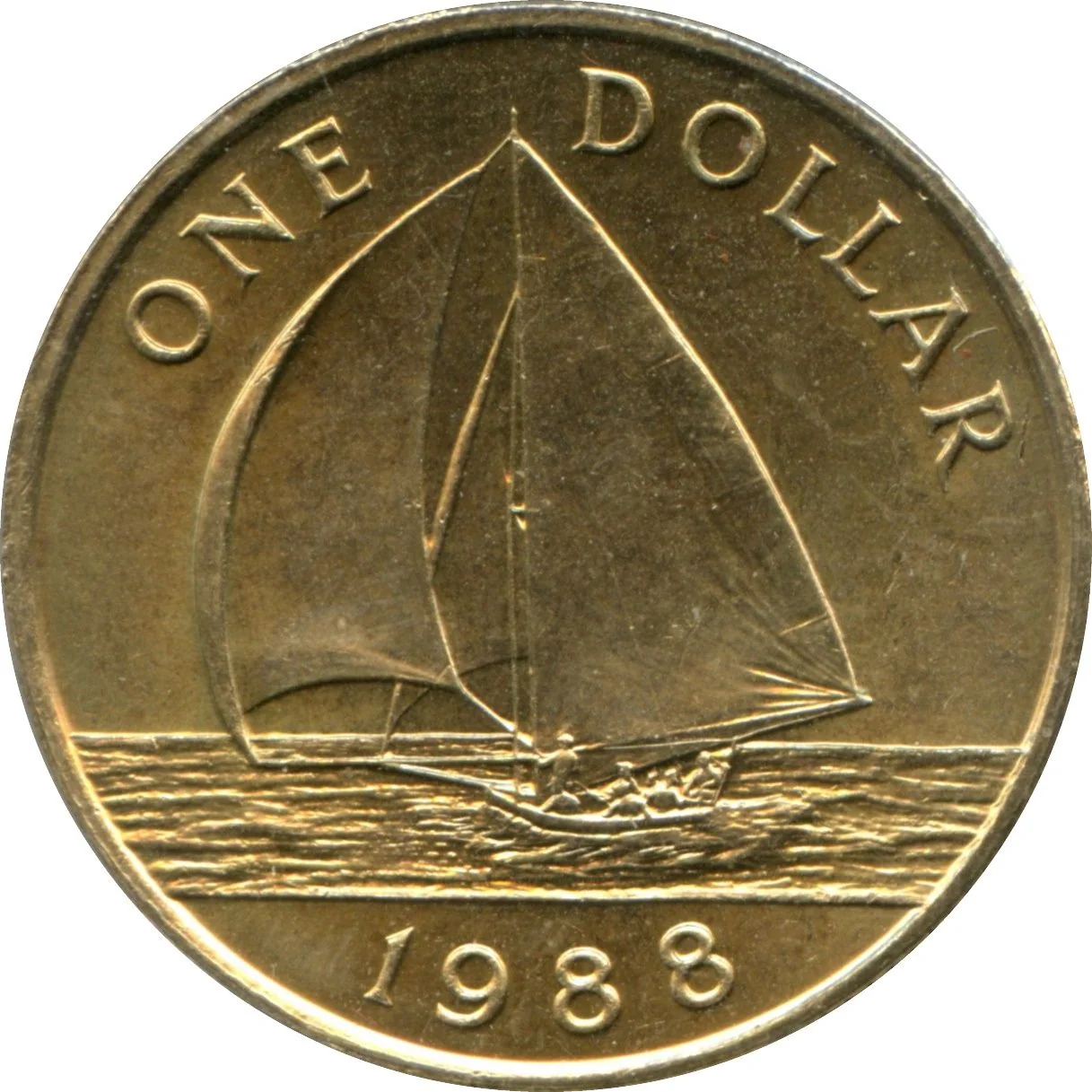
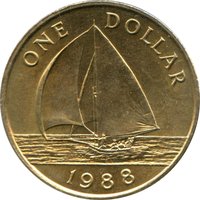
Description:
Bermudian rig (dinghy).
Inscription:
ONE DOLLAR
1988
1988
Script: Latin
Engraver: Eldon Trimingham
Edge
Segmented reeding
Categories
| Transportation> Watercraft |
Mints
| Name | Mark |
|---|---|
| Royal Mint | — |
Mintings
| Year | Mint Mark | Mintage | Quality | Collection |
|---|---|---|---|---|
| 1988 | — | 2,000,000 | ||
| 1993 | — | 15,000 | In sets | |
| 1996 | — | 300,000 | ||
| 1997 | — | 600,000 |
Historical background
In 1988, Bermuda's currency situation was characterized by its unique and stable peg to the United States dollar. The Bermudian dollar, introduced in 1970 to replace the Bermudian pound, was fixed at a one-to-one parity with the US dollar (BMD 1 = USD 1). This peg was not merely a policy choice but a legal requirement, as the Currency Notes Act of 1970 mandated that local currency in circulation be fully backed by US dollar reserves held by the Bermuda Monetary Authority (BMA). This arrangement provided exceptional stability, eliminated exchange rate risk for the vital tourism and international business sectors, and effectively made the US dollar legal tender for all domestic transactions.
The economy's heavy dependence on these two pillars—tourism and international business, particularly insurance and reinsurance—made the US dollar peg fundamental. The majority of Bermuda's foreign exchange earnings were in US dollars, and its imports were overwhelmingly sourced from the United States. Consequently, maintaining the fixed exchange rate was crucial for price stability and investor confidence. The system functioned smoothly, with both currencies circulating interchangeably in cash transactions, though the Bermudian dollar was not accepted outside the territory.
There were no significant currency crises or debates about the peg in 1988, as the arrangement was widely viewed as successful and essential. The monetary policy focus of the Bermuda Monetary Authority was primarily on maintaining the currency board-style backing and managing the money supply within the constraints of the fixed regime. The stability it afforded was a key selling point for attracting foreign capital and high-value commerce, solidifying Bermuda's position as a prosperous offshore financial centre with a currency system that was both simple and robust.
The economy's heavy dependence on these two pillars—tourism and international business, particularly insurance and reinsurance—made the US dollar peg fundamental. The majority of Bermuda's foreign exchange earnings were in US dollars, and its imports were overwhelmingly sourced from the United States. Consequently, maintaining the fixed exchange rate was crucial for price stability and investor confidence. The system functioned smoothly, with both currencies circulating interchangeably in cash transactions, though the Bermudian dollar was not accepted outside the territory.
There were no significant currency crises or debates about the peg in 1988, as the arrangement was widely viewed as successful and essential. The monetary policy focus of the Bermuda Monetary Authority was primarily on maintaining the currency board-style backing and managing the money supply within the constraints of the fixed regime. The stability it afforded was a key selling point for attracting foreign capital and high-value commerce, solidifying Bermuda's position as a prosperous offshore financial centre with a currency system that was both simple and robust.
🌱 Common