Logo Title

6 Văn – Empire of Vietnam

Vietnam
Context
Years: 1883–1884
Country: Vietnam Country flag
Currency:
(1868—1945)
Demonetized: Yes
Material
Diameter: 23 mm
Weight: 2.6 g
Shape: Round
Composition: Brass
Magnetic: No
Technique: Cast
Alignment: Medal alignment
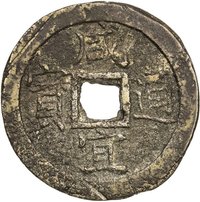
Obverse
OBVERSE ↑
flip
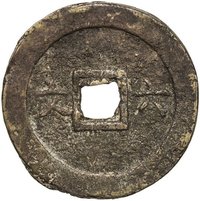
Reverse
REVERSE ↑
References
Numista: #321310

Obverse

Description:
Four Chinese characters read vertically, right to left.
Inscription:


寶 通

 福
Translation:
Established Treasure Circulates

Fortune
Language: Chinese

Reverse

Description:
Blank (uniface).

Edge

Plain

Mintings

YearMint MarkMintageQualityCollection

Historical background

In 1883, the currency situation in the Empire of Vietnam was one of profound instability and transition, directly mirroring its collapsing political sovereignty. The empire, under the weak reign of Emperor Hiệp Hòa, was in the final throes of the French conquest, culminating in the imposition of the Treaty of Huế in August 1883, which established a French protectorate. Monetarily, this created a chaotic dual system. The traditional currency, the văn (copper cash coins) and silver taels, remained in circulation but was plagued by regional inconsistencies, debasement, and counterfeiting, undermining everyday commerce and state revenue.

Simultaneously, French colonial currency was aggressively entering the economy. The French piastre de commerce, a silver coin used across French Indochina, began to circulate alongside and above the indigenous coinage, establishing a hierarchy that reflected the new power dynamics. This created a complex and unfavorable exchange environment for the local population, as the value of their existing coinage fluctuated wildly against the more stable and forcibly promoted piastre. The imperial court in Huế had lost control over its monetary policy, unable to regulate the influx of foreign coin or effectively manage its own minting.

Thus, the background of 1883 is not of a unified system but of a fractured monetary landscape caught between a dying imperial tradition and an imposed colonial standard. The currency chaos exacerbated economic hardship, disrupted taxation and trade, and served as a tangible daily reminder of the empire's subjugation. This period laid the groundwork for the formal monetary unification that would follow under full French colonial administration, which would eventually phase out the imperial coinage in favor of a centralized, French-controlled currency system.
Legendary