

25 euro – Austria
Add to wishlist
Non-circulating coins
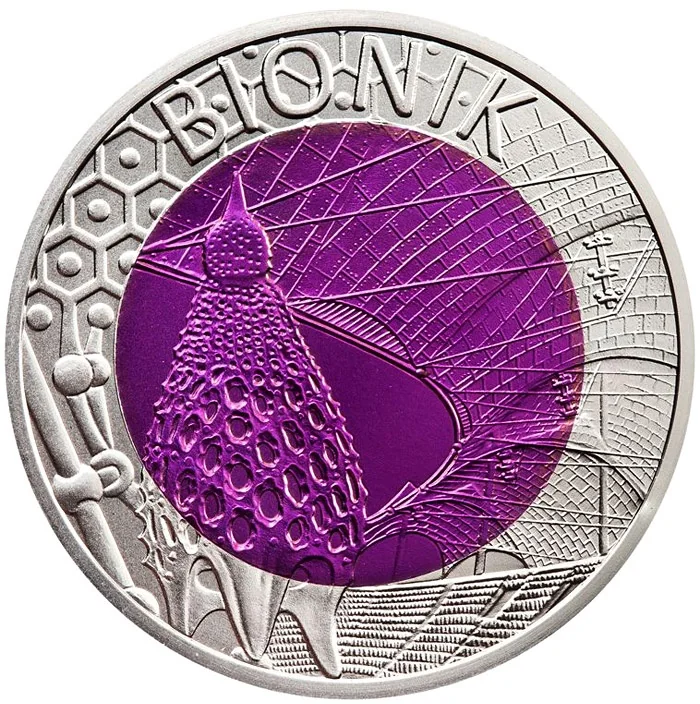
Commemoration: Bionik
Austria
Context
Material

References
KM: #
Numista: #31986
Value
Exchange value: 25 EUR
Inflation-adjusted value: 36.84 EUR
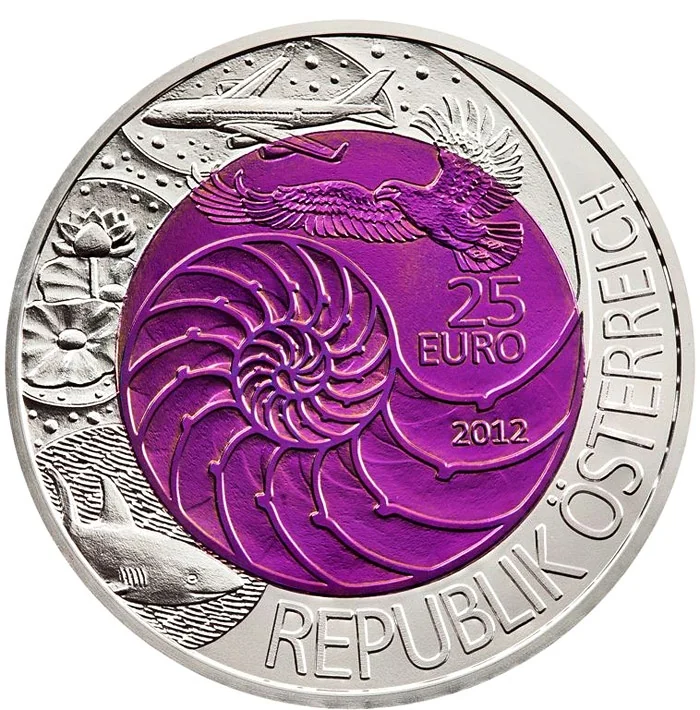
Obverse
Inscription:
25 EURO
2012
REPUBLIK ÖSTERREICH
2012
REPUBLIK ÖSTERREICH
Translation:
25 EURO
2012
REPUBLIC OF AUSTRIA
2012
REPUBLIC OF AUSTRIA
Script: Latin
Engraver: Thomas Pesendorfer
Edge
Plain.
Mints
| Name | Mark |
|---|---|
| Münze Österreich | — |
Mintings
| Year | Mint Mark | Mintage | Quality | Collection |
|---|---|---|---|---|
| 2012 | — | 65,000 |
Historical background
In 2012, Austria was a stable and integral member of the Eurozone, having adopted the euro as its physical currency in 2002. The country's financial system was considered robust, with a conservative banking sector that had weathered the initial 2008 global financial crisis relatively well. However, the overarching currency situation was dominated not by domestic Austrian policy, but by the severe existential crisis of the euro itself. Austria, as a member of the European Union's core, was deeply invested in the stability of the single currency and was directly affected by the sovereign debt turmoil emanating from Southern Europe, particularly Greece.
The primary concern for Austrian authorities and financial institutions was their significant exposure to the economies of Central, Eastern, and Southeastern Europe (CESEE), where Austrian banks had extensive operations. While these investments were profitable, they created vulnerability as the euro crisis threatened to cause regional economic slowdowns or banking stress. Domestically, Austria maintained a strong fiscal position with a low deficit and enjoyed a AAA credit rating, which provided a buffer. Public debate centered on Austria's contributions to Eurozone bailout funds like the European Financial Stability Facility (EFSF) and the future European Stability Mechanism (ESM), with some political factions expressing concern over the costs of safeguarding the currency union.
Ultimately, Austria’s 2012 currency context was one of a stable national position within a turbulent common currency area. The government, under Chancellor Werner Faymann, was a firm supporter of the European Central Bank's efforts to preserve the euro, including the "whatever it takes" stance announced by ECB President Mario Draghi in mid-2012. The year concluded with Austria navigating the dual imperatives of supporting collective Eurozone stability measures while managing its own banking sector's external exposures, all within a framework of continued commitment to the European single currency project.
The primary concern for Austrian authorities and financial institutions was their significant exposure to the economies of Central, Eastern, and Southeastern Europe (CESEE), where Austrian banks had extensive operations. While these investments were profitable, they created vulnerability as the euro crisis threatened to cause regional economic slowdowns or banking stress. Domestically, Austria maintained a strong fiscal position with a low deficit and enjoyed a AAA credit rating, which provided a buffer. Public debate centered on Austria's contributions to Eurozone bailout funds like the European Financial Stability Facility (EFSF) and the future European Stability Mechanism (ESM), with some political factions expressing concern over the costs of safeguarding the currency union.
Ultimately, Austria’s 2012 currency context was one of a stable national position within a turbulent common currency area. The government, under Chancellor Werner Faymann, was a firm supporter of the European Central Bank's efforts to preserve the euro, including the "whatever it takes" stance announced by ECB President Mario Draghi in mid-2012. The year concluded with Austria navigating the dual imperatives of supporting collective Eurozone stability measures while managing its own banking sector's external exposures, all within a framework of continued commitment to the European single currency project.

🌟 Limited