

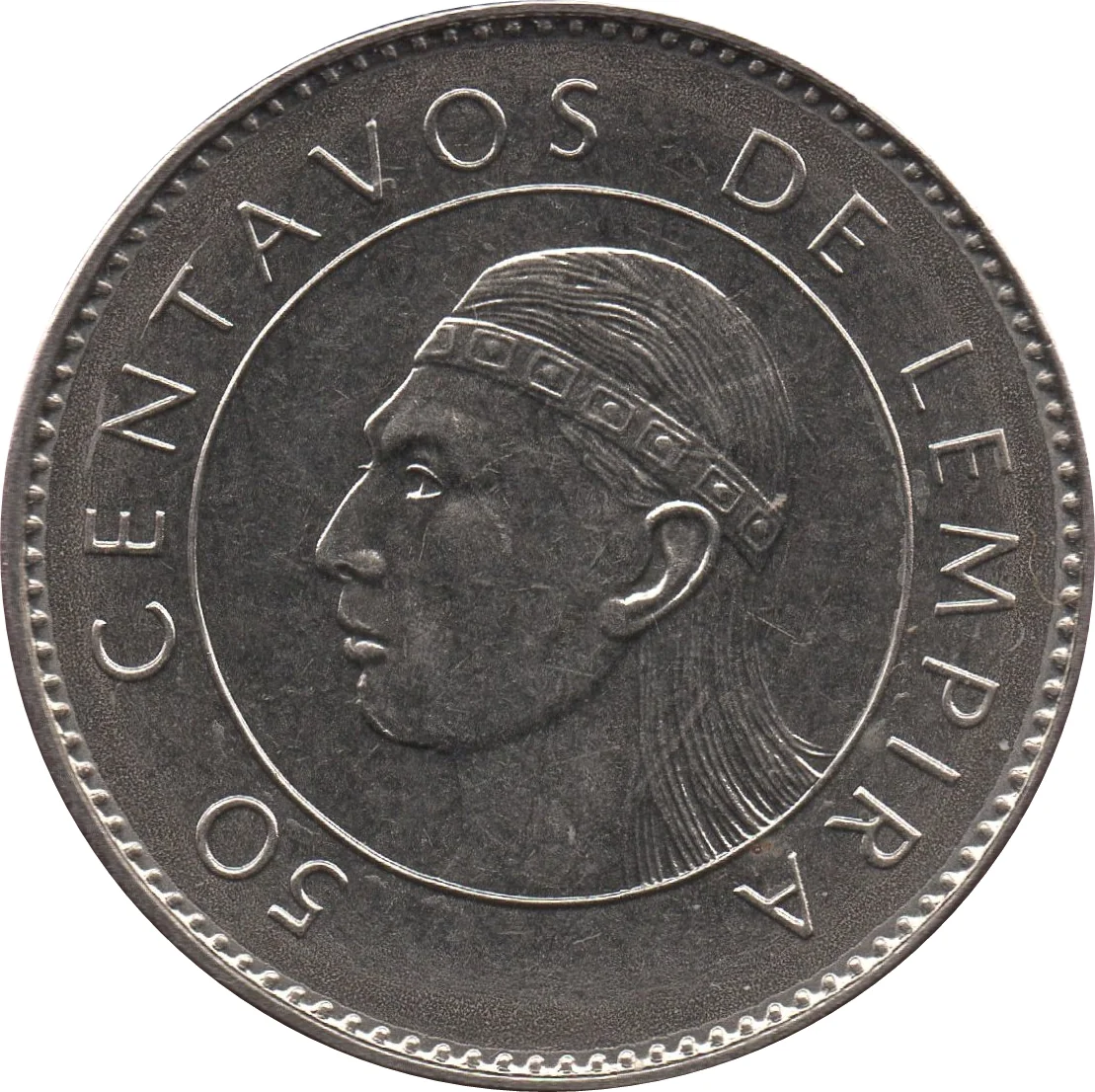
50 centavos – Honduras
Add to wishlist
Honduras
Obverse
Description:
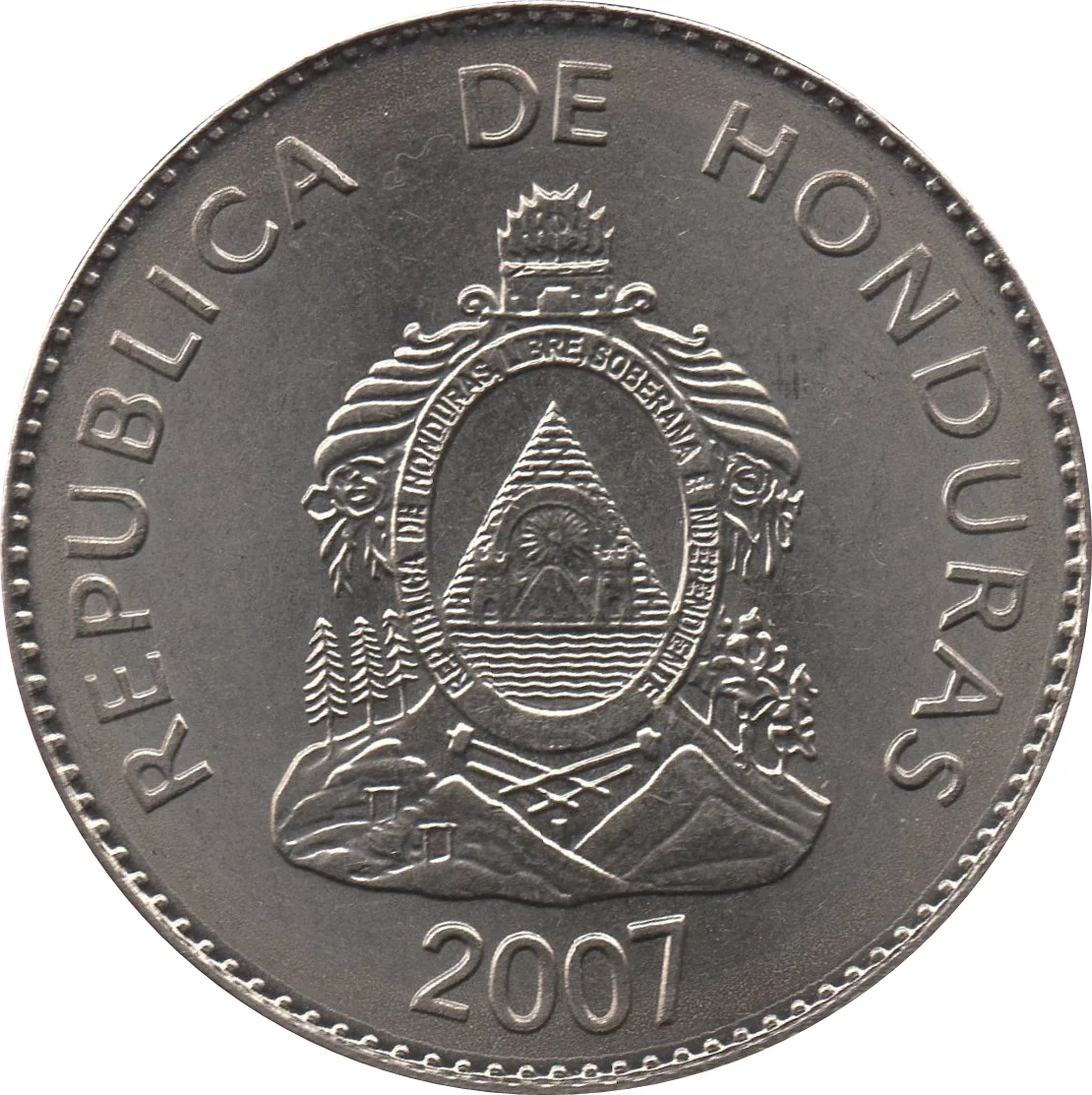
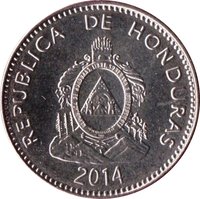
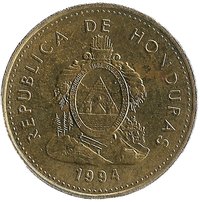
Coat of Arms of Honduras, full state name, and year of issue. NOTE: letter size.
Inscription:
REPUBLICA DE HONDURAS
REPUBLICA DE HONDURAS, LIBRE, SOBERANA E INDEPENDIENTE
15 DE SEPTIEMBRE DE
1821
2007
REPUBLICA DE HONDURAS, LIBRE, SOBERANA E INDEPENDIENTE
15 DE SEPTIEMBRE DE
1821
2007
Translation:
REPUBLIC OF HONDURAS
REPUBLIC OF HONDURAS, FREE, SOVEREIGN AND INDEPENDENT
SEPTEMBER 15,
1821
2007
REPUBLIC OF HONDURAS, FREE, SOVEREIGN AND INDEPENDENT
SEPTEMBER 15,
1821
2007
Script: Latin
Language: Spanish
Reverse
Edge
Reeded
Categories
| Symbols> Coat of Arms |
Mints
| Name | Mark |
|---|---|
| Kremnica | — |
| Mint of Finland | — |
| Mint of Poland | — |
| Royal Canadian Mint of Winnipeg | — |
| Royal Dutch Mint | — |
| Royal Mint | — |
| Vereinigte Deutsche Nickelwerke | — |
Mintings
| Year | Mint Mark | Mintage | Quality | Collection |
|---|---|---|---|---|
| 1991 | — | 30,000,000 | ||
| 1994 | — | 30,000,000 | ||
| 1995 | — | 10,000,000 | ||
| 1996 | — | 20,000,000 | ||
| 1999 | — | 8,000,000 | ||
| 2005 | — | 45,000,000 | ||
| 2007 | — | 30,000,000 | ||
| 2012 | — | 20,000,000 | ||
| 2014 | — | 40,000,000 | ||
| 2016 | — | — | ||
| 2017 | — | 40,000,000 | ||
| 2019 | — | 10,000,000 |
Historical background
In 1991, Honduras was navigating a complex monetary landscape characterized by a dual-currency system and persistent inflationary pressures. The primary currency was the Honduran lempira (HNL), which was pegged to the US dollar at a fixed but adjustable rate. However, alongside the official lempira, the US dollar circulated widely and was used for major transactions, real estate, and as a store of value, reflecting a deep-seated lack of confidence in the national currency due to the country's economic instability.
This period followed a decade of regional conflict and economic turmoil, leaving Honduras with high levels of external debt and structural weaknesses. While annual inflation had decreased from the hyperinflationary spikes of the late 1980s, it remained stubbornly high, eroding purchasing power. The fixed exchange rate, maintained by the Central Bank of Honduras, often came under pressure, leading to periodic devaluations and a thriving parallel black market for dollars where the lempira traded at a significant discount.
The currency situation was a symptom of broader macroeconomic challenges, including fiscal deficits and a reliance on agricultural exports like coffee and bananas. The government, adhering to structural adjustment programs promoted by international financial institutions, was implementing austerity measures and liberalization policies. These aimed to stabilize the economy, but in the short term, they contributed to social hardship and maintained an environment of monetary fragility, with the lempira's stability being a central concern for policymakers and the public alike.
This period followed a decade of regional conflict and economic turmoil, leaving Honduras with high levels of external debt and structural weaknesses. While annual inflation had decreased from the hyperinflationary spikes of the late 1980s, it remained stubbornly high, eroding purchasing power. The fixed exchange rate, maintained by the Central Bank of Honduras, often came under pressure, leading to periodic devaluations and a thriving parallel black market for dollars where the lempira traded at a significant discount.
The currency situation was a symptom of broader macroeconomic challenges, including fiscal deficits and a reliance on agricultural exports like coffee and bananas. The government, adhering to structural adjustment programs promoted by international financial institutions, was implementing austerity measures and liberalization policies. These aimed to stabilize the economy, but in the short term, they contributed to social hardship and maintained an environment of monetary fragility, with the lempira's stability being a central concern for policymakers and the public alike.
🌱 Very Common