

Obverse
Description:
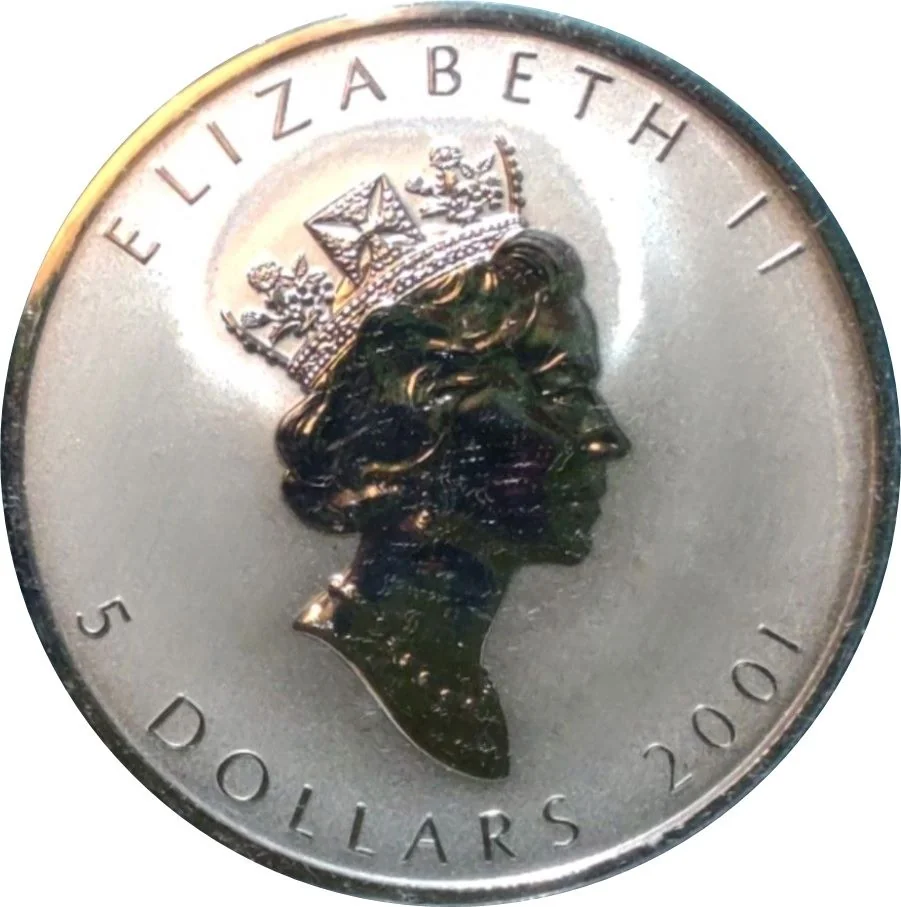
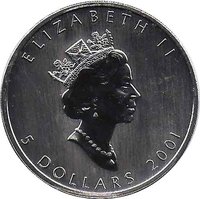
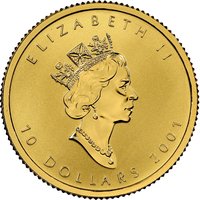
Queen Elizabeth II at 64, wearing the royal diadem and jewels, facing right.
Inscription:
ELIZABETH II
5 DOLLARS 2001
5 DOLLARS 2001
Script: Latin
Designer and engraver: Dora de Pédery-Hunt
Reverse
Edge
Reeded
Categories
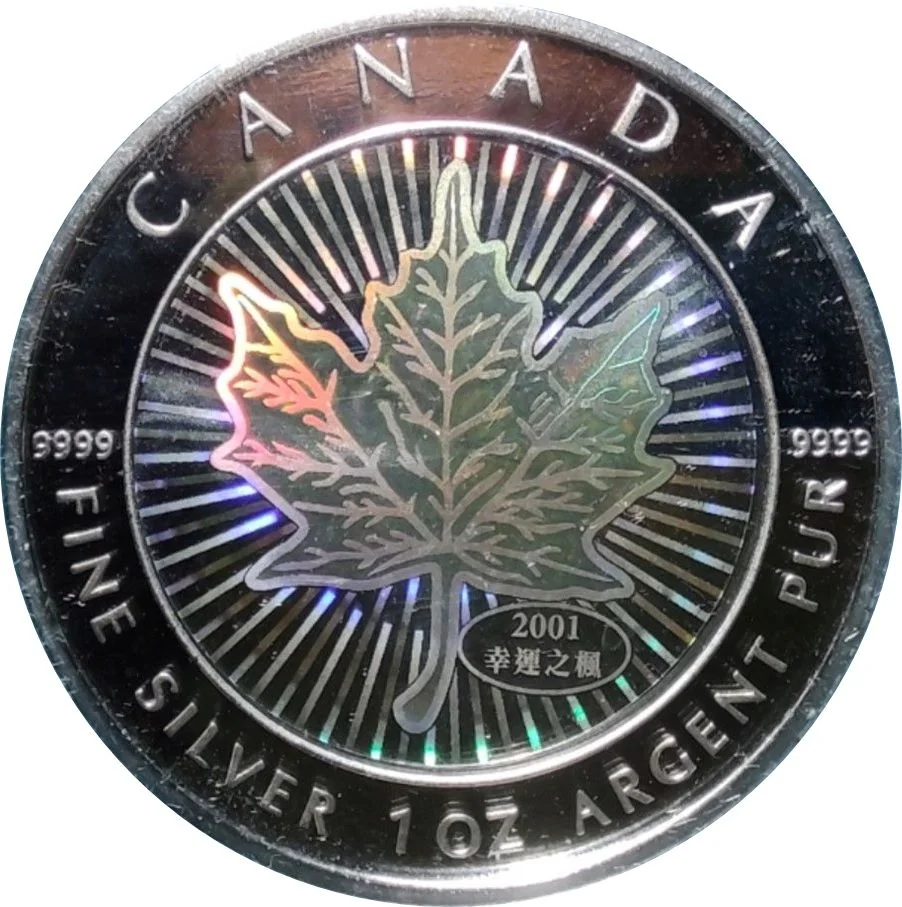
| Astrology> Chinese calendar |
Mints
| Name | Mark |
|---|---|
| Royal Canadian Mint of Ottawa | — |
Mintings
| Year | Mint Mark | Mintage | Quality | Collection |
|---|---|---|---|---|
| 2001 | — | 29,817 |
Historical background
In 2001, Canada's currency situation was characterized by a period of significant depreciation and economic uncertainty, largely overshadowed by the global fallout from the September 11 terrorist attacks in the United States. The Canadian dollar, often called the "loonie," began the year trading near a record low, hovering around US$0.637 in April. This weakness was driven by several structural factors, including a strong U.S. dollar, lower commodity prices, and a persistent perception of a "Canada discount" among international investors concerned about productivity gaps and government debt.
The economic landscape was further complicated by a synchronized global slowdown and a sharp downturn in the technology sector. As Canada's largest trading partner, the United States slipped into a recession in 2001, which dampened demand for Canadian exports. In response, the Bank of Canada aggressively cut its key policy interest rate throughout the year, from 5.75% in January to 2.25% by year's end, to stimulate domestic demand. While these cuts were necessary for the domestic economy, they also reduced the yield advantage for holding Canadian assets, contributing to the loonie's softness.
By the close of 2001, the currency had recovered only modestly, trading around US$0.63, remaining firmly in its historical trough. The year solidified a challenging era for the loonie, which had been in a broad decline since the mid-1970s. This environment set the stage for a pivotal shift in the following years, as a sustained global commodity boom, driven by rising demand from emerging economies like China, would soon begin a dramatic reversal of the Canadian dollar's fortunes, leading to a prolonged period of appreciation throughout the 2000s.
The economic landscape was further complicated by a synchronized global slowdown and a sharp downturn in the technology sector. As Canada's largest trading partner, the United States slipped into a recession in 2001, which dampened demand for Canadian exports. In response, the Bank of Canada aggressively cut its key policy interest rate throughout the year, from 5.75% in January to 2.25% by year's end, to stimulate domestic demand. While these cuts were necessary for the domestic economy, they also reduced the yield advantage for holding Canadian assets, contributing to the loonie's softness.
By the close of 2001, the currency had recovered only modestly, trading around US$0.63, remaining firmly in its historical trough. The year solidified a challenging era for the loonie, which had been in a broad decline since the mid-1970s. This environment set the stage for a pivotal shift in the following years, as a sustained global commodity boom, driven by rising demand from emerging economies like China, would soon begin a dramatic reversal of the Canadian dollar's fortunes, leading to a prolonged period of appreciation throughout the 2000s.
💎 Extremely Rare