


100 denars – North Macedonia
Add to wishlist
Non-circulating coins
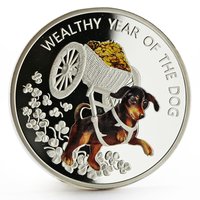
Commemoration: Year of the Dog
North Macedonia
Context
Material
References
KM: #
Numista: #317900
Value
Exchange value: 100 MKD
Bullion value: $65.29
Obverse
Description:
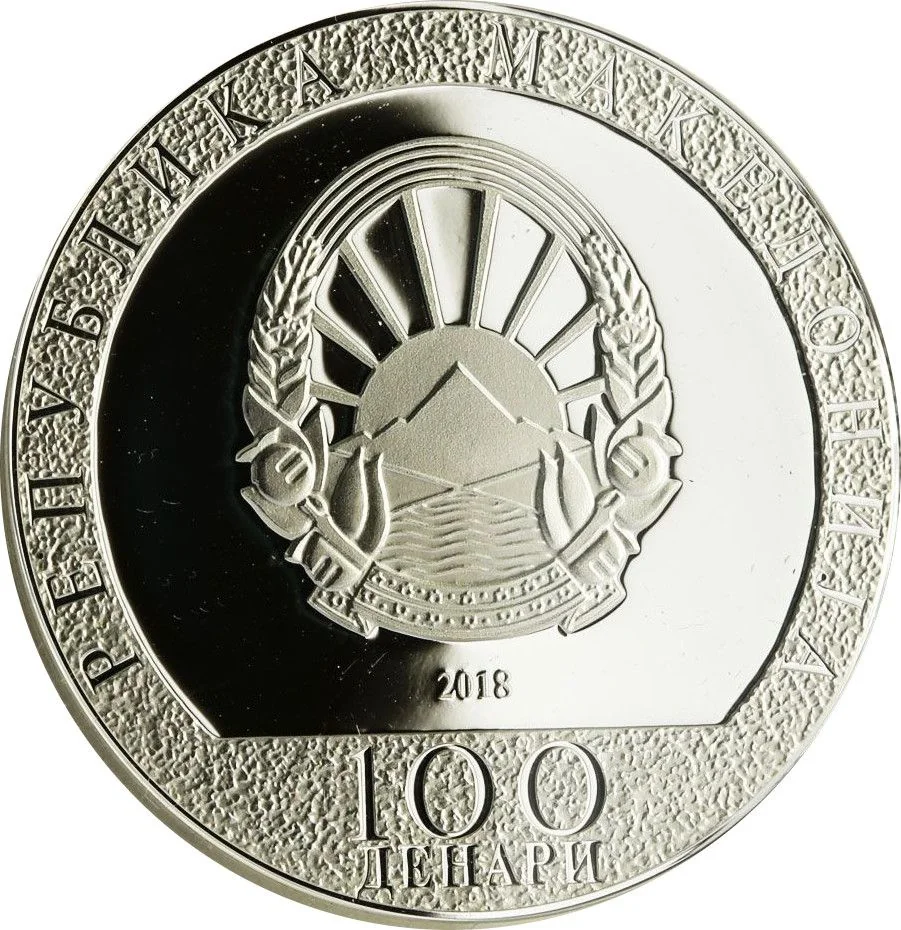
Coat of arms centered, lettering above, denomination and year below.
Inscription:
РЕПУБЛИКА МАКЕДОНИЈА
2018
100
ДЕНАРИ
2018
100
ДЕНАРИ
Translation:
REPUBLIC OF MACEDONIA
2018
100
DENARS
2018
100
DENARS
Script: Cyrillic
Language: Macedonian
Reverse
Description:
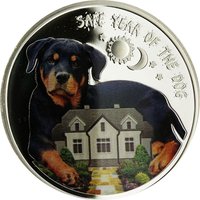
Dog behind a house under stars, sun, and moon. Text above.
Inscription:
SAFE YEAR OF THE DOG
Script: Latin
Edge
Categories
| Animal> Dog |
| Astrology> Chinese calendar |
Mintings
| Year | Mint Mark | Mintage | Quality | Collection |
|---|---|---|---|---|
| 2018 | — | — |
Historical background
In 2018, the currency situation in North Macedonia was characterized by notable stability, with the Macedonian denar (MKD) maintaining a firm and predictable exchange rate against the euro. This stability was primarily underpinned by a de facto currency peg, managed by the National Bank of the Republic of North Macedonia (NBRNM). The central bank actively intervened in the foreign exchange market to keep the denar trading within a very narrow band, effectively pegging it to the euro. This long-standing policy, in place for decades, provided a crucial anchor for inflation, fostered economic predictability for businesses and investors, and supported the country's high level of euroization in savings and loans.
The stable denar existed within a context of positive economic momentum following a prolonged political crisis. The resolution of the "name dispute" with Greece, leading to the Prespa Agreement and the country's subsequent NATO invitation, improved investor sentiment and reduced political risk premiums. This contributed to increased foreign direct investment and economic growth, which in turn supported the currency's stability. Furthermore, the NBRNM maintained adequate foreign currency reserves, which bolstered confidence in its ability to defend the peg and manage any potential external shocks.
However, this stability was not without underlying vulnerabilities. The economy remained heavily euroized, with a significant portion of bank deposits and loans denominated in euros, exposing the financial sector to indirect exchange rate risk. Additionally, as a small, open economy, North Macedonia remained susceptible to external pressures, including potential volatility in the European economy (its main trading partner) and shifts in global financial conditions. Nevertheless, throughout 2018, the managed float regime successfully provided a stable monetary environment, which was a key pillar of macroeconomic policy during a year of significant political transformation and economic growth.
The stable denar existed within a context of positive economic momentum following a prolonged political crisis. The resolution of the "name dispute" with Greece, leading to the Prespa Agreement and the country's subsequent NATO invitation, improved investor sentiment and reduced political risk premiums. This contributed to increased foreign direct investment and economic growth, which in turn supported the currency's stability. Furthermore, the NBRNM maintained adequate foreign currency reserves, which bolstered confidence in its ability to defend the peg and manage any potential external shocks.
However, this stability was not without underlying vulnerabilities. The economy remained heavily euroized, with a significant portion of bank deposits and loans denominated in euros, exposing the financial sector to indirect exchange rate risk. Additionally, as a small, open economy, North Macedonia remained susceptible to external pressures, including potential volatility in the European economy (its main trading partner) and shifts in global financial conditions. Nevertheless, throughout 2018, the managed float regime successfully provided a stable monetary environment, which was a key pillar of macroeconomic policy during a year of significant political transformation and economic growth.

✨ Legendary