

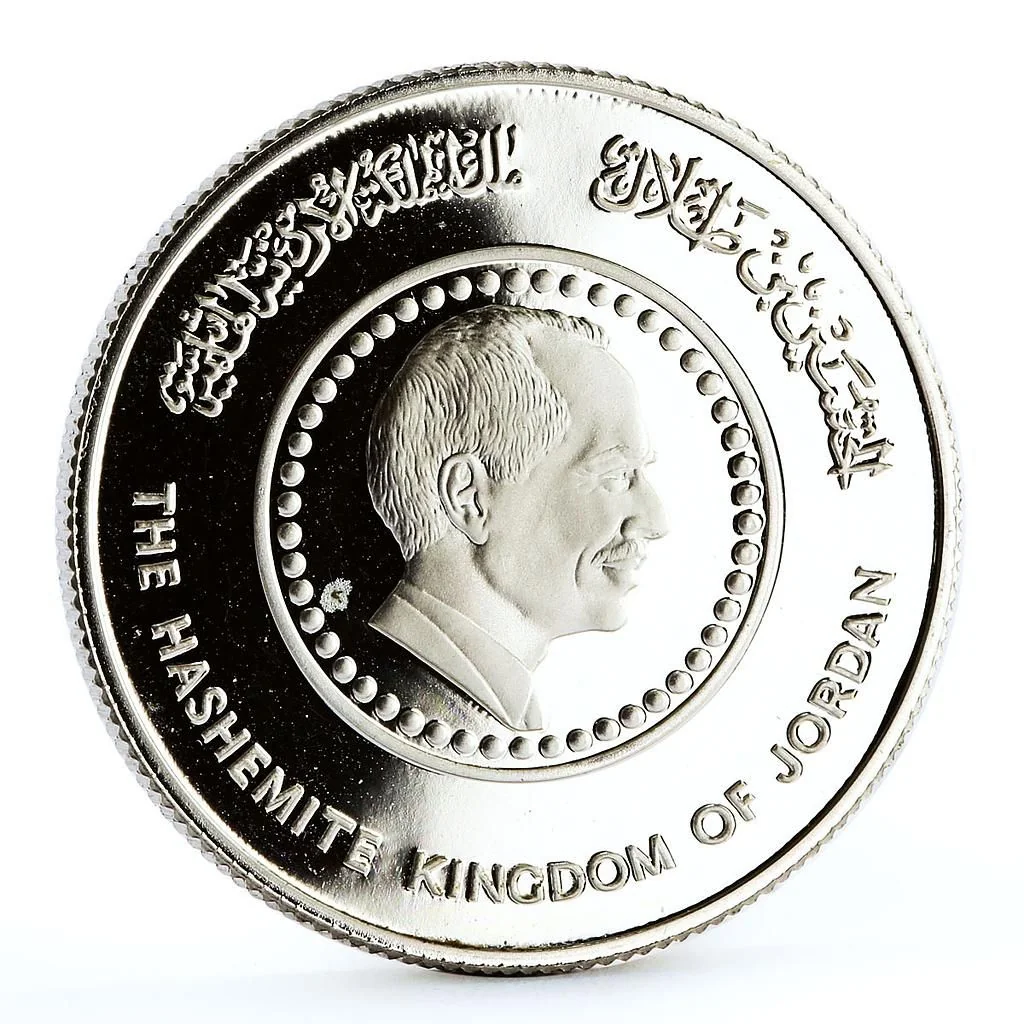
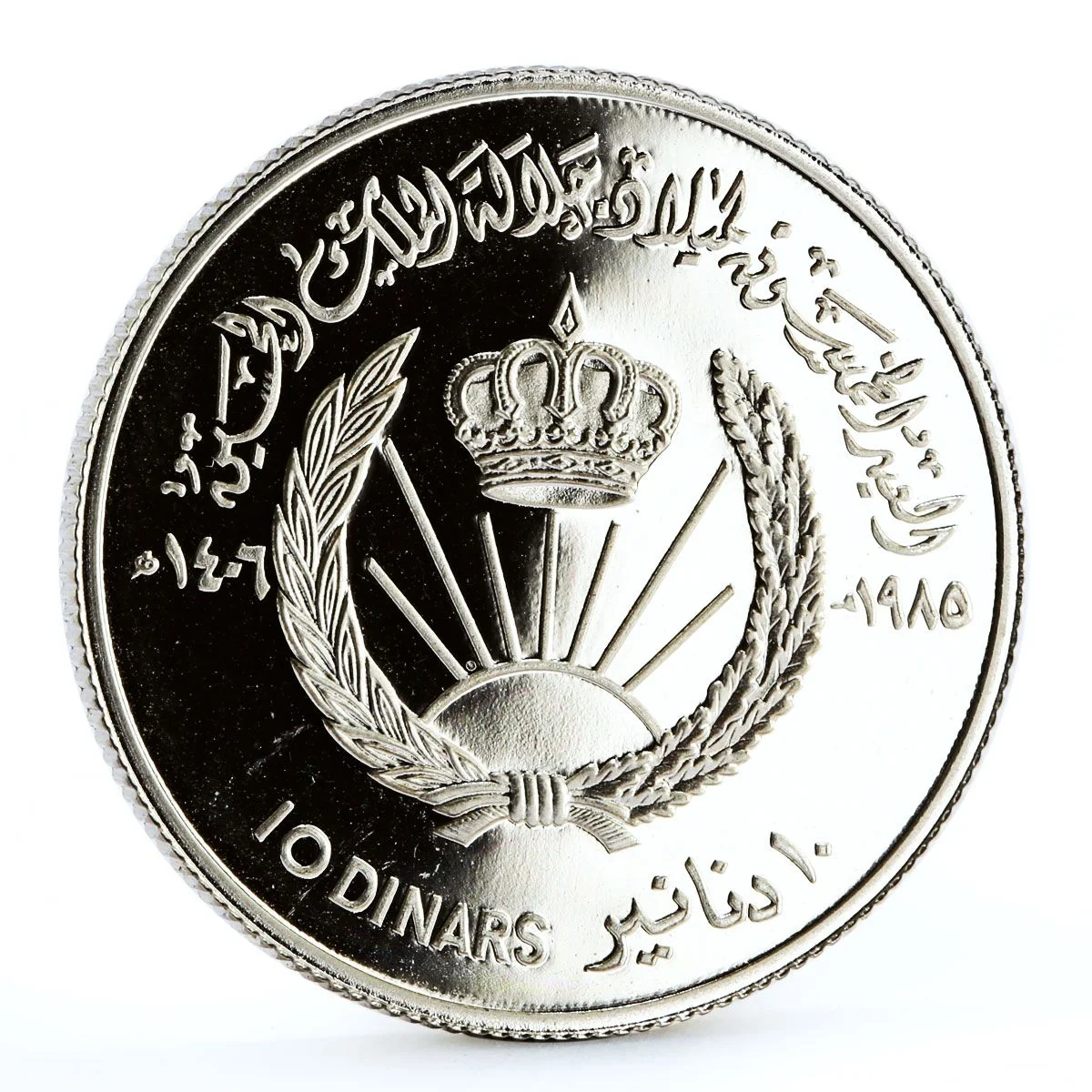
10 dinars (King Hussein bin Talal) – Jordan
Add to wishlist
Non-circulating coins
Commemoration: 50th Birthday of King Hussein bin Talal
Jordan
Context
Year: 1985
Islamic (Hijri) Year:: 1406
Issuer: Jordan
Ruler: Hussein bin Talal
Currency:
(since 1949)
Total mintage: 4,956
Material
References
KM: #
Numista: #102300
Value
Exchange value: 10 JOD
Bullion value: $35.05
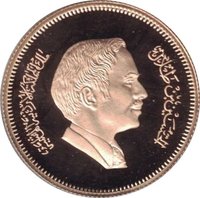
Obverse
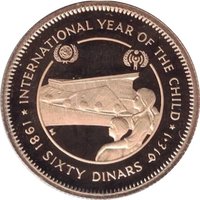
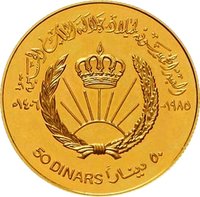
Reverse
Edge
Reeded
Mints
| Name | Mark |
|---|---|
| Royal Mint | — |
Mintings
| Year | Mint Mark | Mintage | Quality | Collection |
|---|---|---|---|---|
| 1985 | — | 4,956 | Proof |
Historical background
In 1985, Jordan faced a severe currency crisis rooted in a combination of external shocks and long-standing economic vulnerabilities. The nation's economy was heavily dependent on foreign aid, worker remittances from the Gulf, and phosphate exports, all of which had sharply declined in the early 1980s. A global recession, a slump in oil prices affecting Gulf patrons, and a cessation of Arab aid following Jordan's neutrality in the Iran-Iraq War created a massive balance-of-payments deficit. Concurrently, the Jordanian dinar, pegged to the U.S. dollar, became significantly overvalued, crippling exports and encouraging costly imports, which rapidly depleted the country's foreign currency reserves.
The government's initial response, led by Prime Minister Ahmad Obeidat, involved imposing strict import restrictions and seeking emergency loans. However, these measures proved insufficient to halt the speculative pressure against the dinar. By the summer of 1985, with reserves nearly exhausted, Jordan was forced to seek assistance from the International Monetary Fund (IMF). In August, the government announced a drastic, IMF-supported devaluation, cutting the dinar's value by approximately 30% against the dollar. This was a profound shock to a population accustomed to a strong and stable currency, leading to immediate price surges for imported goods and contributing to social discontent.
The 1985 devaluation marked a pivotal and painful turning point, ending an era of relative monetary stability. It forced Jordan to embark on a series of structural adjustment programs under IMF guidance, focusing on austerity, trade liberalization, and subsidy reductions. While these steps aimed to correct macroeconomic imbalances, they also ushered in a period of increased living costs and economic hardship for many Jordanians, setting the stage for the economic challenges and protests that would emerge in the late 1980s.
The government's initial response, led by Prime Minister Ahmad Obeidat, involved imposing strict import restrictions and seeking emergency loans. However, these measures proved insufficient to halt the speculative pressure against the dinar. By the summer of 1985, with reserves nearly exhausted, Jordan was forced to seek assistance from the International Monetary Fund (IMF). In August, the government announced a drastic, IMF-supported devaluation, cutting the dinar's value by approximately 30% against the dollar. This was a profound shock to a population accustomed to a strong and stable currency, leading to immediate price surges for imported goods and contributing to social discontent.
The 1985 devaluation marked a pivotal and painful turning point, ending an era of relative monetary stability. It forced Jordan to embark on a series of structural adjustment programs under IMF guidance, focusing on austerity, trade liberalization, and subsidy reductions. While these steps aimed to correct macroeconomic imbalances, they also ushered in a period of increased living costs and economic hardship for many Jordanians, setting the stage for the economic challenges and protests that would emerge in the late 1980s.

✨ Legendary