

50 pence (Queen Elizabeth II accession) – United Kingdom
Add to wishlist
Circulating commemorative coins
Commemoration: 70th anniversary of accession of Queen Elizabeth II
United Kingdom
Context
Year: 2022
Issuer: United Kingdom
Ruler: Elizabeth II
Currency:
(since 1971)
Total mintage: 5,055,059
Material
Diameter: 27.3 mm
Weight: 8 g
Thickness: 1.8 mm
Shape: Equilateral curve heptagon
Technique: Milled
Alignment: Medal alignment
flip
References
KM: #
Numista: #317727
Value
Exchange value: 0.50 GBP
Inflation-adjusted value: 0.61 GBP
Obverse
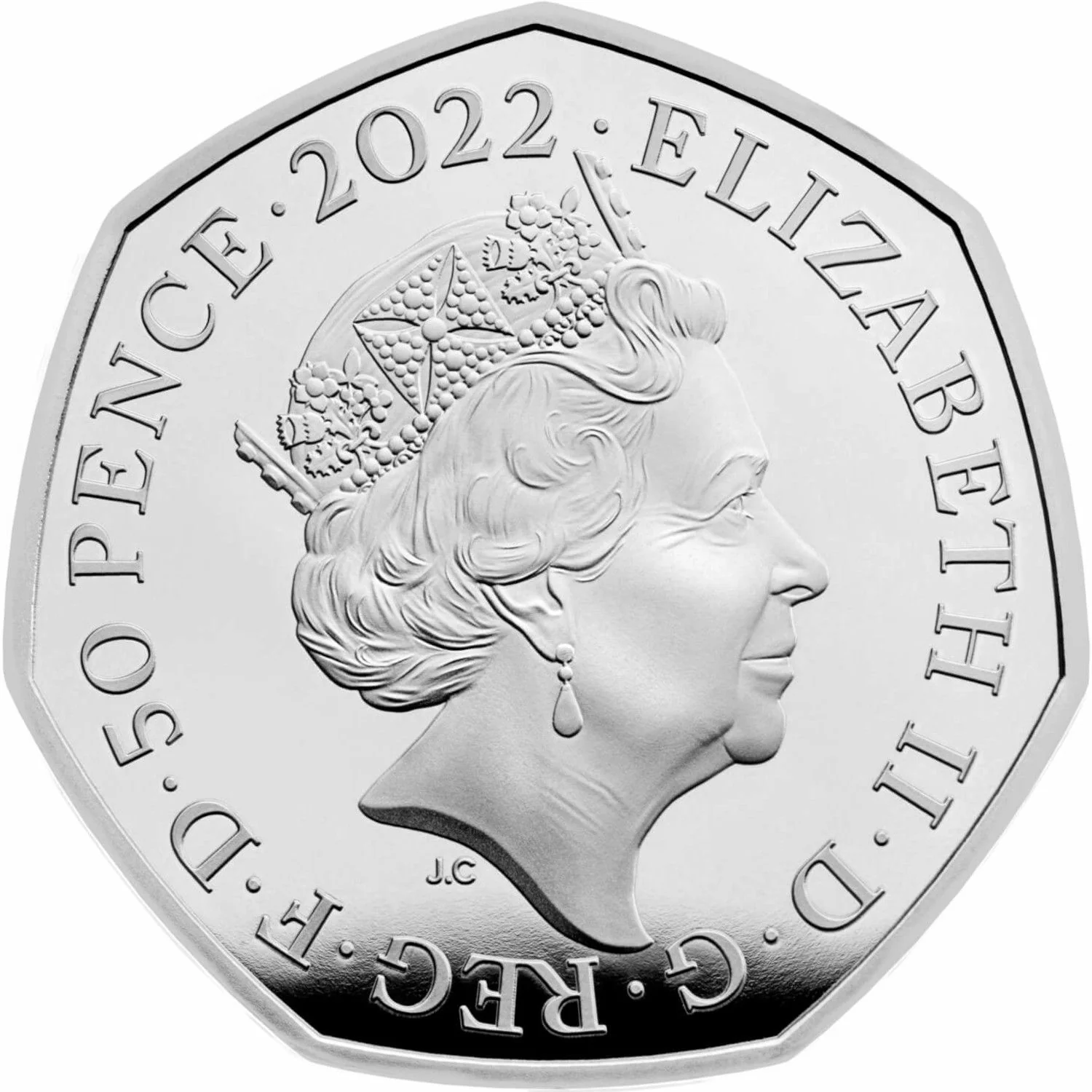
Description:
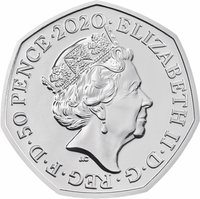
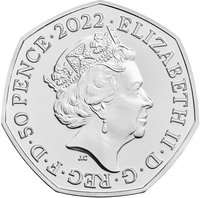
Queen Elizabeth V crowned right, wearing George IV State Diadem.
Inscription:
ELIZABETH II·D·G·REG·F·D·50 PENCE·2022·
J.C
J.C
Translation:
Elizabeth the Second, by the Grace of God, Queen, Defender of the Faith, 50 Pence, 2022
J.C
J.C
Script: Latin
Designer: Jody Clark
Reverse
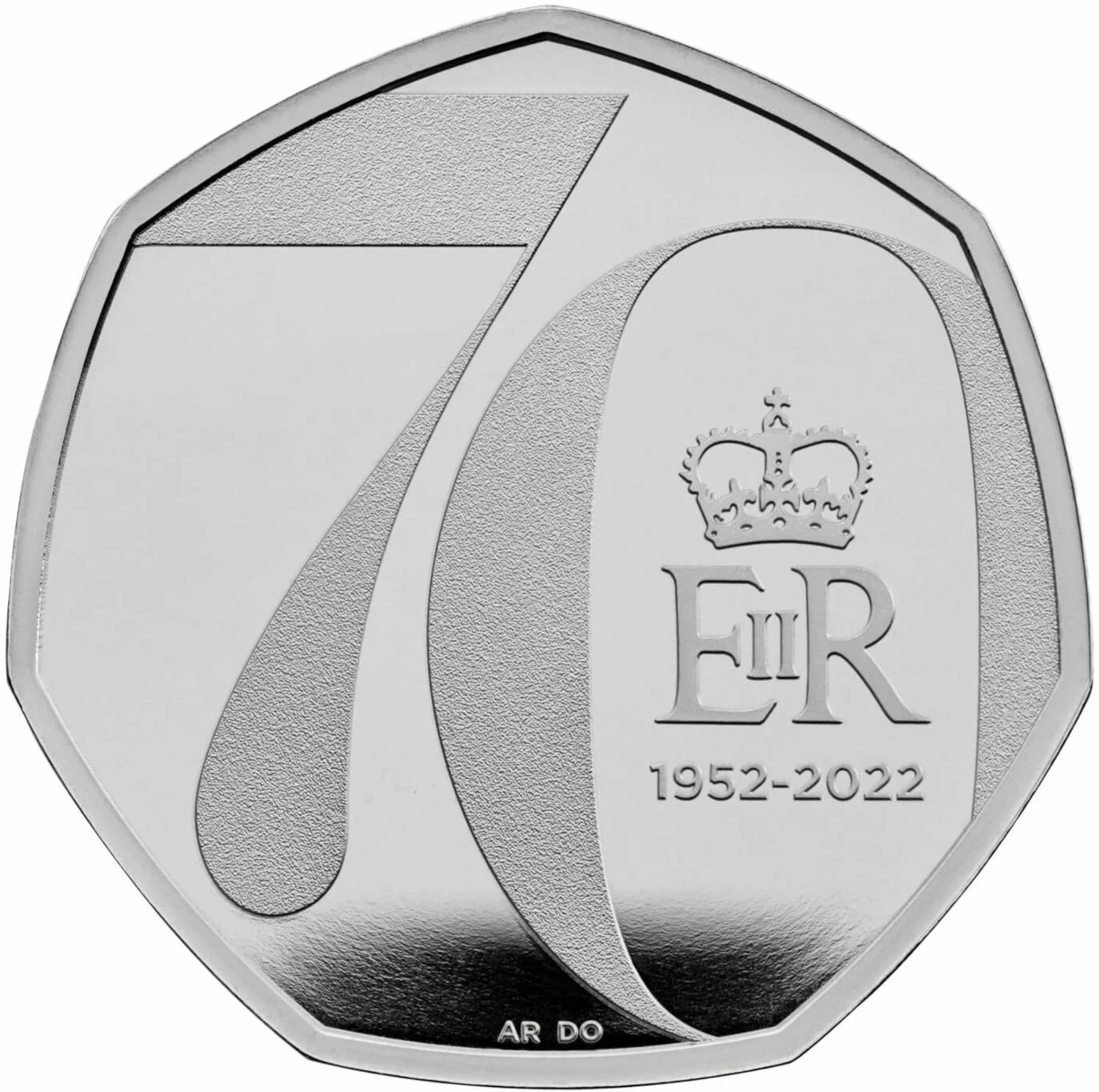
Description:
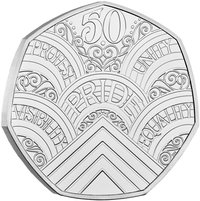
70 with the Royal Cypher and dates.
Inscription:
70
E II R
1952 - 2022
AR DO
E II R
1952 - 2022
AR DO
Translation:
Elizabeth II Regina
1952 - 2022
Silver
1952 - 2022
Silver
Script: Latin
Designers: Andrew Ross, Deborah Osborne
Edge
Plain
Mints
| Name | Mark |
|---|---|
| Royal Mint | — |
Mintings
| Year | Mint Mark | Mintage | Quality | Collection |
|---|---|---|---|---|
| 2022 | — | 45,636 | BU | |
| 2022 | — | 5,000,070 | ||
| 2022 | — | 9,353 | Proof |
Historical background
The United Kingdom's currency situation in 2022 was defined by a dramatic and sustained decline in the value of the pound sterling, driven by a combination of global pressures and domestic policy shocks. The year began with the pound already under strain from high inflation, which was exacerbated by the war in Ukraine pushing energy and commodity prices higher globally. However, the currency faced its most severe stress in September following the government's announcement of the "mini-budget" under Prime Minister Liz Truss. This unfunded package of large tax cuts and energy subsidies spooked financial markets, leading to a collapse in investor confidence. The pound plummeted to a historic low of nearly $1.03 against the US dollar, while government borrowing costs soared.
This currency crisis was fundamentally a crisis of credibility. Markets judged the fiscal plans as unsustainable, fearing they would drastically increase public debt and force the Bank of England into more aggressive interest rate hikes to combat the resulting inflationary pressure. The severe sell-off in UK government bonds (gilts) threatened the stability of pension funds, forcing the Bank of England to make an emergency intervention to buy gilts and restore order. This extraordinary step highlighted the severe tension between the government's expansionary fiscal policy and the central bank's contractionary monetary policy aimed at taming inflation, which had risen into double digits.
By the final quarter, the situation stabilised but left a lasting impact. The reversal of most mini-budget measures and the appointment of a new government under Rishi Sunak restored some market calm, allowing the pound to recover to around $1.20 by year-end. Nevertheless, the legacy of 2022 was a significantly weakened sterling, contributing to a cost-of-living crisis by making imports more expensive, and underscoring the UK's vulnerability to shifts in international investor sentiment amid persistent inflation and economic uncertainty.
This currency crisis was fundamentally a crisis of credibility. Markets judged the fiscal plans as unsustainable, fearing they would drastically increase public debt and force the Bank of England into more aggressive interest rate hikes to combat the resulting inflationary pressure. The severe sell-off in UK government bonds (gilts) threatened the stability of pension funds, forcing the Bank of England to make an emergency intervention to buy gilts and restore order. This extraordinary step highlighted the severe tension between the government's expansionary fiscal policy and the central bank's contractionary monetary policy aimed at taming inflation, which had risen into double digits.
By the final quarter, the situation stabilised but left a lasting impact. The reversal of most mini-budget measures and the appointment of a new government under Rishi Sunak restored some market calm, allowing the pound to recover to around $1.20 by year-end. Nevertheless, the legacy of 2022 was a significantly weakened sterling, contributing to a cost-of-living crisis by making imports more expensive, and underscoring the UK's vulnerability to shifts in international investor sentiment amid persistent inflation and economic uncertainty.

🌱 Common