

1 dollar (Negro National Baseball League) – United States
Add to wishlist
Non-circulating coins
Commemoration: 100th anniversary of the Negro National Baseball League
United States
Context
Material
References
KM: #
Numista: #315923
Value
Exchange value: 1 USD = $1.00
Bullion value: $67.03
Inflation-adjusted value: 1.18 USD
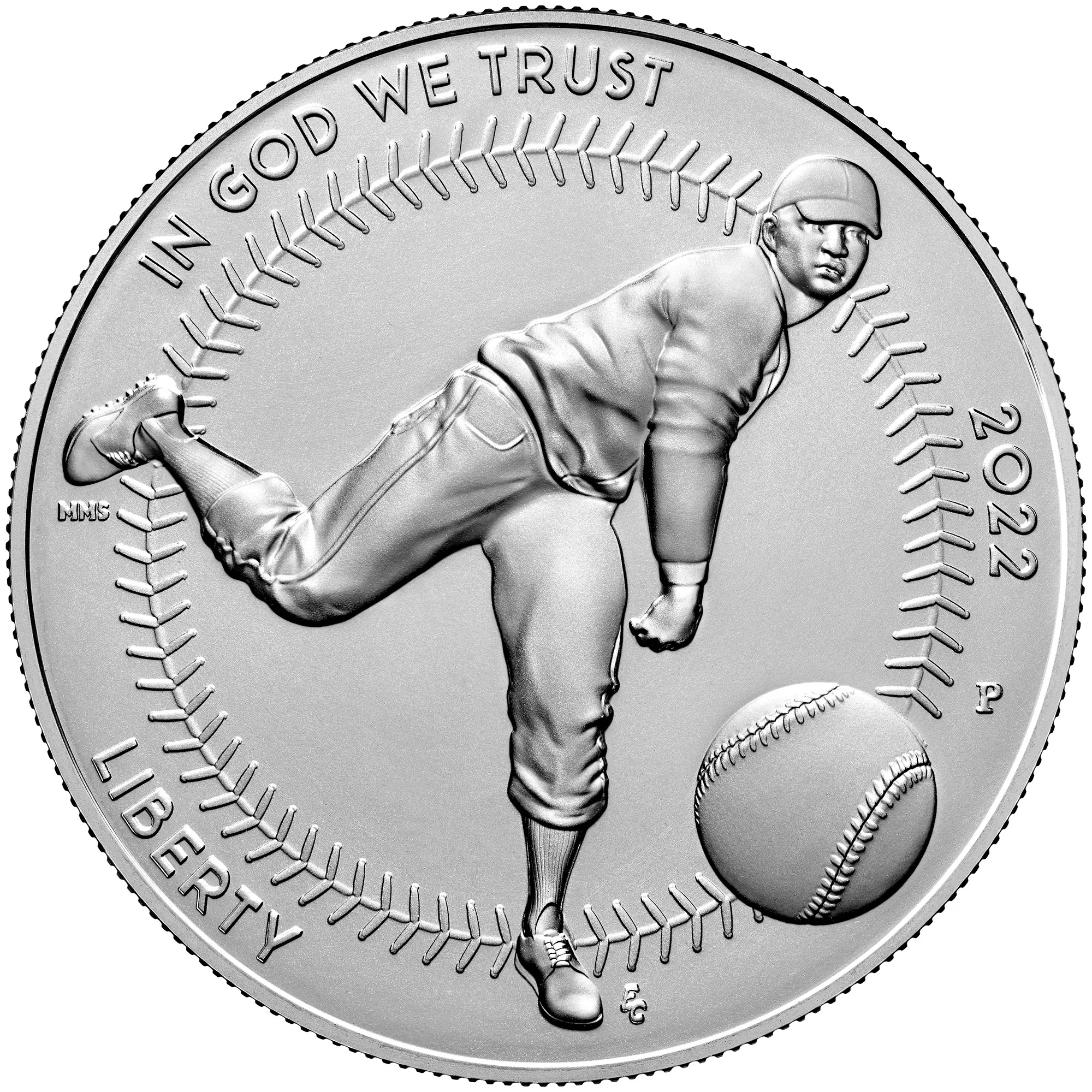
Obverse
Description:
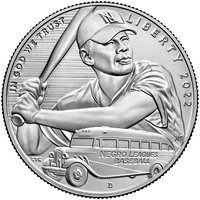
A pitcher mid-throw, a baseball in foreground, with stitching border and surrounding inscription.
Inscription:
IN GOD WE TRUST
2022
LIBERTY
2022
LIBERTY
Script: Latin
Engraver: Eric David Custer
Designer: Matt Swaim
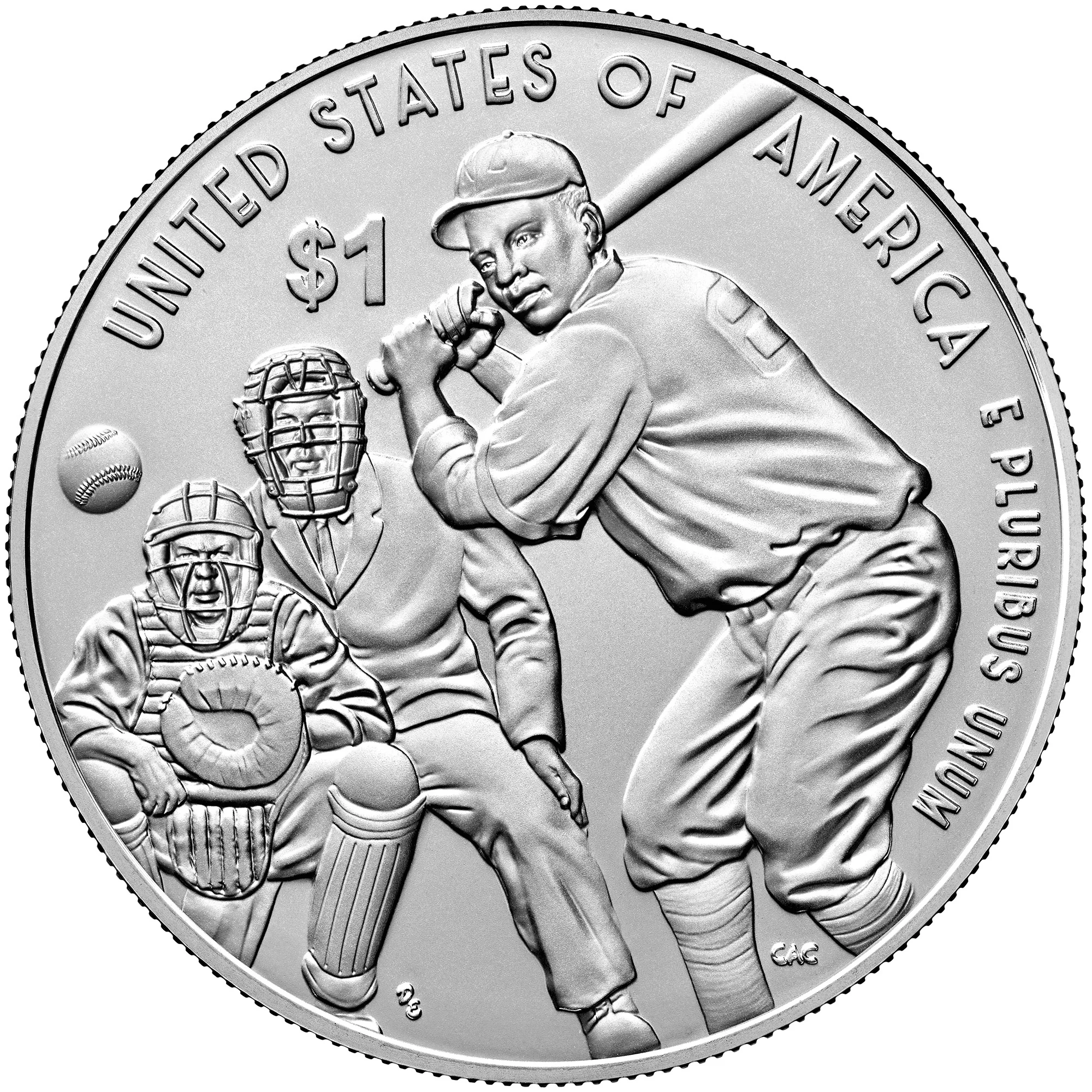
Reverse
Description:
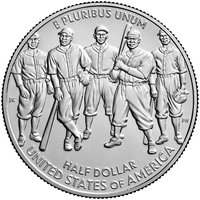
Batter's view of a pitch to the catcher.
Inscription:
UNITED STATES OF AMERICA
$1
E PLURIBUS UNUM
DE CAC
$1
E PLURIBUS UNUM
DE CAC
Translation:
UNITED STATES OF AMERICA
$1
OUT OF MANY, ONE
DE CAC
$1
OUT OF MANY, ONE
DE CAC
Script: Latin
Engraver: Craig Campbell
Designer: Don Everhart
Edge
Reeded
Mints
| Name | Mark |
|---|---|
| United States Mint of Philadelphia | P |
Historical background
In 2022, the United States faced a complex and challenging currency environment defined primarily by aggressive monetary policy tightening by the Federal Reserve. In response to persistent and multi-decade high inflation, the Fed embarked on its most rapid series of interest rate hikes since the 1980s, raising the federal funds rate from near zero in March to a target range of 4.25%-4.50% by year's end. This decisive action was the dominant force driving the value of the U.S. dollar, which surged to a 20-year high against a basket of major currencies. The dollar's strength was fueled by the interest rate differential, which attracted global capital seeking higher returns, and its traditional role as a safe-haven asset amid growing fears of a global recession triggered by the war in Ukraine and ongoing energy crises.
The strong dollar had significant and divergent consequences both domestically and internationally. For Americans, it helped moderate import prices somewhat, providing a minor counterbalance to domestic inflation, but it also made U.S. exports more expensive and less competitive abroad, posing a headwind for multinational corporations. Globally, the dollar's appreciation created severe strains, increasing the cost of dollar-denominated commodities and debt servicing for emerging markets and developing nations, raising the risk of financial crises. Within the U.S., the Fed's tightening, combined with the dollar's rise, contributed to increased volatility in financial markets, a sharp correction in cryptocurrency values, and a cooling housing market as mortgage rates climbed rapidly.
Despite the Fed's actions, inflation proved remarkably stubborn throughout the year, driven by tight labor markets, strong consumer demand, and persistent supply chain disruptions. This created a tense economic backdrop where the central bank's commitment to curbing price increases risked over-tightening and triggering a recession. Thus, the 2022 U.S. currency situation was a story of a powerfully appreciating dollar acting as a key transmission tool for monetary policy, with its effects rippling through the global economy while domestic policymakers walked a narrow path between taming inflation and maintaining economic stability.
The strong dollar had significant and divergent consequences both domestically and internationally. For Americans, it helped moderate import prices somewhat, providing a minor counterbalance to domestic inflation, but it also made U.S. exports more expensive and less competitive abroad, posing a headwind for multinational corporations. Globally, the dollar's appreciation created severe strains, increasing the cost of dollar-denominated commodities and debt servicing for emerging markets and developing nations, raising the risk of financial crises. Within the U.S., the Fed's tightening, combined with the dollar's rise, contributed to increased volatility in financial markets, a sharp correction in cryptocurrency values, and a cooling housing market as mortgage rates climbed rapidly.
Despite the Fed's actions, inflation proved remarkably stubborn throughout the year, driven by tight labor markets, strong consumer demand, and persistent supply chain disruptions. This created a tense economic backdrop where the central bank's commitment to curbing price increases risked over-tightening and triggering a recession. Thus, the 2022 U.S. currency situation was a story of a powerfully appreciating dollar acting as a key transmission tool for monetary policy, with its effects rippling through the global economy while domestic policymakers walked a narrow path between taming inflation and maintaining economic stability.
⭐ Rare