

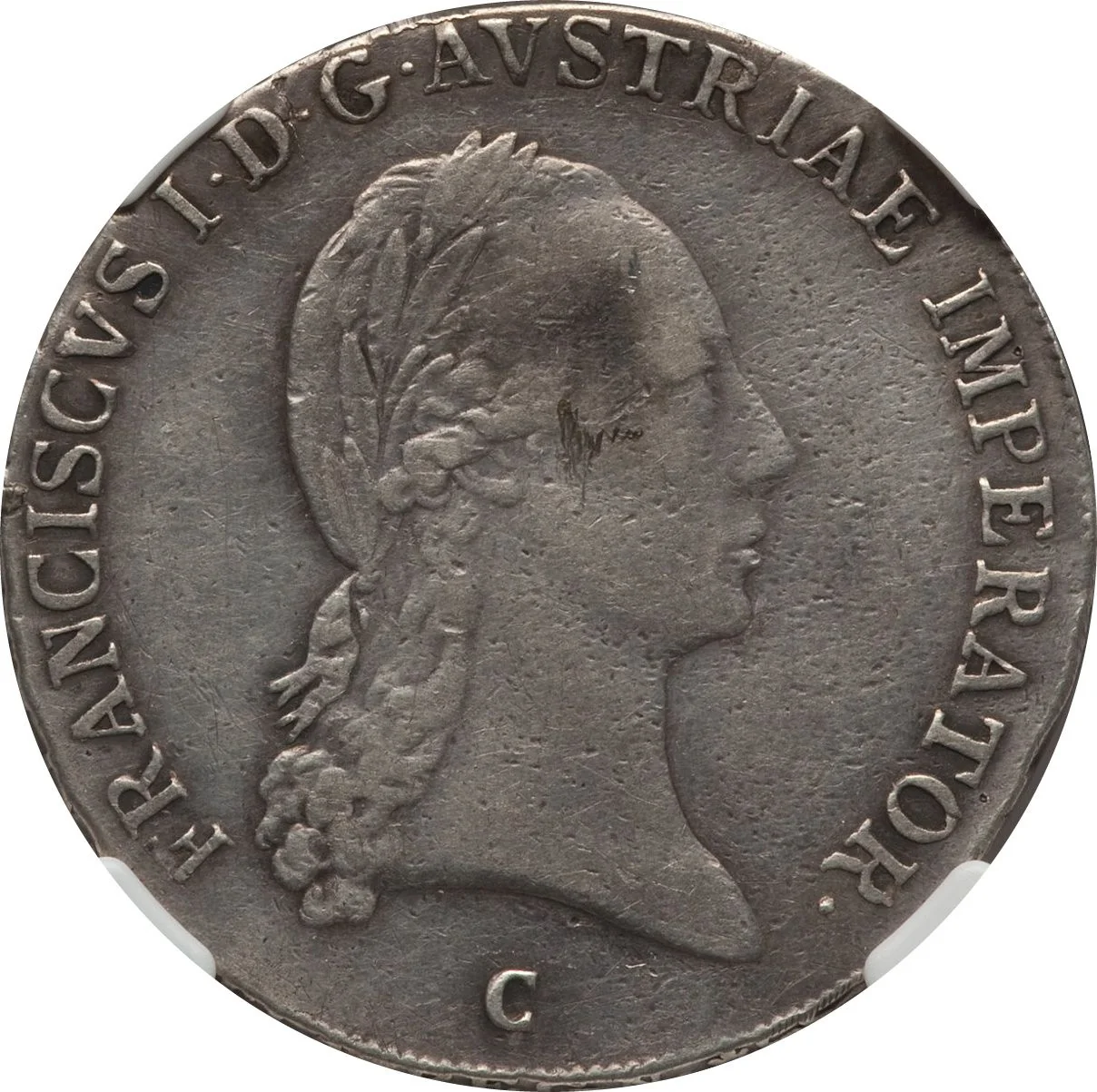
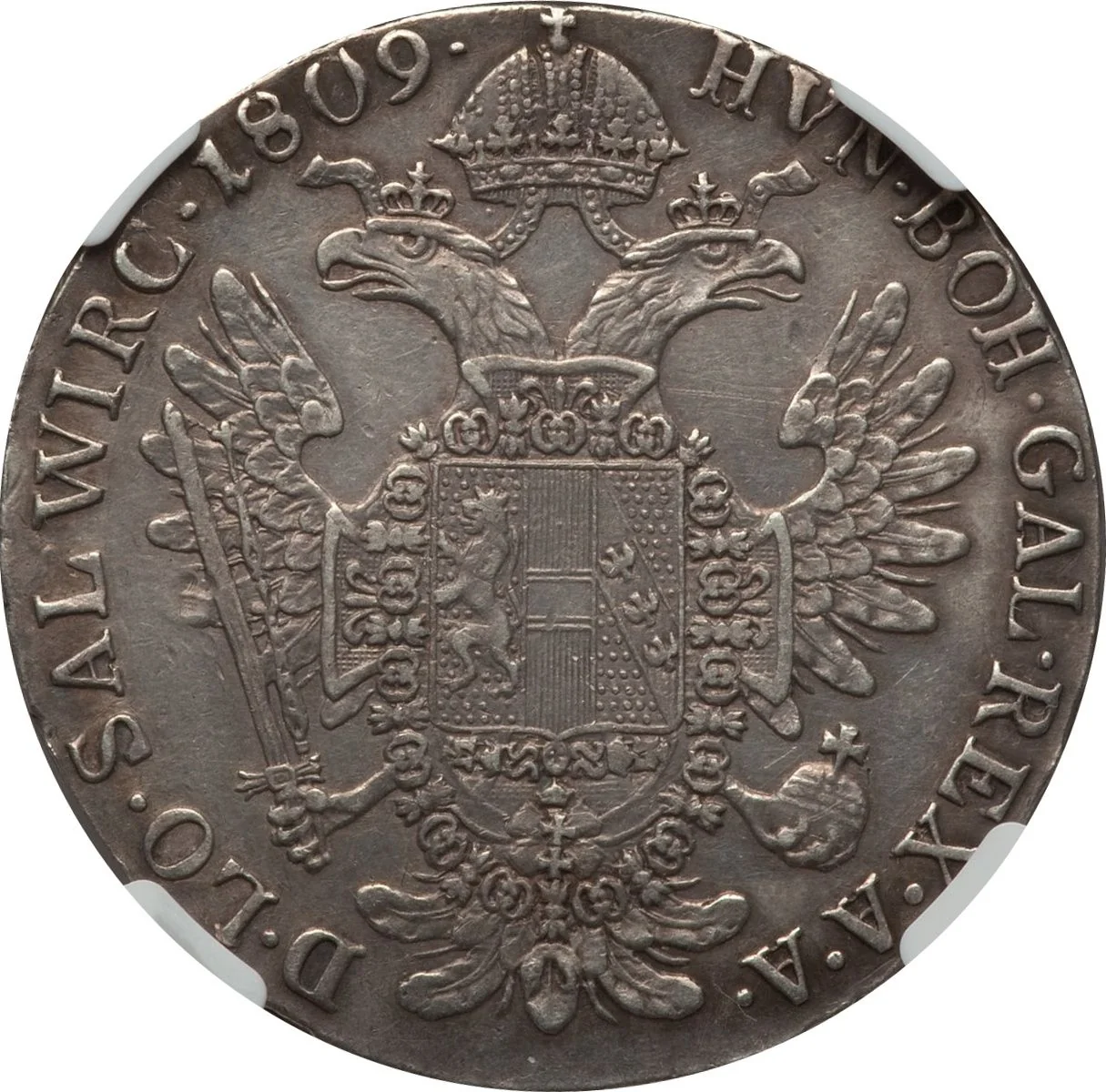
½ Thaler – Austrian Empire
Austria
Context
Years: 1807–1810
Country: Austria 
Issuer: Austrian Empire
Ruler: Francis I of Austria
Currency:
(1754—1857)
Demonetized: Yes
Material
References
KM: #Click to copy to clipboard2151
Numista: #31504
Value
Bullion value: $33.69
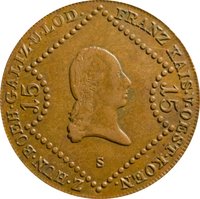
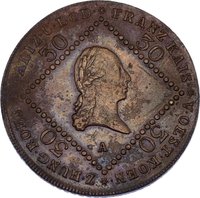
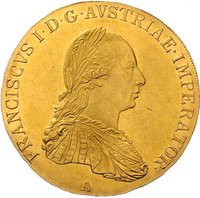
Obverse
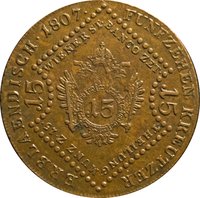
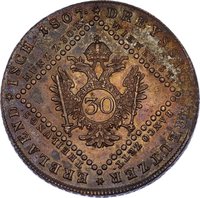
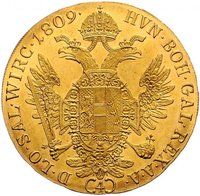
Reverse
Edge
Mints
| Name | Mark |
|---|---|
| Münze Österreich | A |
| Prague | C |
Historical background
In 1807, the currency situation within the Austrian Empire was dire and complex, a direct consequence of the relentless financial demands of the Napoleonic Wars. The state treasury, drained by years of conflict and military defeats, resorted to the large-scale printing of paper money known as Bancozettel. Originally introduced in 1762, these notes were not backed by sufficient silver reserves, leading to severe inflation. By 1807, the paper gulden had lost approximately two-thirds of its face value against silver, creating a chaotic system where goods had both a paper price and a far higher metallic coin price, undermining everyday commerce and state finances.
This monetary instability was exacerbated by the geopolitical pressures of the Continental System, Napoleon's blockade against British trade, which Austria was forced to join after the Treaty of Pressburg in 1805. While intended to cripple Britain, the blockade disrupted Austrian commerce and access to capital, further straining the economy. The government attempted stopgap measures, such as issuing "Einlösungsscheine" (redemption certificates) and levying new taxes, but these failed to restore confidence. The public, understandably, hoarded silver coins, which disappeared from circulation, leaving the depreciating paper notes as the primary medium of exchange for most transactions.
Consequently, the Empire operated in a state of fiscal precariousness. The disparity between the nominal and real value of money crippled long-term planning, credit, and economic stability. This financial weakness directly limited the state's ability to fund its bureaucracy and military, a critical handicap as it prepared for the renewed conflict that would culminate in the War of the Fifth Coalition in 1809. Thus, the currency crisis of 1807 was not merely an economic issue but a fundamental threat to the Habsburg monarchy's capacity to act as a sovereign European power.
This monetary instability was exacerbated by the geopolitical pressures of the Continental System, Napoleon's blockade against British trade, which Austria was forced to join after the Treaty of Pressburg in 1805. While intended to cripple Britain, the blockade disrupted Austrian commerce and access to capital, further straining the economy. The government attempted stopgap measures, such as issuing "Einlösungsscheine" (redemption certificates) and levying new taxes, but these failed to restore confidence. The public, understandably, hoarded silver coins, which disappeared from circulation, leaving the depreciating paper notes as the primary medium of exchange for most transactions.
Consequently, the Empire operated in a state of fiscal precariousness. The disparity between the nominal and real value of money crippled long-term planning, credit, and economic stability. This financial weakness directly limited the state's ability to fund its bureaucracy and military, a critical handicap as it prepared for the renewed conflict that would culminate in the War of the Fifth Coalition in 1809. Thus, the currency crisis of 1807 was not merely an economic issue but a fundamental threat to the Habsburg monarchy's capacity to act as a sovereign European power.
✨ Legendary