

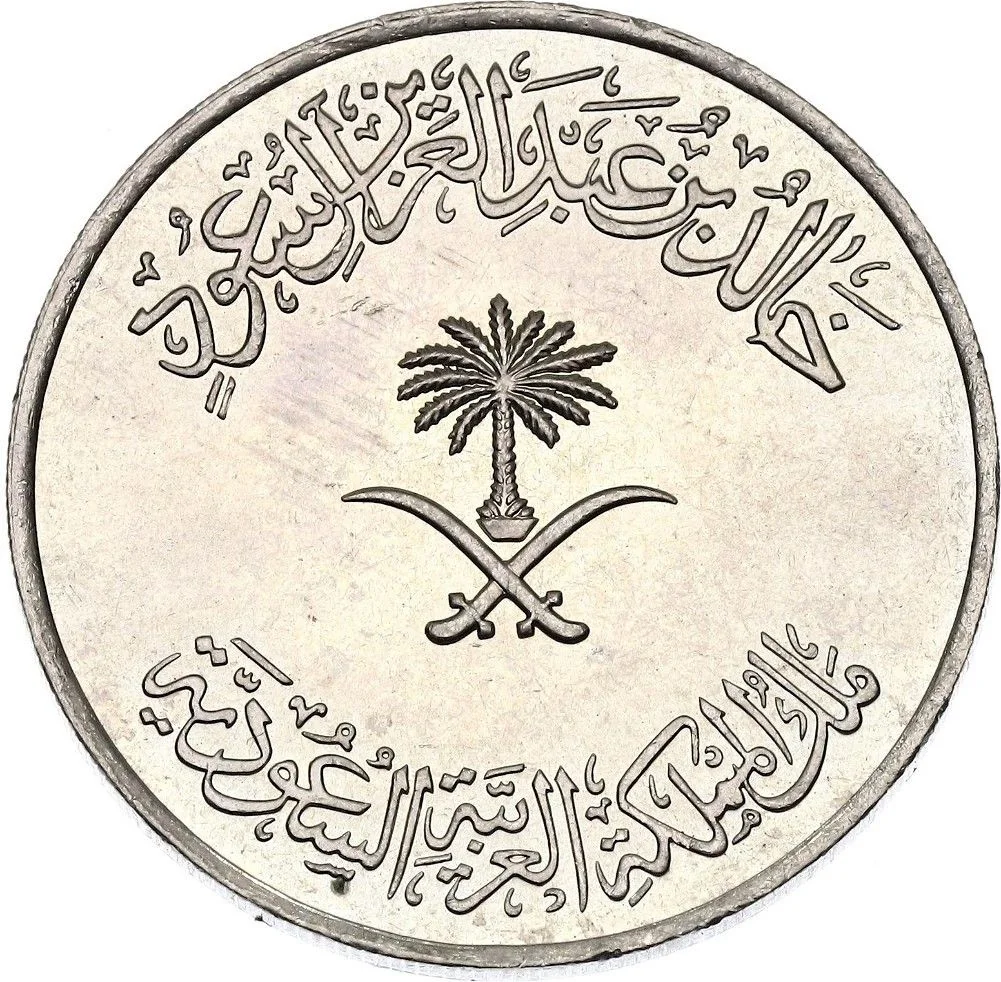
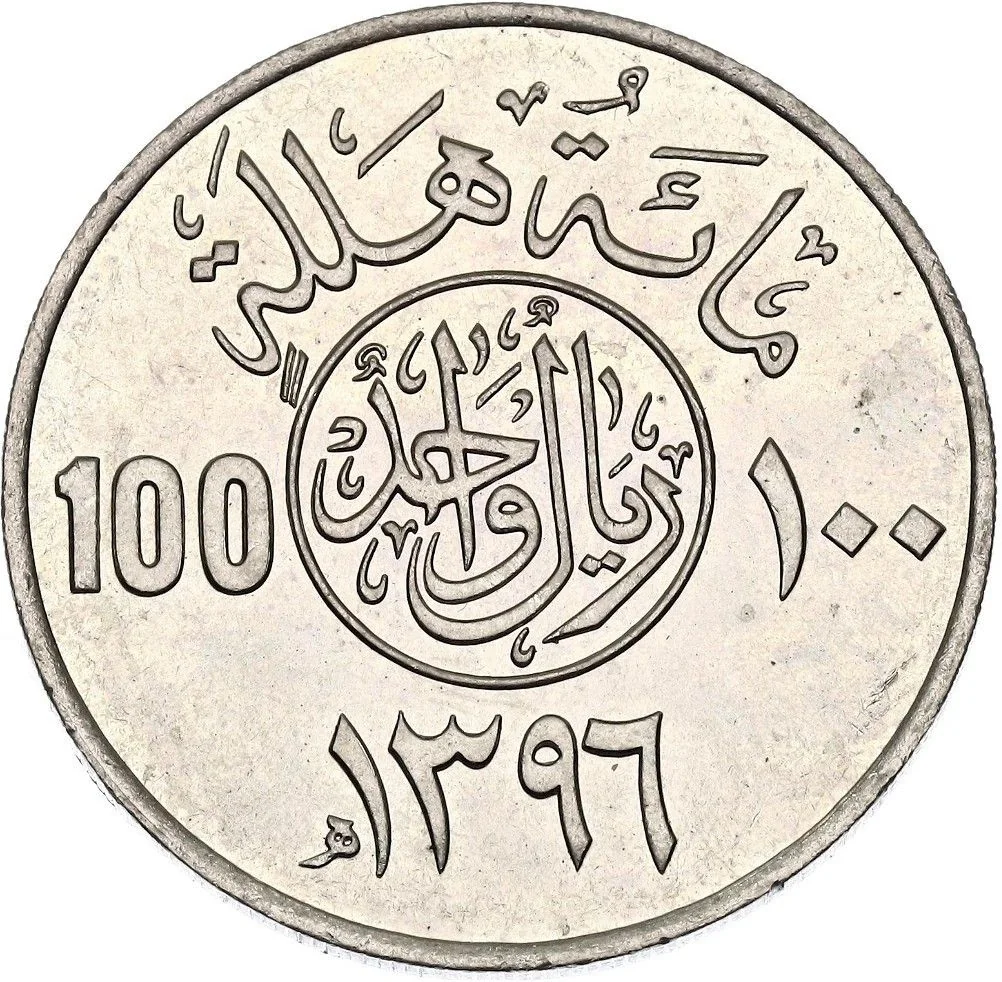
100 halalas – Saudi Arabia
Add to wishlist
Saudi Arabia
Context
Years: 1976–1980
Issuer: Saudi Arabia
Ruler: Khalid bin Abdulaziz
Currency:
(since 1960)
Total mintage: 30,250,000
Material
References
KM: #
Numista: #3145
Value
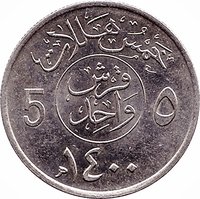
Exchange value: 1 SAR
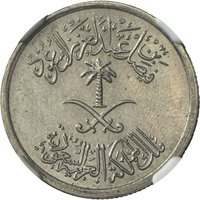
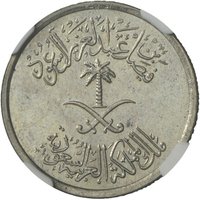
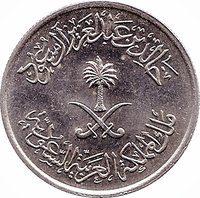
Obverse
Reverse
Edge
Reeded
Categories
| Plant> Tree |
| Symbols> Coat of Arms |
| Object> Cold weapons |
Mints
| Name | Mark |
|---|---|
| Royal Mint | — |
Mintings
| Year | Mint Mark | Mintage | Quality | Collection |
|---|---|---|---|---|
| 1976 | — | 250,000 | ||
| 1980 | — | 30,000,000 |
Historical background
In 1976, Saudi Arabia's currency situation was fundamentally defined by its recent economic transformation and its pegged exchange rate regime. The Saudi riyal was firmly fixed to the U.S. dollar at a rate of 3.75 riyals to one dollar, a peg established in 1960. This monetary anchor provided crucial stability and predictability for the kingdom's burgeoning oil economy, which was then in the midst of a massive revenue surge following the 1973 oil embargo and subsequent price increases. The peg facilitated international trade, particularly for oil exports denominated in dollars, and supported the government's ambitious infrastructure and development spending under its Five-Year Plans.
The country's monetary policy was managed by the Saudi Arabian Monetary Agency (SAMA), established in 1952, which functioned as a central bank. SAMA's primary challenge in the mid-1970s was managing immense foreign exchange inflows without causing excessive domestic inflation. The agency pursued a conservative policy, investing a significant portion of the oil windfall in foreign assets (largely U.S. Treasury securities) and maintaining high levels of international reserves. This "sterilization" effort aimed to prevent the rapid growth of the domestic money supply from overheating the economy.
Despite these efforts, the period was not without inflationary pressures, largely imported via the dollar peg during a time of global inflation and driven by massive domestic demand for goods and construction materials. However, the currency itself remained strong and stable, underpinned by immense foreign reserves and unwavering government commitment to the dollar peg. The 1976 context thus represents a period of confident monetary management, where the riyal's fixed value served as a cornerstone for leveraging new oil wealth into national development, while policymakers carefully balanced domestic growth with external stability.
The country's monetary policy was managed by the Saudi Arabian Monetary Agency (SAMA), established in 1952, which functioned as a central bank. SAMA's primary challenge in the mid-1970s was managing immense foreign exchange inflows without causing excessive domestic inflation. The agency pursued a conservative policy, investing a significant portion of the oil windfall in foreign assets (largely U.S. Treasury securities) and maintaining high levels of international reserves. This "sterilization" effort aimed to prevent the rapid growth of the domestic money supply from overheating the economy.
Despite these efforts, the period was not without inflationary pressures, largely imported via the dollar peg during a time of global inflation and driven by massive domestic demand for goods and construction materials. However, the currency itself remained strong and stable, underpinned by immense foreign reserves and unwavering government commitment to the dollar peg. The 1976 context thus represents a period of confident monetary management, where the riyal's fixed value served as a cornerstone for leveraging new oil wealth into national development, while policymakers carefully balanced domestic growth with external stability.
🌱 Very Common