

1 paisa – Pakistan
Add to wishlist
Circulating commemorative coins
Commemoration: F.A.O.
Pakistan
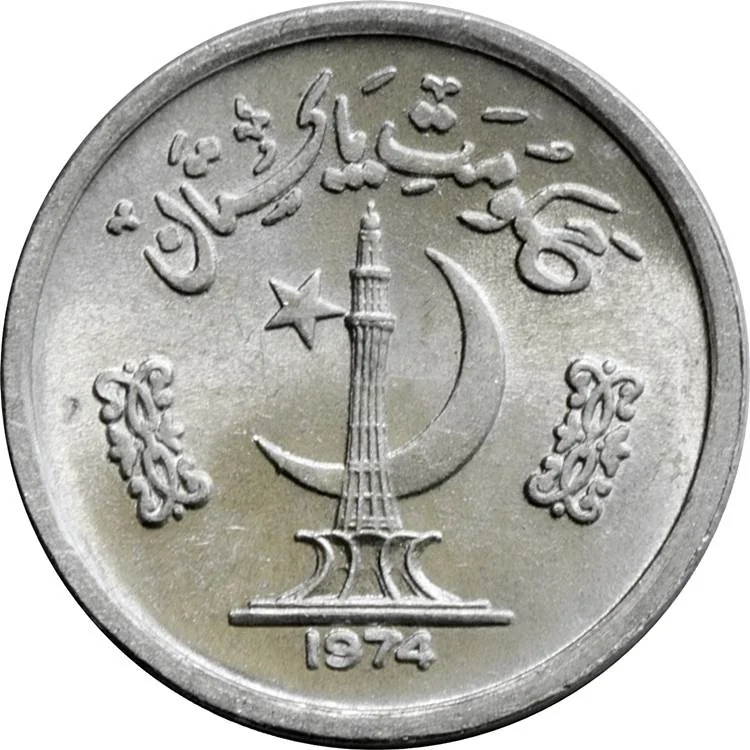
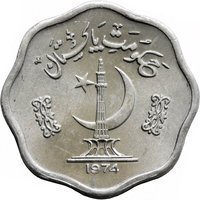
Obverse
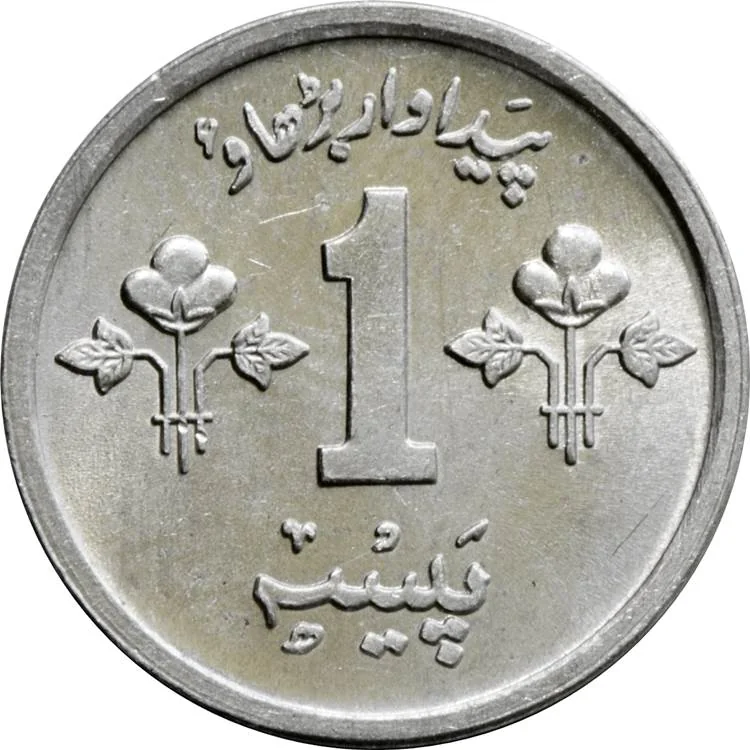
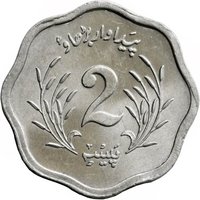
Reverse
Description:
Cotton Bloom on both sides. (Theme: Agriculture - Cash Crop)
Inscription:
پیداوار بڑھاؤ
1
پیسہ
1
پیسہ
Translation:
Increase production
Money
Money
Language: Urdu
Edge
Plain
Categories
| Organization> FAO |
Mints
| Name | Mark |
|---|---|
| Lahore | — |
Mintings
| Year | Mint Mark | Mintage | Quality | Collection |
|---|---|---|---|---|
| 1974 | — | 14,230,000 | ||
| 1975 | — | — | ||
| 1976 | — | 49,180,000 | ||
| 1977 | — | 62,750,000 | ||
| 1978 | — | 20,380,000 | ||
| 1979 | — | 5,630,000 |
Historical background
In 1974, Pakistan's currency situation was fundamentally shaped by the nationalization reforms enacted by Prime Minister Zulfikar Ali Bhutto's government. A key policy was the nationalization of all domestic private banks in 1974, which brought the financial sector under state control. This move aimed to direct credit toward national development priorities and reduce the influence of industrial elites, but it also centralized monetary policy and banking operations under government authority, altering the dynamics of currency management and credit distribution.
The period was marked by a managed exchange rate regime where the Pakistani rupee was pegged to a basket of currencies, heavily influenced by the US dollar. While this provided some stability, the economy faced pressures from the 1973 oil price shock, which widened the trade deficit and put downward pressure on the rupee's value. Inflation was a growing concern, exacerbated by global commodity price increases and domestic fiscal policies, eroding purchasing power and creating economic strain for ordinary citizens.
Furthermore, the separation of East Pakistan in 1971 continued to cast a long shadow. The loss of the significant foreign exchange earnings from East Pakistan's jute and tea exports weakened the country's external account position. Consequently, Pakistan became increasingly reliant on foreign aid and loans, particularly from oil-rich Middle Eastern nations and international institutions, to support its balance of payments and maintain foreign exchange reserves, setting a precedent for future external dependency.
The period was marked by a managed exchange rate regime where the Pakistani rupee was pegged to a basket of currencies, heavily influenced by the US dollar. While this provided some stability, the economy faced pressures from the 1973 oil price shock, which widened the trade deficit and put downward pressure on the rupee's value. Inflation was a growing concern, exacerbated by global commodity price increases and domestic fiscal policies, eroding purchasing power and creating economic strain for ordinary citizens.
Furthermore, the separation of East Pakistan in 1971 continued to cast a long shadow. The loss of the significant foreign exchange earnings from East Pakistan's jute and tea exports weakened the country's external account position. Consequently, Pakistan became increasingly reliant on foreign aid and loans, particularly from oil-rich Middle Eastern nations and international institutions, to support its balance of payments and maintain foreign exchange reserves, setting a precedent for future external dependency.
🌱 Very Common