

10 cents – New Zealand
Add to wishlist
New Zealand
Context
Year: 1972
Issuer: New Zealand
Ruler: Elizabeth II
Currency:
(since 1967)
Demonetization: 1 November 2006
Material
Shape: Round
Composition: Copper-nickel
Technique: Milled
Alignment: Coin alignment
flip
References
Numista: #310799
Value
Exchange value: 0.10 NZD
Inflation-adjusted value: 1.62 NZD
Obverse
Description:
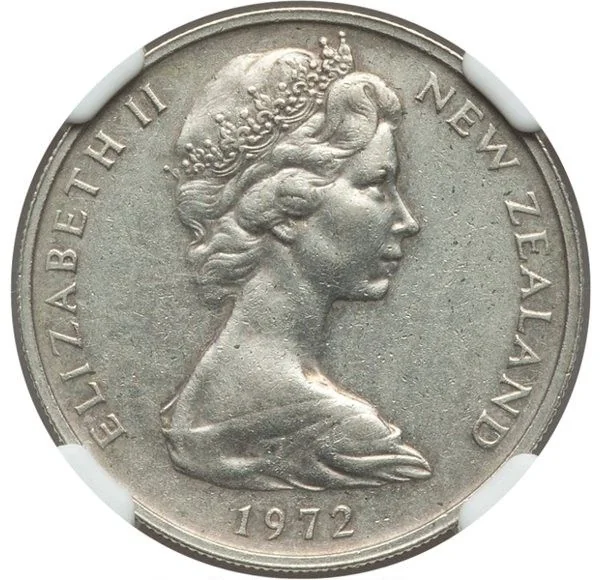
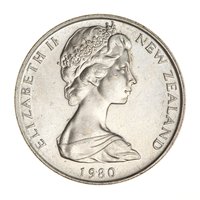
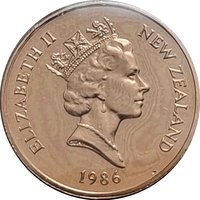
Second crowned portrait of Queen Elizabeth II, wearing the Girls of Great Britain and Ireland tiara, with legend around and date below.
Inscription:
ELIZABETH II NEW ZEALAND
1972
1972
Script: Latin
Designer: Arnold Machin
Reverse
Description:
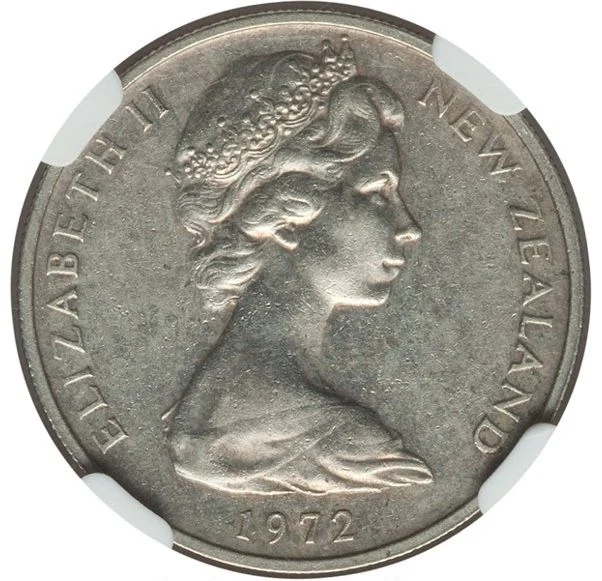
Second crowned portrait of Queen Elizabeth II, wearing the Girls of Great Britain and Ireland tiara, with legend around and date below.
Inscription:
ELIZABETH II NEW ZEALAND
1972
1972
Script: Latin
Designer: Arnold Machin
Edge
Reeded
Mintings
| Year | Mint Mark | Mintage | Quality | Collection |
|---|---|---|---|---|
| 1972 | — | — |
Historical background
In 1972, New Zealand's currency was governed by the Bretton Woods system, which pegged the New Zealand pound to the British pound sterling and, through it, indirectly to the US dollar at a fixed rate. This system provided stability for international trade, which was crucial for an export-dependent economy like New Zealand's, but it also meant monetary policy was largely subservient to maintaining the exchange rate parity. Domestically, the economy was under strain, with rising inflation and a growing balance of payments deficit, creating underlying pressures on the fixed peg.
The year was one of political transition, with the conservative National Party government under Sir Keith Holyoake (succeeded by Jack Marshall in February) facing a general election in November. The longstanding National government was cautious about monetary reform, but the global Bretton Woods framework itself was collapsing. The pivotal event had occurred in 1971 when US President Richard Nixon suspended the dollar's convertibility to gold, causing major international currency realignments. While New Zealand maintained its sterling peg, the foundation of the global fixed-exchange rate system was already shattered.
Consequently, 1972 stood as the final full year of the old sterling-linked currency regime. The election victory of the Third Labour government under Norman Kirk in December set the stage for imminent and profound change. Within months, in 1973, the new government would decimalise the currency, replacing the pound with the New Zealand dollar, and—more significantly—break the historic link with sterling to peg directly to the US dollar. Thus, 1972 represents the quiet but tense calm before a major monetary storm, where inherited systems were still formally in place but were internationally obsolete and domestically unsustainable.
The year was one of political transition, with the conservative National Party government under Sir Keith Holyoake (succeeded by Jack Marshall in February) facing a general election in November. The longstanding National government was cautious about monetary reform, but the global Bretton Woods framework itself was collapsing. The pivotal event had occurred in 1971 when US President Richard Nixon suspended the dollar's convertibility to gold, causing major international currency realignments. While New Zealand maintained its sterling peg, the foundation of the global fixed-exchange rate system was already shattered.
Consequently, 1972 stood as the final full year of the old sterling-linked currency regime. The election victory of the Third Labour government under Norman Kirk in December set the stage for imminent and profound change. Within months, in 1973, the new government would decimalise the currency, replacing the pound with the New Zealand dollar, and—more significantly—break the historic link with sterling to peg directly to the US dollar. Thus, 1972 represents the quiet but tense calm before a major monetary storm, where inherited systems were still formally in place but were internationally obsolete and domestically unsustainable.
✨ Legendary