

5 dollars (Birth) – Cook Islands
Add to wishlist
Non-circulating coins
Commemoration: 150th Birth Anniversary
Context
Material
References
KM: #
Numista: #310003
Value
Exchange value: 5 NZD
Bullion value: $46.76
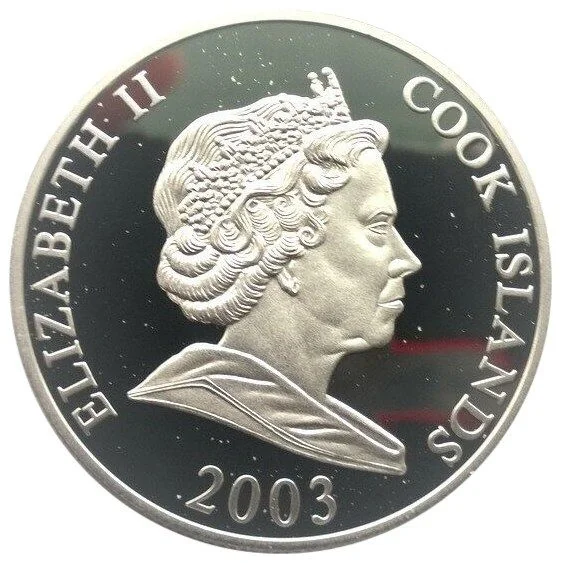
Obverse
Description:
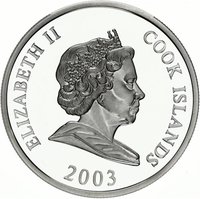
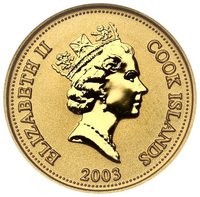
Queen Elizabeth II's effigy
Inscription:
ELIZABETH II COOK ISLANDS
2003
2003
Translation:
ELIZABETH II COOK ISLANDS
2003
2003
Script: Latin
Language: English
Designer: Ian Rank-Broadley
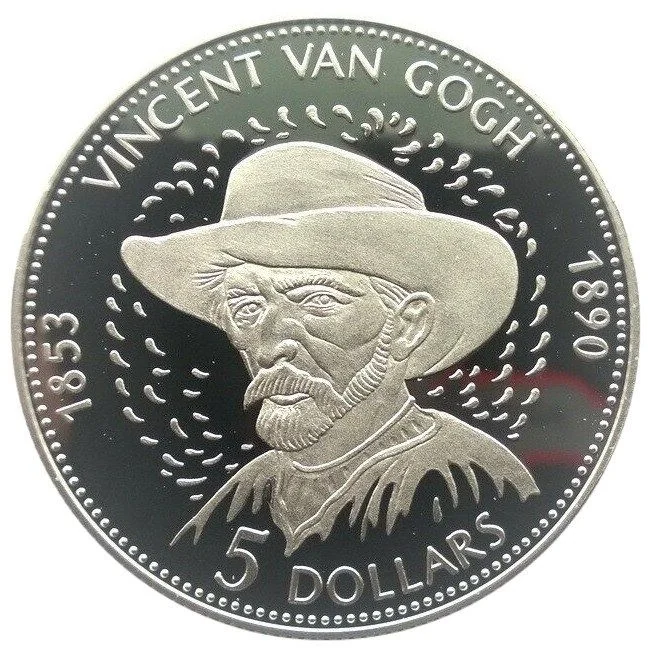
Reverse
Description:
A troubled Dutch painter known for bold colors and expressive brushstrokes.
Inscription:
1853 VINCENT VAN GOGH 1890
5 DOLLARS
5 DOLLARS
Script: Latin
Edge
Reeded
Categories
| Event> Birth anniversary |
| Person> Artist |
Mintings
| Year | Mint Mark | Mintage | Quality | Collection |
|---|---|---|---|---|
| 2003 | — | 5,000 | Proof |
Historical background
In 2003, the currency situation in the Cook Islands was defined by its continued use of New Zealand currency as legal tender, a relationship formalized in the 1980s. The New Zealand dollar (NZD) served as the sole official circulating currency, providing critical monetary stability and credibility for the small Pacific island nation. This arrangement effectively outsourced monetary policy to the Reserve Bank of New Zealand, insulating the Cook Islands from the risks of inflation and currency devaluation that could accompany a separate, smaller national currency.
However, 2003 also highlighted a unique local element: the continued issuance and circulation of Cook Islands commemorative and collector coinage. While not used in everyday transactions, these coins, denominated in dollars and crafted by the Cook Islands government, held legal tender status at face value equivalent to New Zealand currency. Their primary purpose was numismatic, generating revenue from collectors and tourists, and symbolizing national identity without disrupting the practical benefits of the NZD system.
The broader economic context in 2003 was one of recovery and fiscal consolidation following the severe debt crisis of the mid-1990s. The government's financial stability, supported by the NZD framework, was crucial for ongoing reforms and for maintaining confidence in the tourism and offshore banking sectors. Thus, the currency situation was a cornerstone of a broader strategy to ensure macroeconomic stability, allowing the nation to focus on sustainable development without the burden of managing an independent monetary policy.
However, 2003 also highlighted a unique local element: the continued issuance and circulation of Cook Islands commemorative and collector coinage. While not used in everyday transactions, these coins, denominated in dollars and crafted by the Cook Islands government, held legal tender status at face value equivalent to New Zealand currency. Their primary purpose was numismatic, generating revenue from collectors and tourists, and symbolizing national identity without disrupting the practical benefits of the NZD system.
The broader economic context in 2003 was one of recovery and fiscal consolidation following the severe debt crisis of the mid-1990s. The government's financial stability, supported by the NZD framework, was crucial for ongoing reforms and for maintaining confidence in the tourism and offshore banking sectors. Thus, the currency situation was a cornerstone of a broader strategy to ensure macroeconomic stability, allowing the nation to focus on sustainable development without the burden of managing an independent monetary policy.
✨ Legendary