Logo Title
obverse
reverse
smy77 CC BY-NC-SA

25 Centimes – Grand Duchy of Luxembourg

Luxembourg
Context
Year: 1927
Country: Luxembourg Country flag
Ruler: Charlotte
Currency:
(1854—2001)
Demonetization: 1 January 1953
Total mintage: 2,500,000
Material
Diameter: 25 mm
Weight: 5.5 g
Thickness: 1.4 mm
Shape: Round
Composition: Copper-nickel
Technique: Milled
Alignment: Coin alignment
Obverse
OBVERSE ↑
flip
Reverse
REVERSE ↓
References
KM: #Click to copy to clipboard37
Numista: #3099
Value
Exchange value: 0.25 LUF

Obverse

Description:
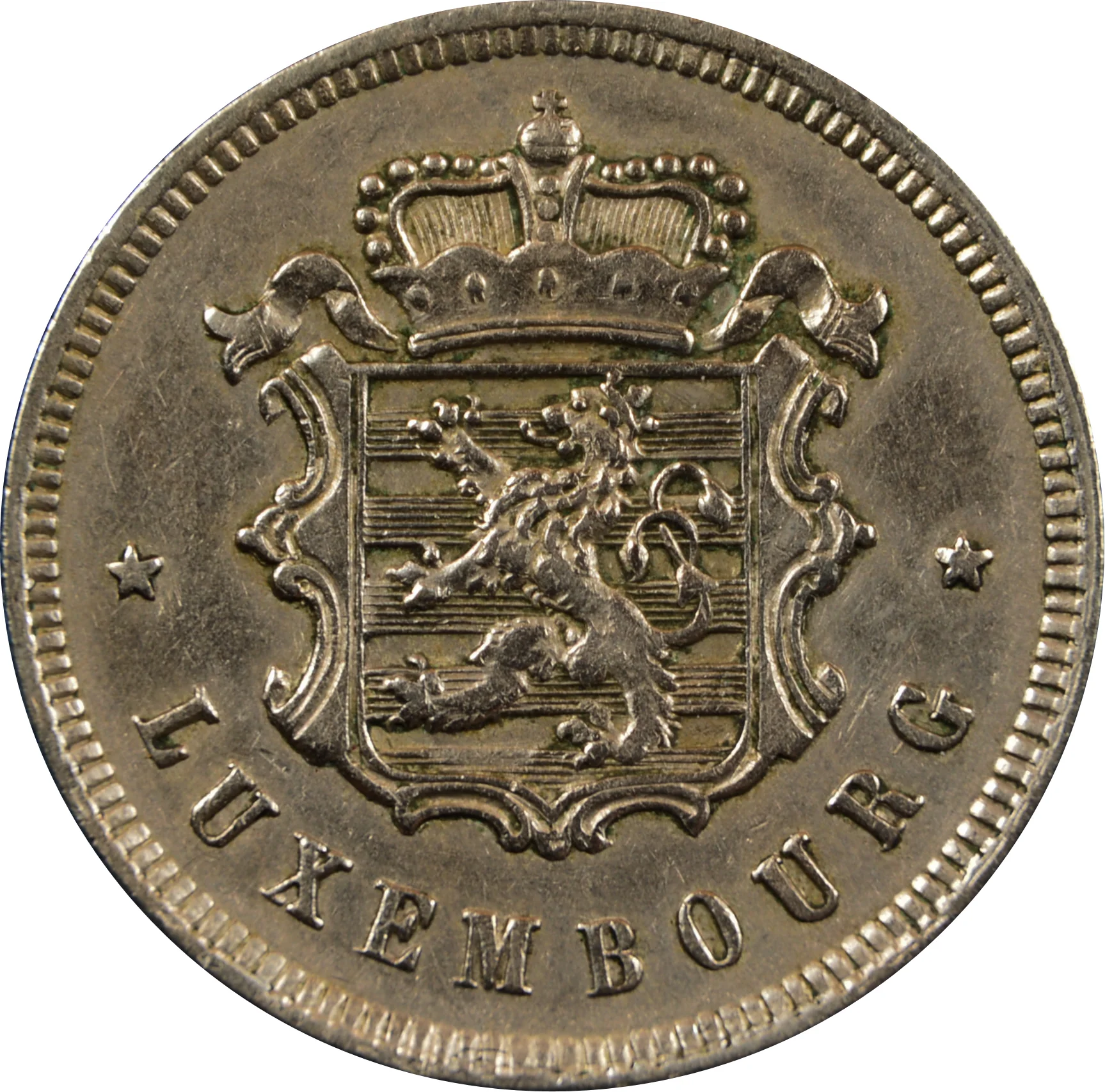
Shield with a crowned, forked-tail Luxembourg lion on a striped field, encircled by the country's name and stars within a border.
Inscription:
* LUXEMBOURG *
Script: Latin

Reverse

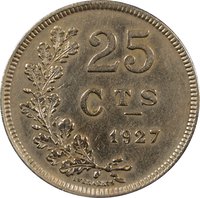
Description:
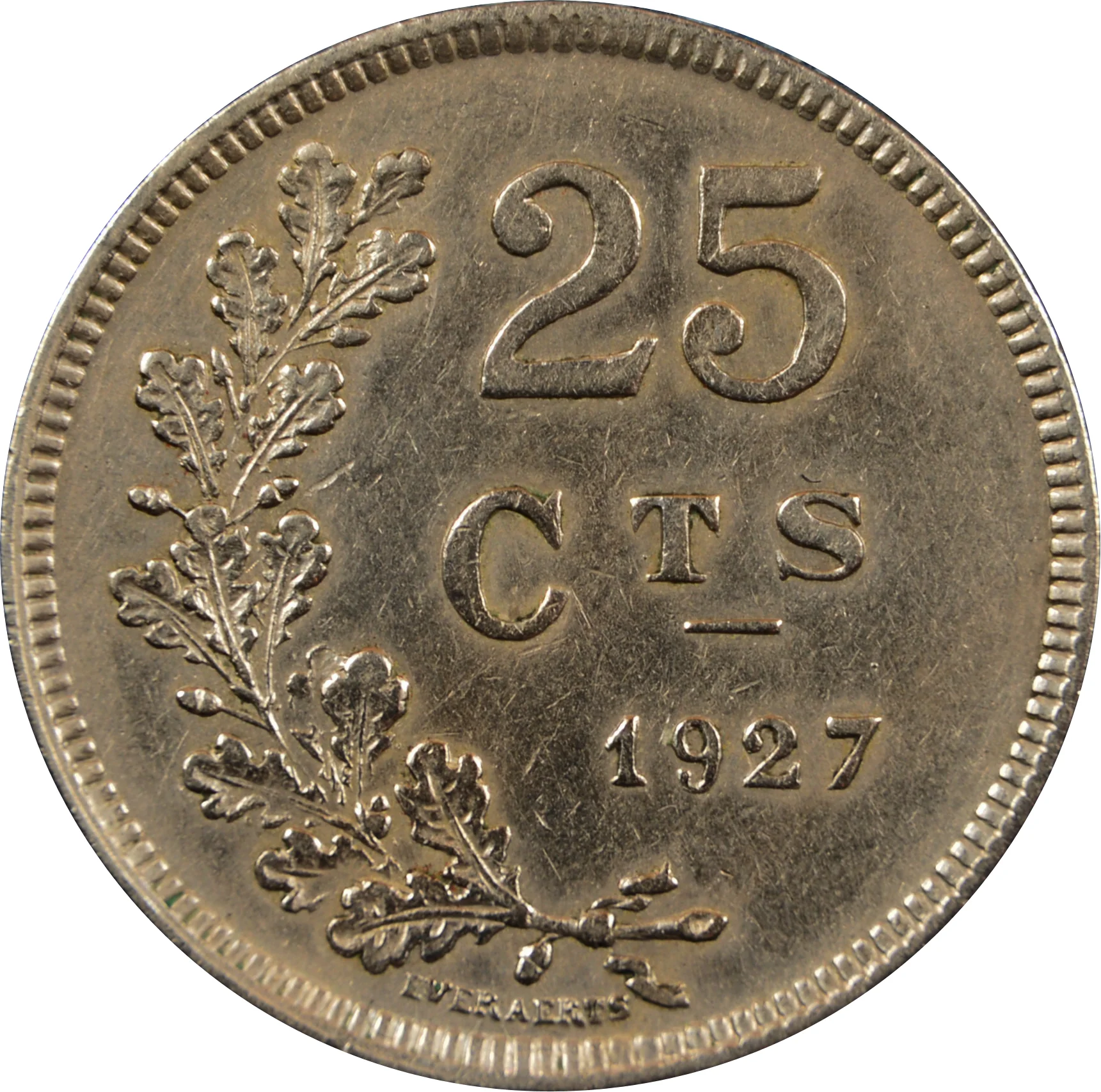
Face value and mint year in three lines.
An oak branch on the left.
Engraver's name at the bottom.
Inscription:
25

CTS

1927

EVERAERTS
Script: Latin

Edge

Plain

Categories

Symbols> Coat of Arms

Mints

NameMark
Royal Mint of Belgium

Mintings

YearMint MarkMintageQualityCollection
19272,500,000

Historical background

In 1927, the Grand Duchy of Luxembourg was navigating a complex and transitional monetary landscape, still deeply influenced by the aftermath of the First World War. Prior to the war, Luxembourg had been part of the Latin Monetary Union (LMU), using the Luxembourg franc, which was at parity with the Belgian franc. However, the war's disruption and subsequent German occupation severed this link. In the post-war period, Luxembourg entered into a pivotal monetary convention with Belgium in 1921, which created the Belgian-Luxembourg Economic Union (BLEU). This treaty effectively made the Belgian franc legal tender in Luxembourg alongside the Luxembourg franc, establishing a fixed 1:1 parity and placing Luxembourg's monetary policy under the de facto control of the National Bank of Belgium.

The situation in 1927 was one of consolidation under this bilateral framework. The BLEU agreement provided much-needed stability after a period of uncertainty, but it also meant Luxembourg had relinquished independent control over its currency and interest rates. Both Belgian banknotes and coins circulated freely, while distinct Luxembourg franc coins (with limited issuance) were also in use. This system facilitated seamless trade and economic integration with Belgium, Luxembourg's most vital economic partner, but it was a relationship of asymmetry, with Luxembourg's economy tethered to Belgian monetary decisions.

Therefore, the currency situation in 1927 was characterized not by crisis but by a settled, if dependent, arrangement. The Luxembourg franc existed nominally, but the practical reality was a shared currency area dominated by Belgium. This framework provided the stability necessary for Luxembourg's emerging industrial strength, particularly in steel, and laid the institutional groundwork for the BLEU, which would endure as a cornerstone of Luxembourg's economic policy for most of the 20th century.
🌱 Very Common