

10 Euro (Battle of Crete) – Greece
Non-circulating coins
Commemoration: 80th Anniversary of the Battle of Crete
Greece
Obverse
Description:
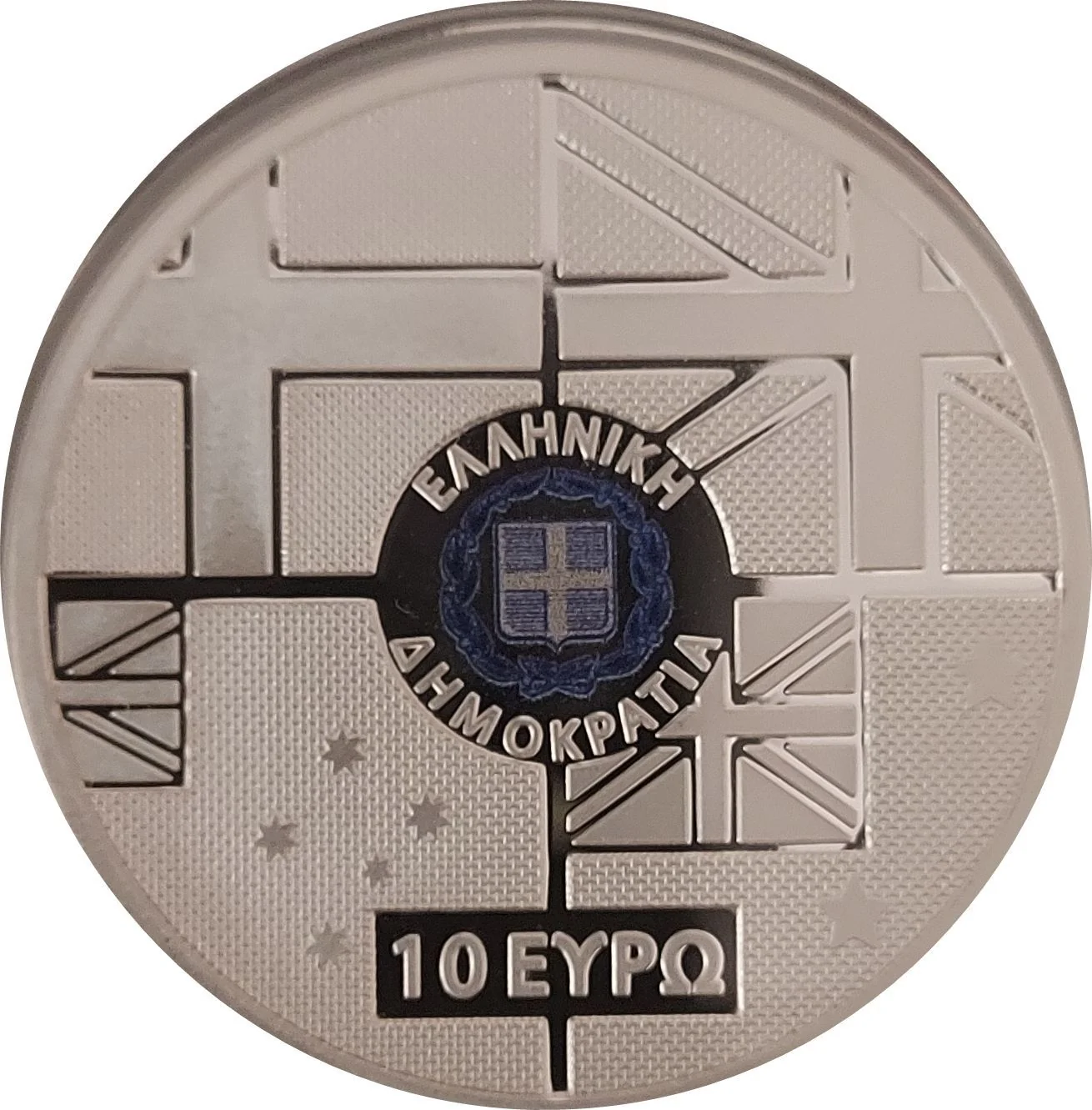
The design centers on the national emblem, encircled by "HELLENIC REPUBLIC" in Greek. Four quadrants (top-left, clockwise) show the flags of Greece, the United Kingdom, Australia, and New Zealand. The denomination "10 EURO" in Greek is at the bottom.
Inscription:
ΕΛΛΗΝΙΚΗ ΔΗΜΟΚΡΑΤΙΑ
10 ΕΥΡΩ
10 ΕΥΡΩ
Translation:
HELLENIC REPUBLIC
10 EURO
10 EURO
Script: Greek
Language: Greek
Engraver: Geórgios Stamatópoulos
Reverse
Description:
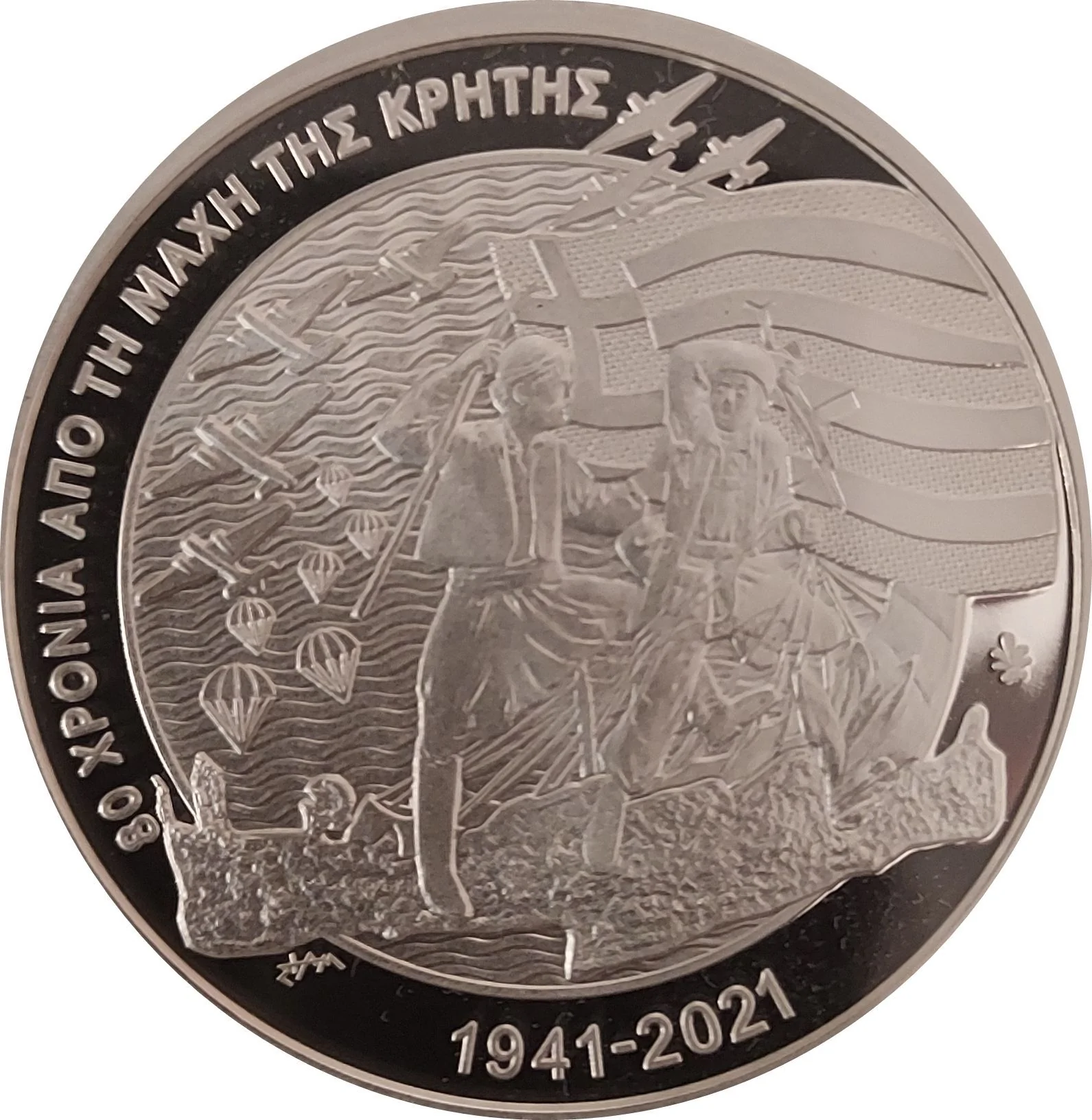
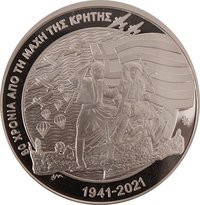
Two soldiers clash before the Greek flag within Crete's outline, with planes and paratroopers above. The Greek inscription "80 YEARS FROM THE BATTLE OF CRETE" encircles the scene, with the engraver's signature and mint mark at the bottom.
Inscription:
80 ΧΡΟΝΙΑ ΑΠΟ ΤΗΝ ΜΑΧΗ ΤΗΣ ΚΡΗΤΗΣ
1941 - 2021
1941 - 2021
Translation:
80 YEARS FROM THE BATTLE OF CRETE
1941 - 2021
1941 - 2021
Script: Greek
Language: Greek
Engraver: Geórgios Stamatópoulos
Edge
Plain
Categories
| Object> Firearms |
| Symbols> Coat of Arms |
| Symbol> Flag |
| History> War |
| Transportation> Aircraft |
Mints
| Name | Mark |
|---|---|
| National Mint of the Bank of Greece | — |
Mintings
| Year | Mint Mark | Mintage | Quality | Collection |
|---|---|---|---|---|
| 2021 | — | 2,500 | Proof |
Historical background
In 2021, Greece remained under the close supervision of its creditors and the European Union's enhanced surveillance framework, a legacy of the severe debt crisis that had peaked a decade earlier. The country had officially exited its third and final international bailout program in 2018, but 2021 was a critical year for demonstrating sustained fiscal discipline and reform implementation without the safety net of emergency funding. The primary focus was on maintaining budget surpluses, managing a public debt exceeding 200% of GDP, and continuing structural reforms to modernize the economy, all while navigating the profound economic shock of the COVID-19 pandemic.
The currency situation itself was stable but underscored by ongoing challenges. As a member of the Eurozone, Greece used the euro, which provided monetary stability and prevented the currency crises of the past. However, this also meant Greece had no independent monetary policy to devalue its currency and boost competitiveness. The European Central Bank's (ECB) accommodative policies, including its Pandemic Emergency Purchase Programme (PEPP), were crucial in keeping Greek borrowing costs at historically low levels, allowing the government to access markets at sustainable rates. This support was vital for economic recovery and debt servicing.
Looking ahead, the key debates in 2021 centered on debt sustainability and growth prospects. There were persistent calls, both domestically and from some European officials, for further debt relief measures from Eurozone creditors to create more fiscal space for investment. The year ended with Greece successfully repaying early a portion of its IMF loans and seeing an upward revision of its credit rating, signaling cautious market confidence. Nevertheless, the underlying reality was that Greece's currency stability was inextricably tied to continued European solidarity, strict adherence to EU fiscal rules, and the broader performance of the Eurozone, with the pandemic's lingering effects casting a shadow over the pace of economic recovery.
The currency situation itself was stable but underscored by ongoing challenges. As a member of the Eurozone, Greece used the euro, which provided monetary stability and prevented the currency crises of the past. However, this also meant Greece had no independent monetary policy to devalue its currency and boost competitiveness. The European Central Bank's (ECB) accommodative policies, including its Pandemic Emergency Purchase Programme (PEPP), were crucial in keeping Greek borrowing costs at historically low levels, allowing the government to access markets at sustainable rates. This support was vital for economic recovery and debt servicing.
Looking ahead, the key debates in 2021 centered on debt sustainability and growth prospects. There were persistent calls, both domestically and from some European officials, for further debt relief measures from Eurozone creditors to create more fiscal space for investment. The year ended with Greece successfully repaying early a portion of its IMF loans and seeing an upward revision of its credit rating, signaling cautious market confidence. Nevertheless, the underlying reality was that Greece's currency stability was inextricably tied to continued European solidarity, strict adherence to EU fiscal rules, and the broader performance of the Eurozone, with the pandemic's lingering effects casting a shadow over the pace of economic recovery.
💎 Very Rare