

1⁄80 riyal – Yemeni Zaidi State
Add to wishlist
Yemen
Obverse
Description:
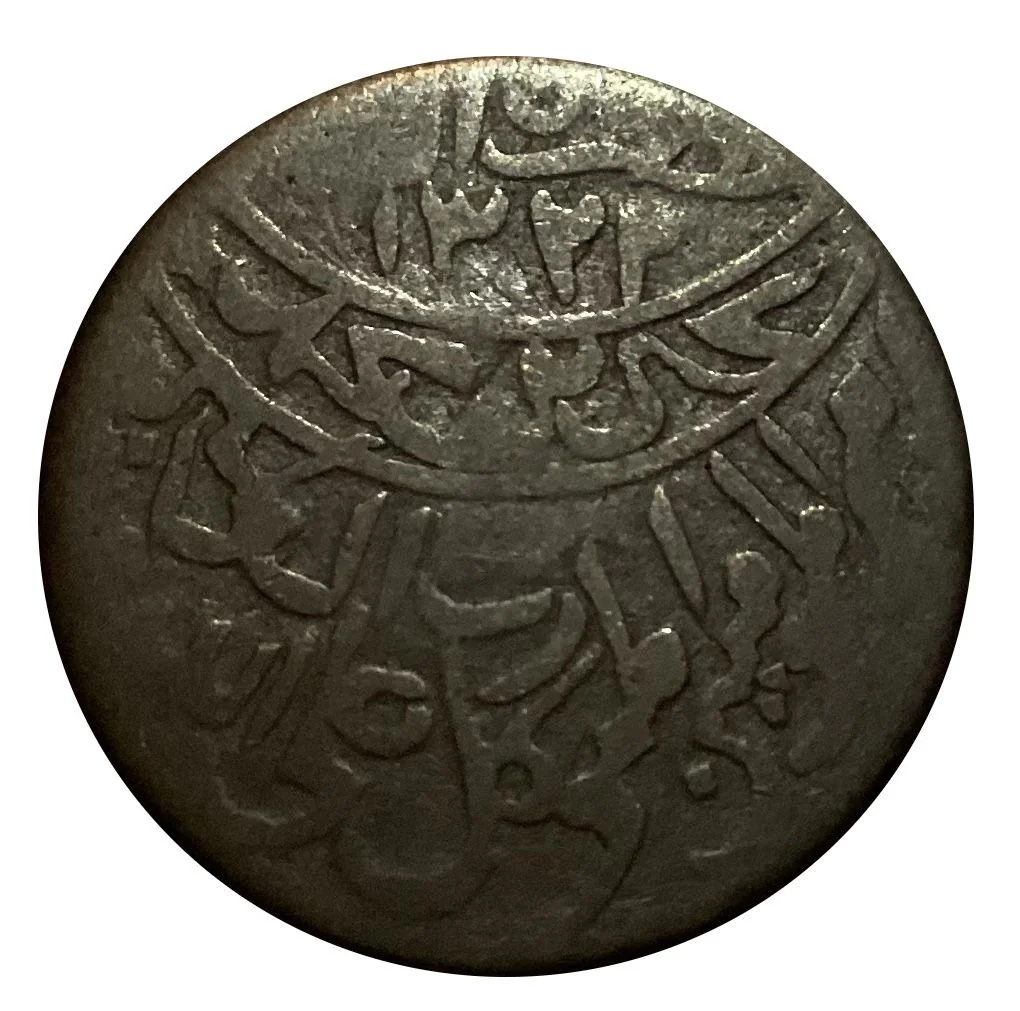
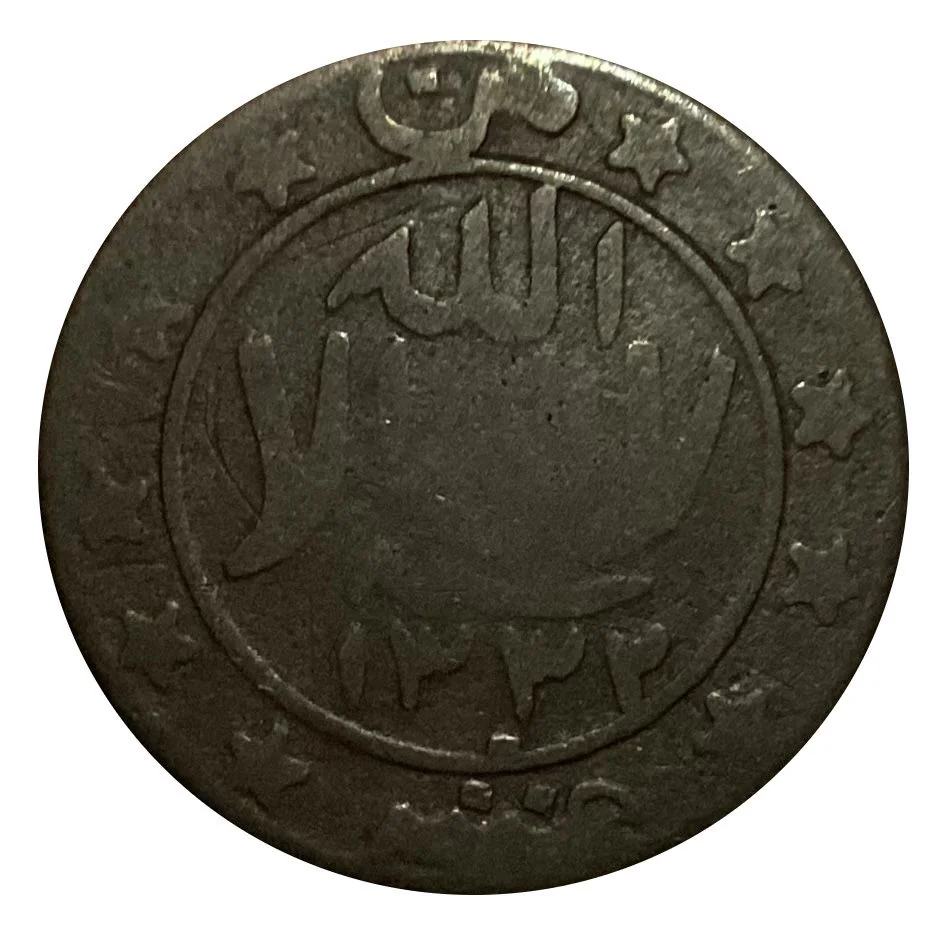
Multiple varieties exist. Differences include accession dates (322 or 1322), flan thickness and weight, star count and alignment, legend placement (e.g., "Sana"), and obverse designs (0–4 stars). One type is a mule with two obverse sides.
Inscription:
الله
نصره
١٣٢٢
يحيى بن محمد
أمير المؤمنين المتوكل على الله رب العالمين
نصره
١٣٢٢
يحيى بن محمد
أمير المؤمنين المتوكل على الله رب العالمين
Translation:
God
His helper
1322
Yahya bin Muhammad
Commander of the Faithful, Who relies on God, Lord of the Worlds
His helper
1322
Yahya bin Muhammad
Commander of the Faithful, Who relies on God, Lord of the Worlds
Script: Arabic
Language: Arabic
Reverse
Edge
Plain.
Mintings
| Year | Mint Mark | Mintage | Quality | Collection |
|---|---|---|---|---|
| 1911 | — | — | ||
| — | — | — | ||
| 1912 | — | — | ||
| 1913 | — | — | ||
| 1914 | — | — | ||
| 1915 | — | — |
Historical background
In 1911, the currency situation within the Zaidi Imamate of Yemen was characterized by monetary fragmentation and the circulation of diverse, often debased coinage. The primary unit was the Imadi Riyal, a silver coin named after Imam al-Mansur Billah Muhammad bin Yahya Hamid ad-Din (1890-1904). However, its purity and weight were inconsistent due to periods of economic strain and irregular minting. Alongside this, the Ottoman Qirsh (piastre) and Majidi Riyals from the Ottoman Empire remained in circulation, especially from the recent period of Ottoman reoccupation (1872-1911), creating a dual-system in many markets.
This monetary disarray was directly tied to the political settlement of the Treaty of Da‘an in October 1911. The treaty, which ended years of conflict between the Zaidi Imamate and the Ottoman Empire, granted the Imam autonomy in the highland interior. A key clause stipulated that the Imam could mint coins in his own name, a crucial symbol of sovereignty. However, the treaty also required these coins to conform to the Ottoman standard in weight and purity, an attempt by the Ottomans to maintain some economic influence and monetary stability within their nominal sphere.
Consequently, the immediate post-1911 period saw the Imamate beginning to regularize its currency under Imam Yahya Muhammad Hamid ad-Din, issuing new silver riyals and fractional qirsh coins that bore his name but adhered to the Ottoman specifications. This hybrid system—sovereign in imprint but tied to an external standard—reflected the Imamate's new autonomous yet constrained political reality. The economy continued to rely heavily on a mix of these newer official coins, older Imadi and Ottoman issues, and even foreign Maria Theresa thalers, illustrating the challenge of establishing unified monetary authority in a politically complex region.
This monetary disarray was directly tied to the political settlement of the Treaty of Da‘an in October 1911. The treaty, which ended years of conflict between the Zaidi Imamate and the Ottoman Empire, granted the Imam autonomy in the highland interior. A key clause stipulated that the Imam could mint coins in his own name, a crucial symbol of sovereignty. However, the treaty also required these coins to conform to the Ottoman standard in weight and purity, an attempt by the Ottomans to maintain some economic influence and monetary stability within their nominal sphere.
Consequently, the immediate post-1911 period saw the Imamate beginning to regularize its currency under Imam Yahya Muhammad Hamid ad-Din, issuing new silver riyals and fractional qirsh coins that bore his name but adhered to the Ottoman specifications. This hybrid system—sovereign in imprint but tied to an external standard—reflected the Imamate's new autonomous yet constrained political reality. The economy continued to rely heavily on a mix of these newer official coins, older Imadi and Ottoman issues, and even foreign Maria Theresa thalers, illustrating the challenge of establishing unified monetary authority in a politically complex region.
💎 Very Rare