

1 Penny – Guernsey
Context
Years: 1998–2012
Country: British Crown dependencies
Issuer: Guernsey
Ruler: Elizabeth II
Currency:
(since 1971)
Total mintage: 9,138,850
Material
References
KM: #Click to copy to clipboard89
Numista: #3087
Value
Exchange value: 0.01 GGP
Obverse
Description:
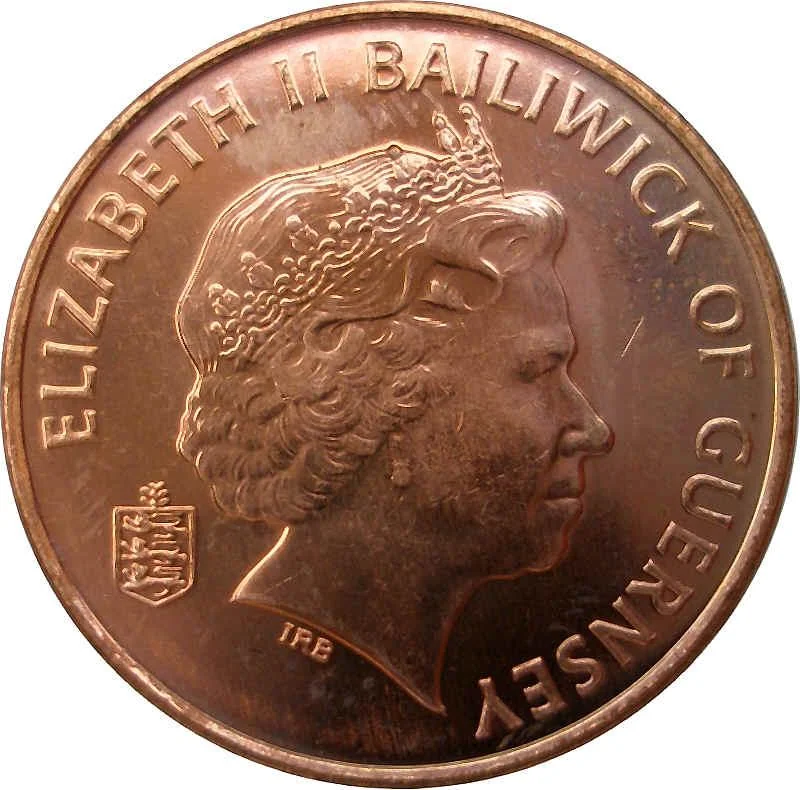
Crowned portrait right in the Girls of Great Britain and Ireland tiara, Guernsey arms at left.
Inscription:
ELIZABETH II BAILIWICK OF GUERNSEY
Script: Latin
Engraver: Ian Rank-Broadley
Reverse
Edge
Plain
Categories
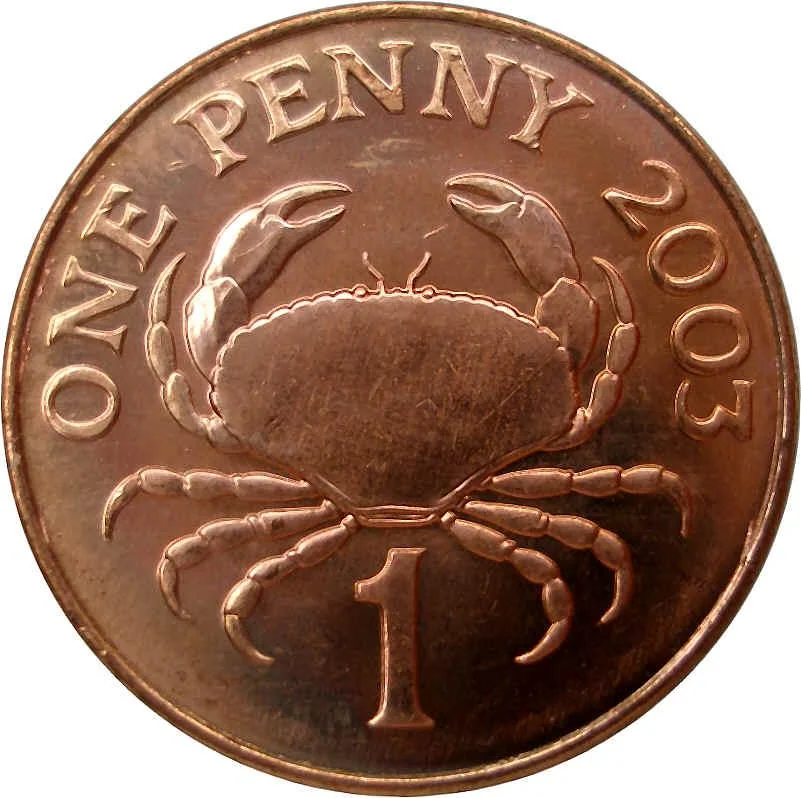
| Animal> Crustacean |
Mints
| Name | Mark |
|---|---|
| Royal Mint | — |
Mintings
| Year | Mint Mark | Mintage | Quality | Collection |
|---|---|---|---|---|
| 1998 | — | 2,800,000 | ||
| 2003 | — | 1,302,600 | ||
| 2006 | — | 1,731,000 | ||
| 2012 | — | 3,305,250 |
Historical background
In 1998, the currency situation in Guernsey was characterised by a formalised and stable dual-currency system, underpinned by the island's long-standing constitutional right to issue its own money. The primary circulating currency was the Guernsey pound (GGP), which existed as a local issue of banknotes and coins. Critically, this currency was not legal tender in the United Kingdom but was pegged at par with sterling (GBP), which also circulated freely and interchangeably on the island. This parity was maintained by the States of Guernsey's requirement to hold sterling reserves to fully back the local note issue, ensuring confidence and facilitating seamless trade and travel.
The system functioned smoothly due to this one-to-one peg and the acceptance of Guernsey pounds by UK banks, though often as a matter of custom rather than legal obligation. For all practical domestic purposes, the two currencies were treated as identical, with change often given in a mixture of both. However, the Guernsey pound was effectively a localised representation of sterling, with its value entirely dependent on the UK's monetary policy set by the Bank of England. Guernsey had no independent central bank or monetary policy, meaning interest rates and broader economic stability were directly imported from the UK.
The year 1998 fell within a period of quiet continuity for Guernsey's currency arrangements, which had been firmly established for decades. There were no significant changes or crises that year; the system's design successfully preserved monetary stability while affirming the island's fiscal autonomy. This stability provided a solid foundation for Guernsey's finance sector and local economy, allowing it to operate with the credibility of sterling while retaining the symbolic and practical benefits of a distinct local currency.
The system functioned smoothly due to this one-to-one peg and the acceptance of Guernsey pounds by UK banks, though often as a matter of custom rather than legal obligation. For all practical domestic purposes, the two currencies were treated as identical, with change often given in a mixture of both. However, the Guernsey pound was effectively a localised representation of sterling, with its value entirely dependent on the UK's monetary policy set by the Bank of England. Guernsey had no independent central bank or monetary policy, meaning interest rates and broader economic stability were directly imported from the UK.
The year 1998 fell within a period of quiet continuity for Guernsey's currency arrangements, which had been firmly established for decades. There were no significant changes or crises that year; the system's design successfully preserved monetary stability while affirming the island's fiscal autonomy. This stability provided a solid foundation for Guernsey's finance sector and local economy, allowing it to operate with the credibility of sterling while retaining the symbolic and practical benefits of a distinct local currency.
🌱 Very Common