

2 Reales – Guatemala
Circulating commemorative coins
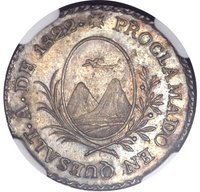
Commemoration: Proclamation of the Adoption of the 1812 Constitution in Guatemala City
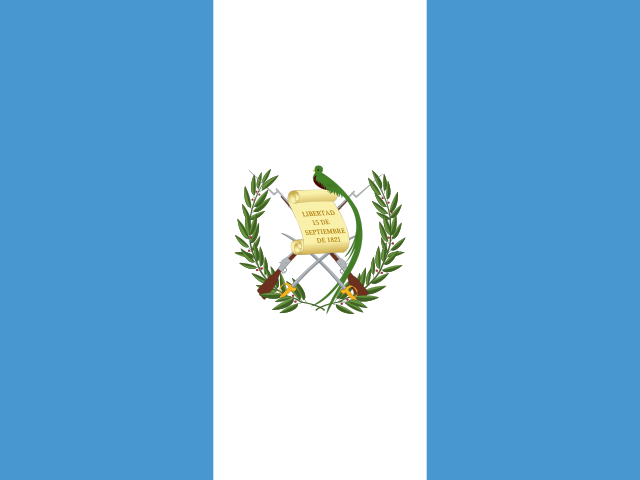
Guatemala
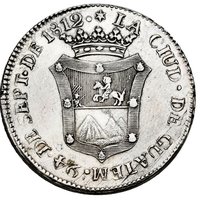
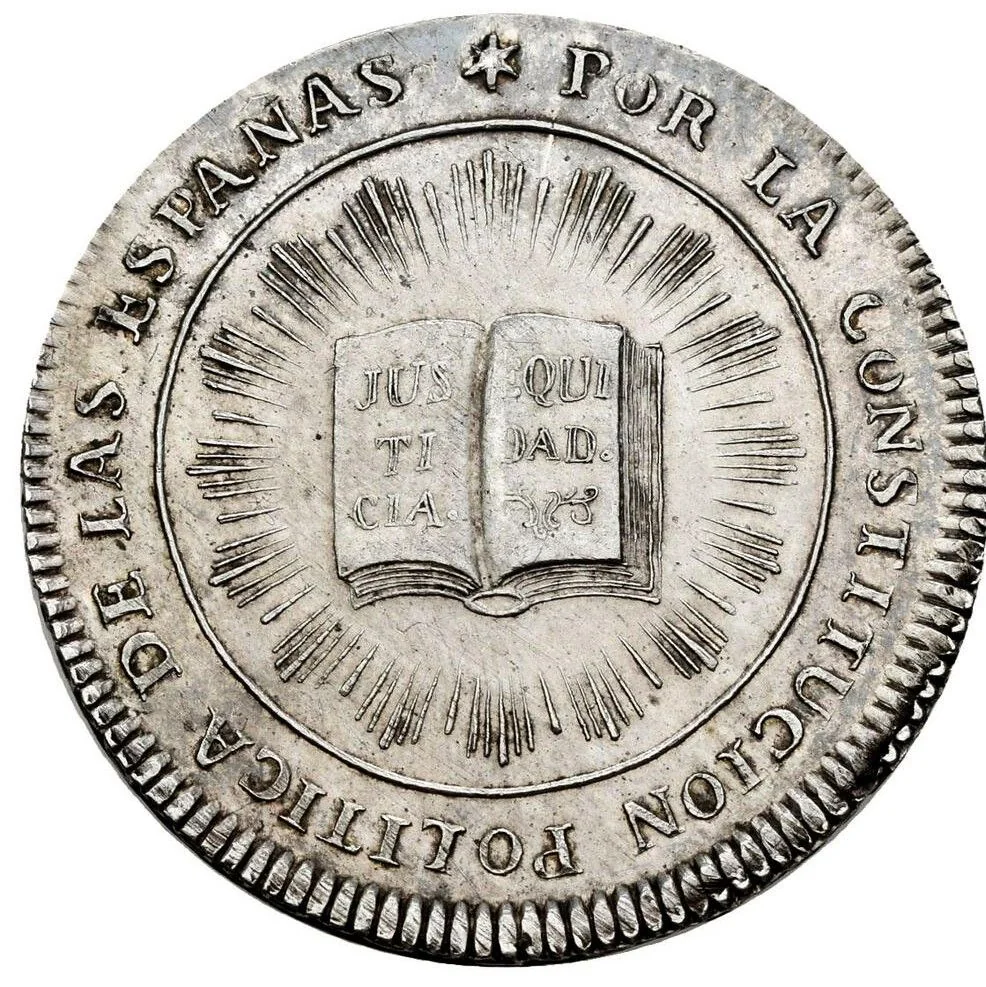
Obverse
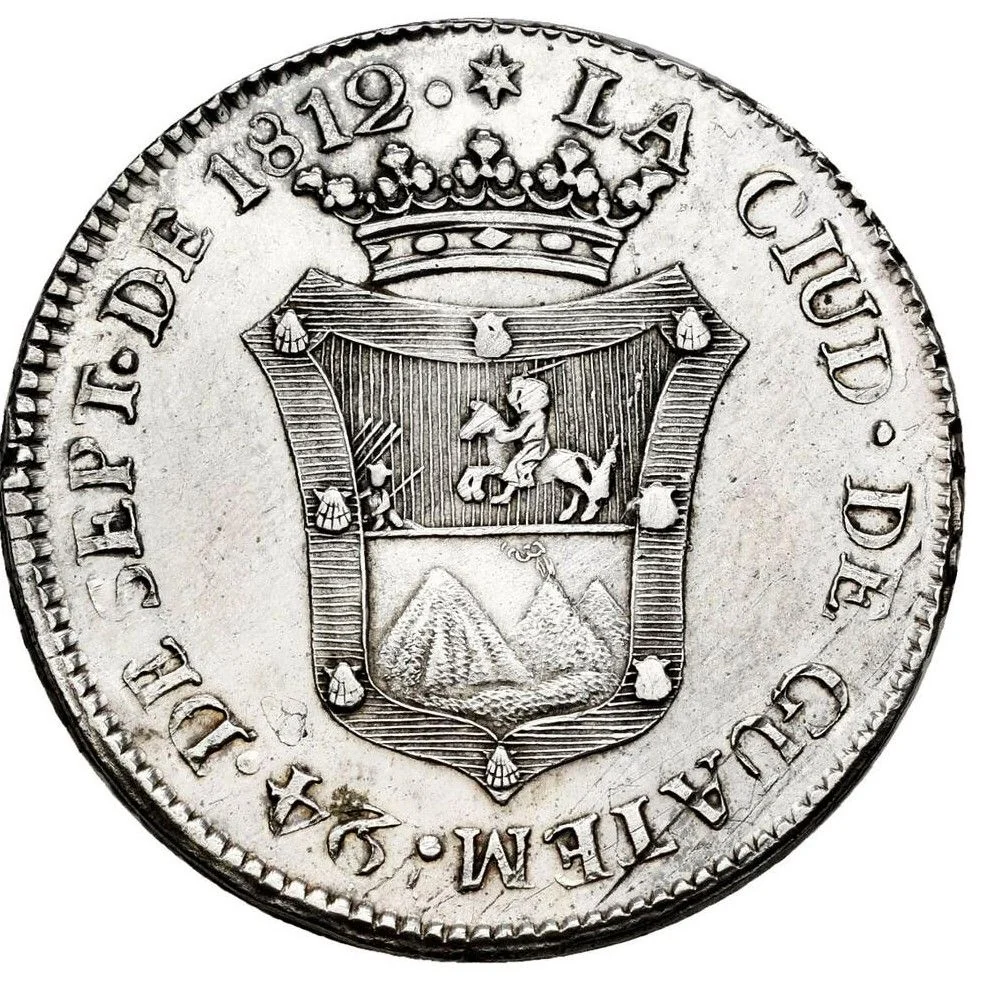
Reverse
Edge
Categories
| Symbols> Coat of Arms |
Mintings
| Year | Mint Mark | Mintage | Quality | Collection |
|---|---|---|---|---|
| 1812 | — | — |
Historical background
In 1812, Guatemala existed as the Captaincy General of Guatemala, a colonial administrative district of the Spanish Empire encompassing much of Central America. The currency situation was complex and strained, reflecting the broader political and economic turmoil of the era. The primary circulating coin was the Spanish colonial real, with eight reales making a peso, but the supply was chronically insufficient for local commerce. This scarcity was exacerbated by the Napoleonic invasion of Spain (1808), which severely disrupted transatlantic trade and the regular arrival of official coinage from mints in Mexico and Peru.
To alleviate the chronic shortage of specie, local authorities and merchants relied heavily on a system of tlacos or vales—essentially credit tokens or promissory notes, often made of lead or copper. These were issued by municipal councils, merchant guilds (consulados), and even individual hacienda owners. However, their value was highly localized and unstable, leading to frequent disputes and a general climate of monetary confusion. Furthermore, the Spanish Crown’s own financial desperation led it to circulate debased coinage and to demand increased remittances from the colonies, further draining hard currency from the local economy.
This unstable monetary environment unfolded against the backdrop of the Spanish Constitution of 1812, promulgated in that same year. While the constitution aimed at liberal reform, it did not immediately resolve the currency crisis. The political uncertainty, combined with the ongoing Mexican War of Independence (which began in 1810), disrupted regional trade routes and intensified economic isolation. Thus, in 1812, Guatemala’s currency system was a fragile patchwork of scarce official coinage and unreliable local tokens, mirroring the weakening imperial control and the growing pressures that would eventually lead to the region’s independence in 1821.
To alleviate the chronic shortage of specie, local authorities and merchants relied heavily on a system of tlacos or vales—essentially credit tokens or promissory notes, often made of lead or copper. These were issued by municipal councils, merchant guilds (consulados), and even individual hacienda owners. However, their value was highly localized and unstable, leading to frequent disputes and a general climate of monetary confusion. Furthermore, the Spanish Crown’s own financial desperation led it to circulate debased coinage and to demand increased remittances from the colonies, further draining hard currency from the local economy.
This unstable monetary environment unfolded against the backdrop of the Spanish Constitution of 1812, promulgated in that same year. While the constitution aimed at liberal reform, it did not immediately resolve the currency crisis. The political uncertainty, combined with the ongoing Mexican War of Independence (which began in 1810), disrupted regional trade routes and intensified economic isolation. Thus, in 1812, Guatemala’s currency system was a fragile patchwork of scarce official coinage and unreliable local tokens, mirroring the weakening imperial control and the growing pressures that would eventually lead to the region’s independence in 1821.
✨ Legendary