

100 euro (Diet of Porvod) – Finland
Add to wishlist
Non-circulating coins
Commemoration: 200th Anniversary of Diet of Porvod
Finland
Context
Material
References
KM: #
Numista: #13594
Value
Exchange value: 100 EUR
Bullion value: $953.83
Inflation-adjusted value: 136.95 EUR
Obverse
Description:
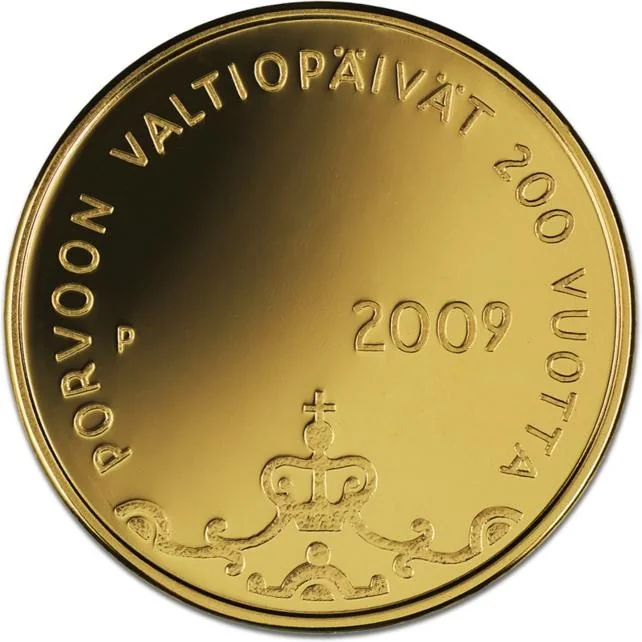
Crown icon.
Inscription:
PORVOON VALTIOPÄIVÄT 200 VUOTTA
P 2009
P 2009
Translation:
The Porvoo Diet 200 Years
P 2009
P 2009
Script: Latin
Language: Finnish
Engraver: Reijo Juhani Paavilainen
Reverse
Description:
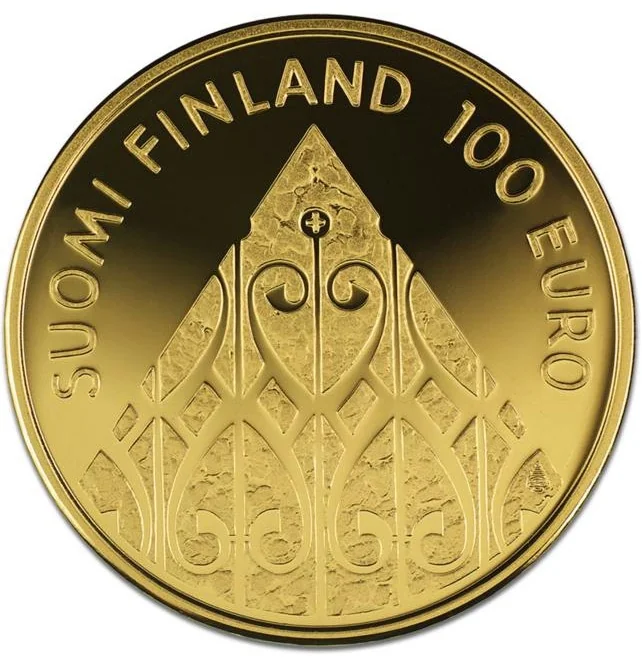
Porvoo Cathedral, site of the first Diet of Finland.
Inscription:
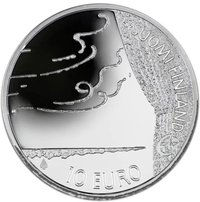
SUOMI FINLAND 100 EURO
Script: Latin
Engraver: Reijo Juhani Paavilainen
Edge
Smooth with inscriptions.
Mints
| Name | Mark |
|---|---|
| Mint of Finland | — |
Mintings
| Year | Mint Mark | Mintage | Quality | Collection |
|---|---|---|---|---|
| 2009 | — | 7,500 | Proof |
Historical background
In 2009, Finland was a member of the European Union and part of the Eurozone, having adopted the euro as its currency in 2002. Therefore, the country did not have an independent national monetary policy during the 2008-2009 global financial crisis. Its currency situation was entirely defined by its use of the euro, which meant that the European Central Bank (ECB) in Frankfurt set interest rates and managed monetary policy for the entire currency bloc. This provided stability and eliminated exchange rate risk within the Eurozone, but it also meant Finland could not devalue its currency to boost competitiveness, a tool it had historically used during previous economic downturns.
The year 2009 was marked by a severe economic contraction for Finland, with GDP plummeting by over 8%—one of the steepest declines in the Eurozone. The currency situation was a double-edged sword. On one hand, the euro provided a safe-haven status and prevented a potential liquidity crisis that might have beset a smaller, independent currency. On the other hand, the strong euro (relative to pre-crisis levels) and the ECB's one-size-fits-all policy were not optimally tailored to Finland's specific needs, which included a collapse in global demand for its key exports like electronics and paper. The crisis exposed structural vulnerabilities in the Finnish economy that exchange rate adjustment could not solve.
Consequently, the policy response in Finland focused on fiscal measures rather than monetary tools. The government implemented significant stimulus packages, increased public spending, and ran substantial budget deficits to cushion the economic blow. The debate within Finland during this period often centered on the trade-offs of euro membership: the benefits of integration and stability versus the loss of autonomous monetary policy. The 2009 experience underscored Finland's deep integration into the European project and highlighted how its national economic fortunes were inextricably linked to both the management of the euro and the health of the global economy.
The year 2009 was marked by a severe economic contraction for Finland, with GDP plummeting by over 8%—one of the steepest declines in the Eurozone. The currency situation was a double-edged sword. On one hand, the euro provided a safe-haven status and prevented a potential liquidity crisis that might have beset a smaller, independent currency. On the other hand, the strong euro (relative to pre-crisis levels) and the ECB's one-size-fits-all policy were not optimally tailored to Finland's specific needs, which included a collapse in global demand for its key exports like electronics and paper. The crisis exposed structural vulnerabilities in the Finnish economy that exchange rate adjustment could not solve.
Consequently, the policy response in Finland focused on fiscal measures rather than monetary tools. The government implemented significant stimulus packages, increased public spending, and ran substantial budget deficits to cushion the economic blow. The debate within Finland during this period often centered on the trade-offs of euro membership: the benefits of integration and stability versus the loss of autonomous monetary policy. The 2009 experience underscored Finland's deep integration into the European project and highlighted how its national economic fortunes were inextricably linked to both the management of the euro and the health of the global economy.
💎 Extremely Rare