

10 Francs – Belgium
Belgium
Context
Years: 1969–1979
Issuer: Belgium 
Ruler: Baudouin I
Currency:
(1832—2001)
Demonetization: 25 June 1985
Total mintage: 67,000,000
Material
References
KM: #Click to copy to clipboard155.1
Numista: #1358
Value
Exchange value: 10 BEF
Inflation-adjusted value: 72.18 BEF
Obverse
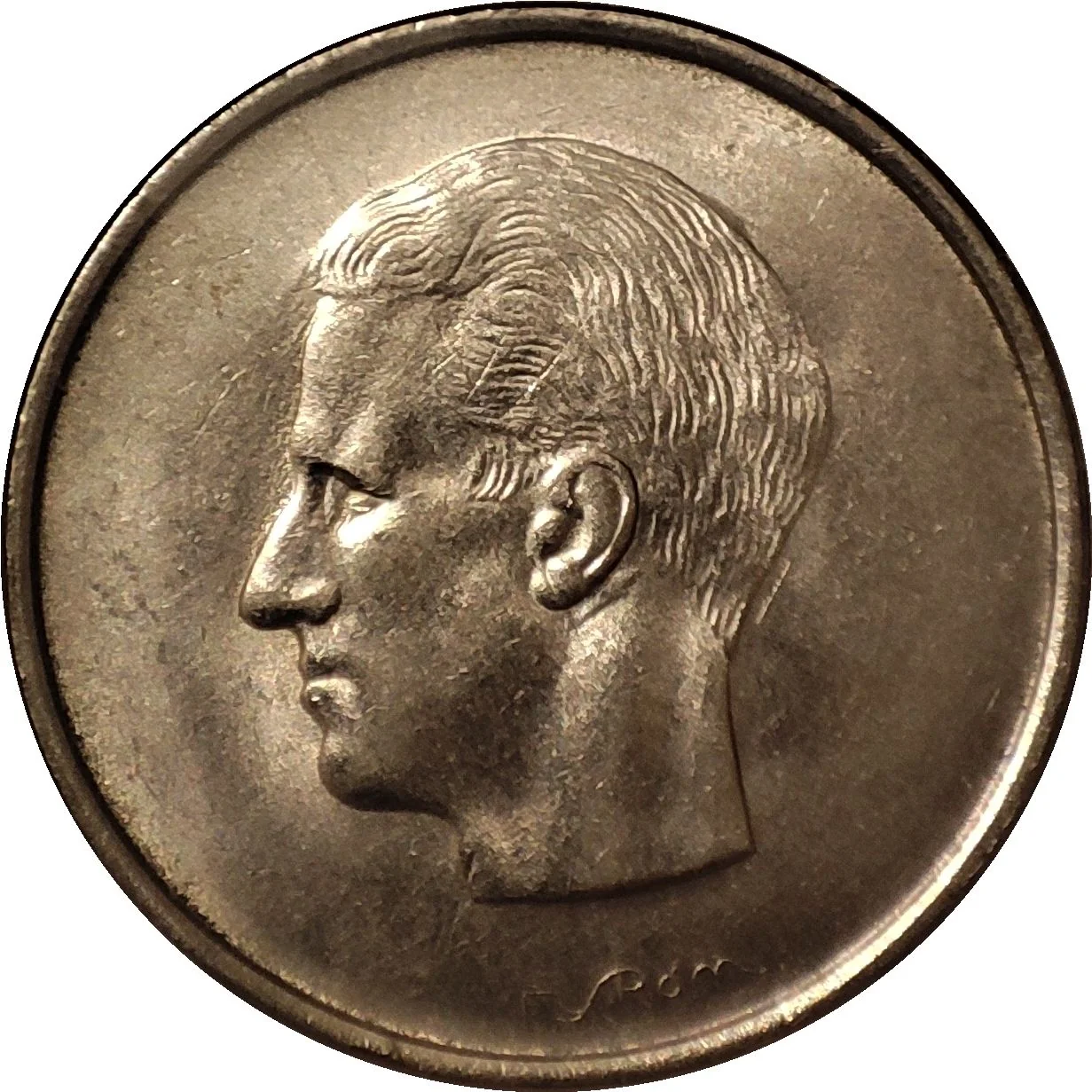
Description:
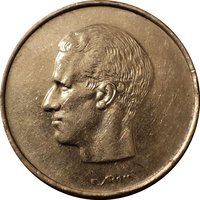
Baudouin I facing left, designer below.
Inscription:
Elstrøm
Translation:
The Eel Stream
Script: Latin
Language: Danish
Engraver: Harry Elstrøm
Reverse
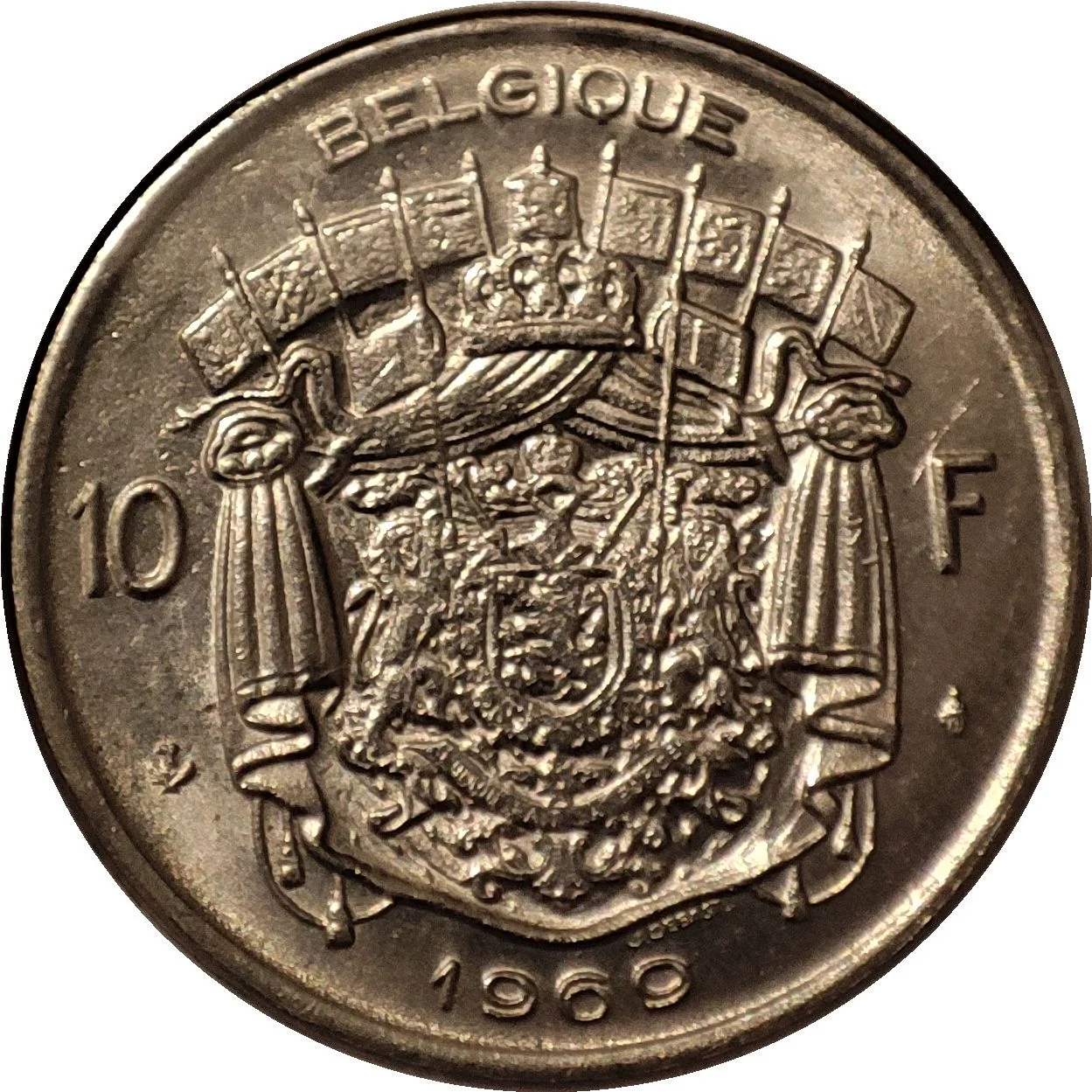
Description:
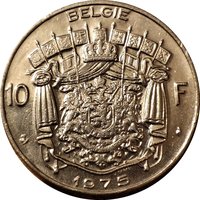
Belgian coat of arms divides value. French legend above, date below. Privy and mint marks flank sides.
Inscription:
BELGIQUE
10 F
L'UNION FAIT LA FORCE
J.DEBAST.
1979
10 F
L'UNION FAIT LA FORCE
J.DEBAST.
1979
Translation:
BELGIUM
10 F
UNITY MAKES STRENGTH
J.DEBAST.
1979
10 F
UNITY MAKES STRENGTH
J.DEBAST.
1979
Script: Latin
Language: French
Engraver: Jean De Bast
Edge
Plain
Categories
| Symbols> Coat of Arms |
Mints
| Name | Mark |
|---|---|
| Royal Mint of Belgium | — |
Mintings
| Year | Mint Mark | Mintage | Quality | Collection |
|---|---|---|---|---|
| 1969 | — | — | ||
| 1970 | — | 9,500,000 | ||
| 1971 | — | 15,000,000 | ||
| 1972 | — | 15,000,000 | ||
| 1973 | — | 10,000,000 | ||
| 1974 | — | — | ||
| 1975 | — | 5,000,000 | ||
| 1976 | — | 7,500,000 | ||
| 1977 | — | — | ||
| 1978 | — | — | ||
| 1979 | — | 5,000,000 |
Historical background
In 1969, Belgium’s currency situation was intrinsically tied to the Bretton Woods international monetary system, which pegged the Belgian franc to the US dollar and, by extension, to gold. This system provided stability but also imposed constraints, as the Belgian franc’s exchange rate was fixed at approximately 50 francs per US dollar. Domestically, Belgium enjoyed relative monetary stability and low inflation compared to some of its neighbors, a position bolstered by the country's strong post-war industrial exports and conservative fiscal management. However, this external stability was beginning to show signs of strain due to broader international pressures on the Bretton Woods system itself.
The primary challenge stemmed from growing imbalances within the Bretton Woods framework, particularly pressures on the US dollar. As confidence in the dollar waned globally, speculative capital flows increased, threatening the fixed parity of currencies like the Belgian franc. While not yet in acute crisis, Belgian monetary authorities were compelled to intervene in foreign exchange markets to maintain the franc’s peg, requiring careful management of the nation's foreign reserves. This period was one of mounting tension, as Belgium sought to preserve its hard-won stability in an increasingly volatile international monetary environment.
Consequently, 1969 represented a calm before the storm for the Belgian franc. The focus was on maintaining the status quo amidst gathering international turbulence. This defensive posture would soon be tested, as the cracks in the Bretton Woods system widened, leading to its eventual collapse in the early 1970s and forcing Belgium, along with other nations, to navigate a new era of currency floats and European monetary cooperation.
The primary challenge stemmed from growing imbalances within the Bretton Woods framework, particularly pressures on the US dollar. As confidence in the dollar waned globally, speculative capital flows increased, threatening the fixed parity of currencies like the Belgian franc. While not yet in acute crisis, Belgian monetary authorities were compelled to intervene in foreign exchange markets to maintain the franc’s peg, requiring careful management of the nation's foreign reserves. This period was one of mounting tension, as Belgium sought to preserve its hard-won stability in an increasingly volatile international monetary environment.
Consequently, 1969 represented a calm before the storm for the Belgian franc. The focus was on maintaining the status quo amidst gathering international turbulence. This defensive posture would soon be tested, as the cracks in the Bretton Woods system widened, leading to its eventual collapse in the early 1970s and forcing Belgium, along with other nations, to navigate a new era of currency floats and European monetary cooperation.
🌱 Very Common