

10 Euro (Finnish Language) – Finland
Non-circulating coins
Commemoration: 500th Anniversary of the Finnish Language
Finland
Context

Material
References
KM: #Click to copy to clipboard136
Numista: #13578
Value
Exchange value: 10 EUR = $11.81
Bullion value: $68.53
Inflation-adjusted value: 14.61 EUR
Obverse
Description:
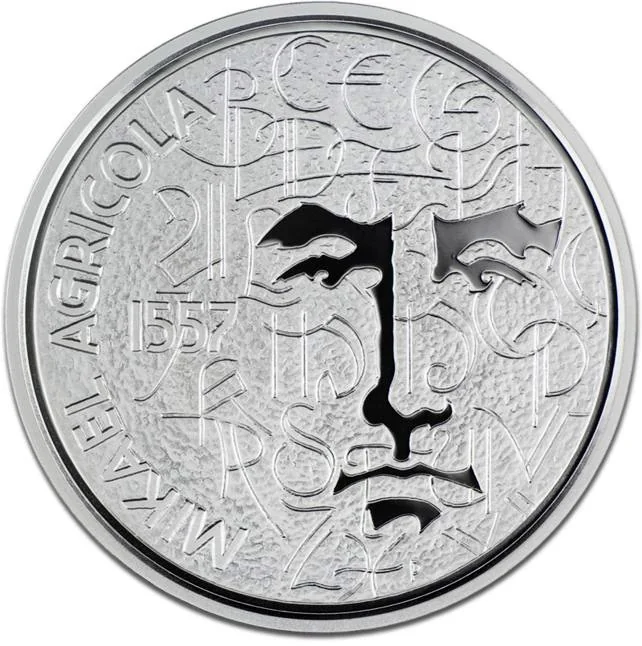
Writer's face amid stylized letters, 450 years after his 1557 death.
Inscription:
MIKAEL AGRICOLA 1557
Translation:
MIKAEL AGRICOLA 1557
Script: Latin
Engraver: Reijo Juhani Paavilainen
Reverse
Description:
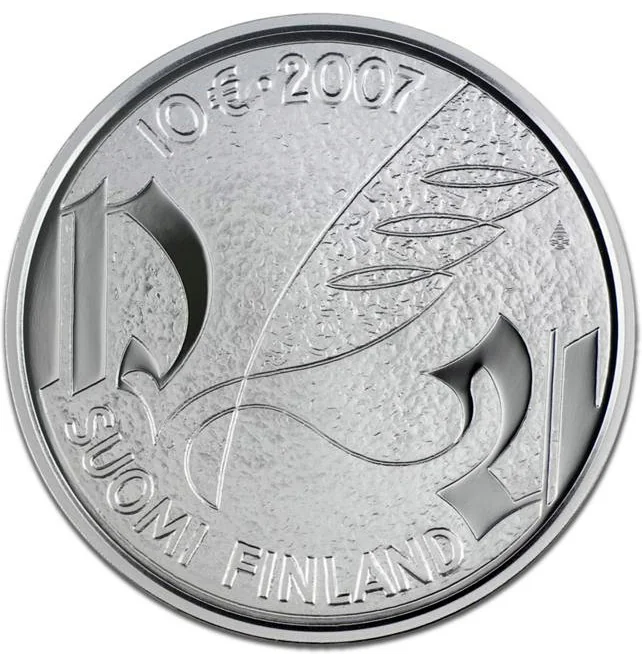
Pen and gothic letters stylized.
Inscription:
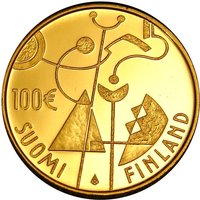
10 €
SUOMI FINLAND
SUOMI FINLAND
Script: Latin
Engraver: Reijo Juhani Paavilainen
Edge
Plain.
Categories
| Event> Death anniversary |
Mints
| Name | Mark |
|---|---|
| Mint of Finland | — |
Mintings
| Year | Mint Mark | Mintage | Quality | Collection |
|---|---|---|---|---|
| 2007 | — | 6,000 | ||
| 2007 | — | 24,000 | Proof |
Historical background
In 2007, Finland was a full and integrated member of the Eurozone, having adopted the euro as its sole legal tender on 1 January 2002. The pre-euro currency, the Finnish markka (FIM), had been permanently fixed to the euro at a rate of 5.94573 markkaa to one euro, and by 2007 it existed only in historical records and the memories of its citizens. The country's monetary policy was entirely set by the European Central Bank (ECB) in Frankfurt, with the Bank of Finland participating in the ECB's Governing Council. This period represented the calm after the successful transition, with the euro firmly established in everyday transactions and financial systems.
The Finnish economy in 2007 was performing strongly, benefiting from the global economic boom and the dominance of its flagship technology company, Nokia. The common currency facilitated trade and investment within the Eurozone, Finland's largest trading partner. However, underlying tensions were beginning to surface. The ECB's one-size-fits-all interest rate policy, aimed at the broader Eurozone economy, was arguably too low for an overheating Finnish economy, contributing to rising household debt and a growing property market bubble. Competitiveness concerns also lingered, as high domestic costs and wages posed challenges within the single currency area where devaluation was no longer an option.
Looking ahead, the global financial crisis, which began in late 2007, would soon test the euro's resilience. Finland entered what became known as the "Great Recession" from a position of relative fiscal strength, but the subsequent collapse of Nokia's mobile phone business and a deep recession would later provoke intense national debate about the costs and benefits of euro membership. Nevertheless, throughout 2007 itself, the currency situation was stable and unquestioned, with no serious political movement to revert to a national currency and the euro functioning as a normal part of Finnish economic life.
The Finnish economy in 2007 was performing strongly, benefiting from the global economic boom and the dominance of its flagship technology company, Nokia. The common currency facilitated trade and investment within the Eurozone, Finland's largest trading partner. However, underlying tensions were beginning to surface. The ECB's one-size-fits-all interest rate policy, aimed at the broader Eurozone economy, was arguably too low for an overheating Finnish economy, contributing to rising household debt and a growing property market bubble. Competitiveness concerns also lingered, as high domestic costs and wages posed challenges within the single currency area where devaluation was no longer an option.
Looking ahead, the global financial crisis, which began in late 2007, would soon test the euro's resilience. Finland entered what became known as the "Great Recession" from a position of relative fiscal strength, but the subsequent collapse of Nokia's mobile phone business and a deep recession would later provoke intense national debate about the costs and benefits of euro membership. Nevertheless, throughout 2007 itself, the currency situation was stable and unquestioned, with no serious political movement to revert to a national currency and the euro functioning as a normal part of Finnish economic life.
⭐ Rare