

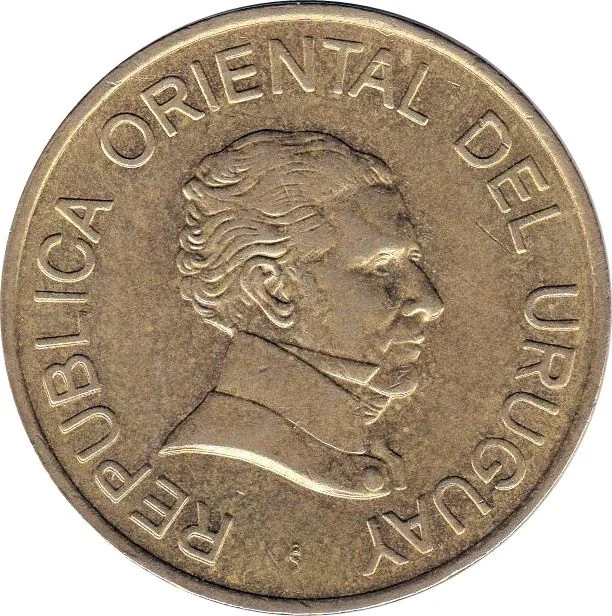
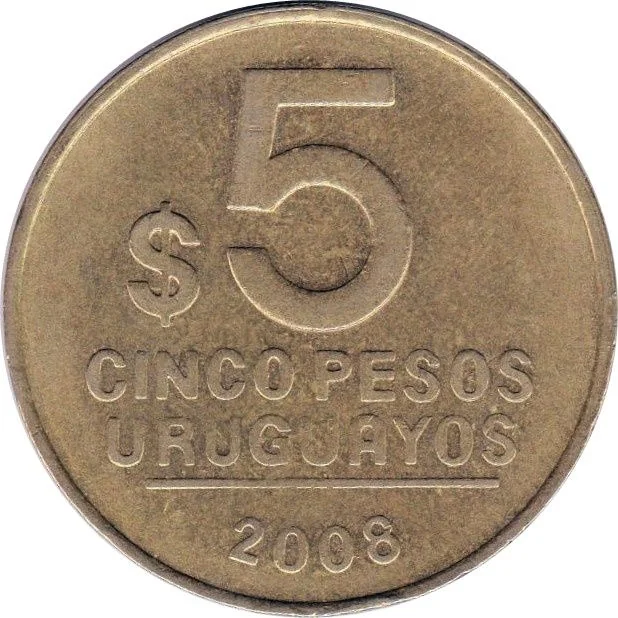
5 pesos uruguayos – Uruguay
Add to wishlist
Uruguay
Context
Years: 2003–2008
Issuer: Uruguay
Issuing organization: Central Bank of Uruguay
Period:
(since 1825)
Currency:
(since 1993)
Total mintage: 65,000,000
Material
References
KM: #
Numista: #3057
Value
Exchange value: 5 UYU
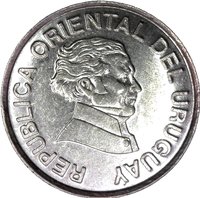
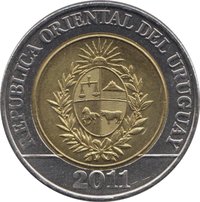
Obverse
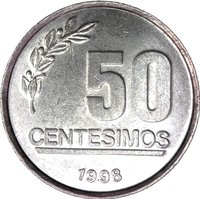
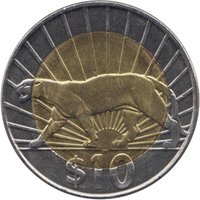
Reverse
Edge
Plain
Categories
| Person> Military leader |
| Person> Politician |
Mints
| Name | Mark |
|---|---|
| Buenos Aires | — |
| Casa de Moneda de Chile | — |
Mintings
| Year | Mint Mark | Mintage | Quality | Collection |
|---|---|---|---|---|
| 2003 | — | 15,000,000 | BU | |
| 2005 | So | 30,000,000 | ||
| 2008 | So | 20,000,000 |
Historical background
In 2003, Uruguay was emerging from a profound financial and economic crisis that had peaked in 2002, the most severe in its modern history. The crisis was triggered by a regional contagion from Argentina's economic collapse, which led to a massive loss of confidence in Uruguay's banking system. As Argentines withdrew billions of dollars from Uruguayan banks, the country faced a devastating bank run, depleting international reserves and forcing the government to declare a four-day bank holiday in July 2002. This culminated in a sharp devaluation of the Uruguayan peso, which lost over 50% of its value against the US dollar in 2002, and a deep economic contraction.
The currency situation in 2003 was characterized by a fragile stabilization under a floating exchange rate regime, adopted during the crisis after the abandonment of the crawling peg. The Central Bank of Uruguay had ceased its interventions to defend the peso, allowing the market to set the value. While the free fall had halted, the peso remained volatile and significantly depreciated, driving high inflation (over 19% in 2003) and severely reducing purchasing power. Dollarization was widespread in the economy, with many contracts, savings, and debts (especially mortgages) denominated in US dollars, creating a severe "dollarization mismatch" problem for peso-earning citizens and businesses.
The path to recovery was anchored by a substantial $3.8 billion standby agreement with the International Monetary Fund, signed in 2002 and underpinning Uruguay's economic policy through 2003. This program provided crucial liquidity and restored some international confidence. Key measures included the comprehensive restructuring of the bankrupt banking system, the issuance of dollar-denominated government bonds to recapitalize banks, and a commitment to fiscal discipline. By the end of 2003, these actions had begun to yield results, with GDP growth turning positive, marking the start of a slow but steady recovery from the currency and banking catastrophe.
The currency situation in 2003 was characterized by a fragile stabilization under a floating exchange rate regime, adopted during the crisis after the abandonment of the crawling peg. The Central Bank of Uruguay had ceased its interventions to defend the peso, allowing the market to set the value. While the free fall had halted, the peso remained volatile and significantly depreciated, driving high inflation (over 19% in 2003) and severely reducing purchasing power. Dollarization was widespread in the economy, with many contracts, savings, and debts (especially mortgages) denominated in US dollars, creating a severe "dollarization mismatch" problem for peso-earning citizens and businesses.
The path to recovery was anchored by a substantial $3.8 billion standby agreement with the International Monetary Fund, signed in 2002 and underpinning Uruguay's economic policy through 2003. This program provided crucial liquidity and restored some international confidence. Key measures included the comprehensive restructuring of the bankrupt banking system, the issuance of dollar-denominated government bonds to recapitalize banks, and a commitment to fiscal discipline. By the end of 2003, these actions had begun to yield results, with GDP growth turning positive, marking the start of a slow but steady recovery from the currency and banking catastrophe.
🌱 Very Common