

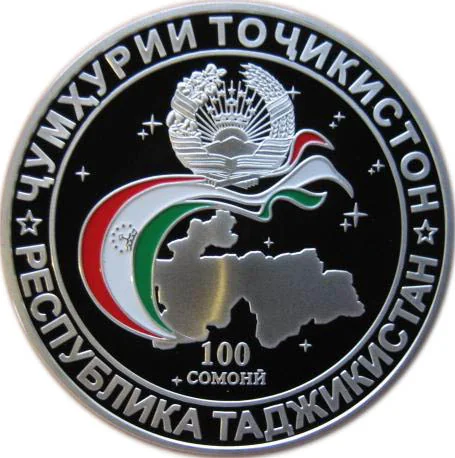
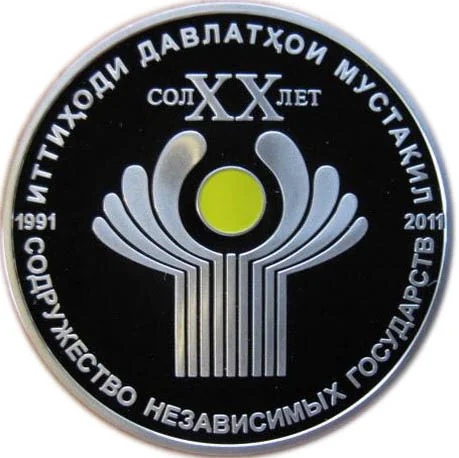
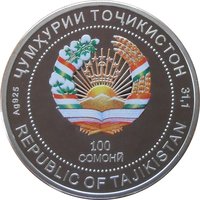
100 somoni (CEI) – Tajikistan
Add to wishlist
Non-circulating coins
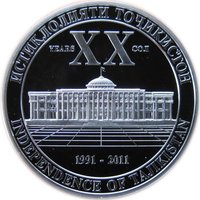
Commemoration: 20th Anniversary of CEI
Tajikistan
Context
Material
Diameter: 38.61 mm
Weight: 31.1 g
Silver Weight:: 28.77 g
Shape: Round
Composition: 92.5% Silver
Standard: Silver ounce
Magnetic: No
Technique: Milled
Alignment: Medal alignment

flip
References
KM: #
Numista: #30421
Value
Exchange value: 100 TJS
Bullion value: $72.21
Obverse
Reverse
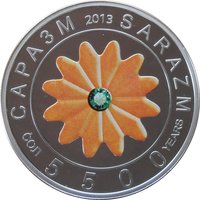
Edge
Mints
| Name | Mark |
|---|---|
| Kazakhstan Mint | — |
Mintings
| Year | Mint Mark | Mintage | Quality | Collection |
|---|---|---|---|---|
| 2011 | — | 1,000 | Proof |
Historical background
In 2011, Tajikistan's currency, the somoni, faced significant pressure, continuing a trend of gradual depreciation driven by a chronic and widening trade deficit. The country's economy remained heavily reliant on imports for essential goods, including food and fuel, while its export base was narrow, dominated by aluminum and cotton. This structural imbalance created consistent demand for foreign currency, primarily US dollars and Russian rubles, to pay for imports, which steadily outpaced the inflow of foreign exchange from exports and remittances.
A critical pillar of stability was the substantial flow of remittances from Tajik migrant workers, predominantly in Russia, which by this time constituted a lifeline for the economy, often compared to nearly half of the country's GDP. These inflows provided the central bank, the National Bank of Tajikistan (NBT), with the hard currency reserves needed to intervene in the market and smooth out volatility. However, this also made the somoni's stability vulnerable to external shocks in the Russian economy and changes in migration policies.
Throughout the year, the NBT managed a controlled depreciation of the somoni against the US dollar, aiming to balance the need to preserve foreign reserves with the pressure from the trade gap. Inflation remained a concern, partly imported through higher global commodity prices, and the somoni's gradual decline contributed to rising costs of living. The situation highlighted the economy's deep vulnerabilities: its dependence on a few volatile sectors, the crucial role of remittances, and the ongoing challenge of moving toward a more diversified and productive economic structure to achieve long-term monetary stability.
A critical pillar of stability was the substantial flow of remittances from Tajik migrant workers, predominantly in Russia, which by this time constituted a lifeline for the economy, often compared to nearly half of the country's GDP. These inflows provided the central bank, the National Bank of Tajikistan (NBT), with the hard currency reserves needed to intervene in the market and smooth out volatility. However, this also made the somoni's stability vulnerable to external shocks in the Russian economy and changes in migration policies.
Throughout the year, the NBT managed a controlled depreciation of the somoni against the US dollar, aiming to balance the need to preserve foreign reserves with the pressure from the trade gap. Inflation remained a concern, partly imported through higher global commodity prices, and the somoni's gradual decline contributed to rising costs of living. The situation highlighted the economy's deep vulnerabilities: its dependence on a few volatile sectors, the crucial role of remittances, and the ongoing challenge of moving toward a more diversified and productive economic structure to achieve long-term monetary stability.
✨ Legendary