

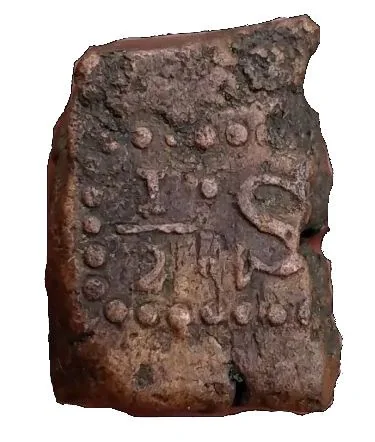

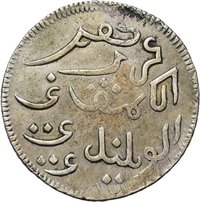
½ stuiver – Java
Add to wishlist
Indonesia
Context
Material
Weight: 7.25 g
Thickness: 5 mm
Shape: Irregular rectangular
Composition: Copper
Magnetic: No
Technique: Hammered
Alignment: Medal alignment

flip

References
KM: #
Numista: #302397
Obverse
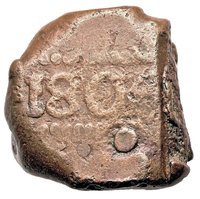
Reverse
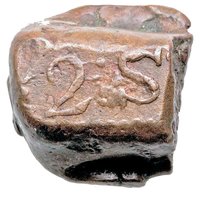
Edge
Rough
Mintings
| Year | Mint Mark | Mintage | Quality | Collection |
|---|---|---|---|---|
| 1804 | — | — | ||
| 1805 | — | — |
Historical background
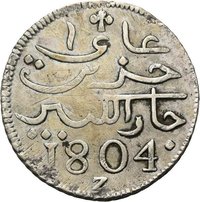
In 1804, the currency situation in Java was complex and transitional, reflecting the island's shift from Dutch East India Company (VOC) rule to direct administration by the Dutch state (the Batavian Republic). The financial legacy of the bankrupt VOC, dissolved in 1799, left a chaotic monetary environment characterized by a severe shortage of sound coinage. In circulation was a bewildering array of currencies: Spanish silver dollars (reals), Japanese copper koban, Chinese copper picis (often holed and strung), and various locally minted tin and copper coins of uncertain value. Most critically, the paper money issued by the VOC had become virtually worthless, destroying public trust in fiduciary currency.
The Dutch authorities, under Governor-General Johannes Siberg, were attempting to impose order through the Java Bank, established in 1802. Its primary task was to replace the discredited paper notes and standardize the coinage. The bank introduced new silver and copper coins, valuing them against the Spanish dollar, which remained the dominant trade currency. However, progress was slow. The economy still relied heavily on the existing patchwork of coins, and the government's own fiscal demands, including the costly Java War (1825-1830) that would soon erupt, strained its ability to implement a unified system. Counterfeiting was rampant, and the intrinsic value of the metal in a coin often outweighed its official face value, leading to hoarding and further scarcity.
Therefore, the monetary landscape in 1804 was one of attempted reform mired in persistent instability. While the framework for a modern, centralized currency under the Java Bank was being laid, the day-to-day reality for Javanese and Dutch residents alike was one of calculation and uncertainty. Transactions required constant negotiation between different coin types and their fluctuating market values, hindering commerce and underscoring the challenges of colonial governance in a period of profound political and economic change.
The Dutch authorities, under Governor-General Johannes Siberg, were attempting to impose order through the Java Bank, established in 1802. Its primary task was to replace the discredited paper notes and standardize the coinage. The bank introduced new silver and copper coins, valuing them against the Spanish dollar, which remained the dominant trade currency. However, progress was slow. The economy still relied heavily on the existing patchwork of coins, and the government's own fiscal demands, including the costly Java War (1825-1830) that would soon erupt, strained its ability to implement a unified system. Counterfeiting was rampant, and the intrinsic value of the metal in a coin often outweighed its official face value, leading to hoarding and further scarcity.
Therefore, the monetary landscape in 1804 was one of attempted reform mired in persistent instability. While the framework for a modern, centralized currency under the Java Bank was being laid, the day-to-day reality for Javanese and Dutch residents alike was one of calculation and uncertainty. Transactions required constant negotiation between different coin types and their fluctuating market values, hindering commerce and underscoring the challenges of colonial governance in a period of profound political and economic change.
💎 Extremely Rare