

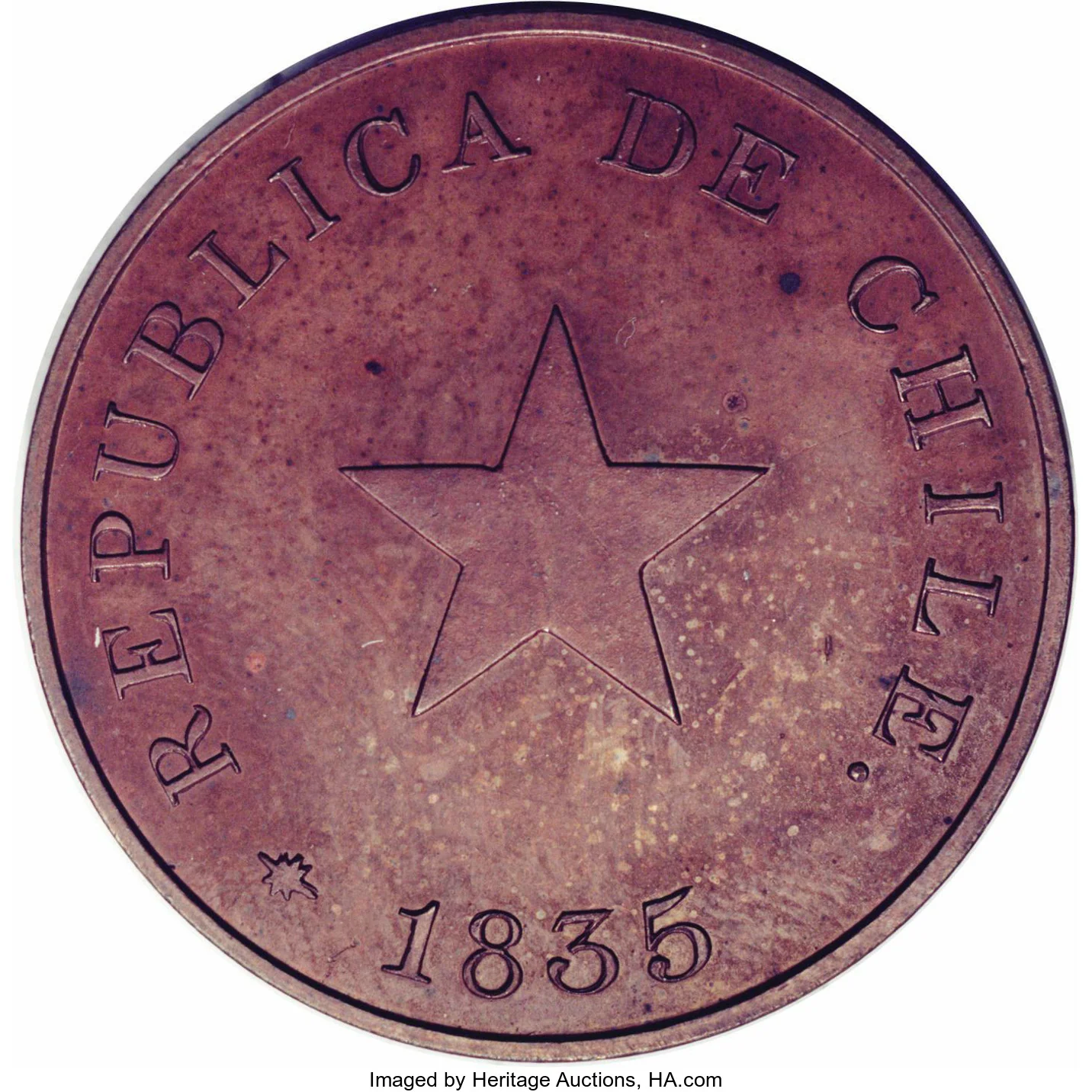
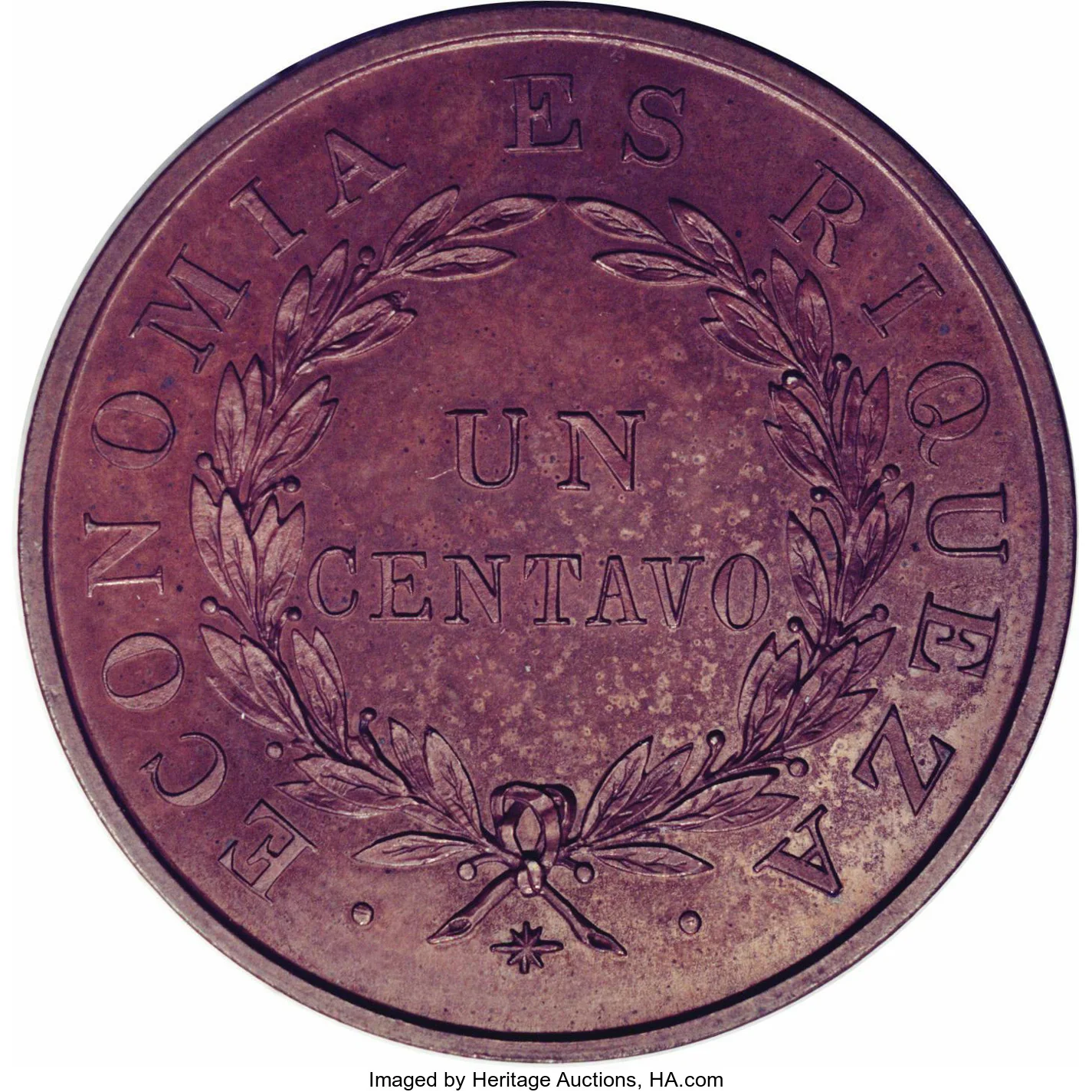
1 centavo – Chile
Add to wishlist
Chile
Obverse
Reverse
Edge
Plain
Mints
| Name | Mark |
|---|---|
| Soho Mint | — |
Mintings
| Year | Mint Mark | Mintage | Quality | Collection |
|---|---|---|---|---|
| 1835 | — | — | Proof |
Historical background
In 1835, Chile's currency situation was characterized by a chaotic and fragmented system, a direct legacy of the independence wars that ended over a decade prior. The new republic inherited a mix of Spanish colonial coins, along with a flood of debased and counterfeit coins from neighboring nations like Bolivia and Peru that circulated freely. The state itself had limited minting capacity, primarily from the Casa de Moneda in Santiago, but its output of high-quality pesos and reales was insufficient to establish a uniform national currency. This resulted in a complex marketplace where merchants and citizens had to constantly assess the weight and purity of countless coin types, with values often determined by metal content rather than a stable face value.
Economically, this monetary disorder acted as a significant brake on commerce and state-building. The lack of a trusted and uniform medium of exchange hampered internal trade, complicated tax collection for the treasury, and created uncertainty for both domestic and foreign merchants. The government of President José Joaquín Prieto, advised by his formidable Finance Minister Manuel Rengifo, recognized that monetary reform was essential for economic modernization and fiscal stability. Rengifo had already begun laying the groundwork for recovery, but a definitive solution to the currency anarchy was still a pressing challenge.
Therefore, the year 1835 stands as a pivotal point just before major reform. The conditions of monetary confusion were widely acknowledged as unsustainable, creating the necessary impetus for action. Within two years, this would lead to the decisive Currency Law of 1837, which mandated the exclusive use of Chilean-minted coins, prohibited certain foreign currencies, and officially decimalized the system. Thus, the situation in 1835 is best understood as the final chapter of post-independence monetary turmoil, setting the stage for the establishment of a coherent national currency system that would underpin Chile's coming era of economic expansion.
Economically, this monetary disorder acted as a significant brake on commerce and state-building. The lack of a trusted and uniform medium of exchange hampered internal trade, complicated tax collection for the treasury, and created uncertainty for both domestic and foreign merchants. The government of President José Joaquín Prieto, advised by his formidable Finance Minister Manuel Rengifo, recognized that monetary reform was essential for economic modernization and fiscal stability. Rengifo had already begun laying the groundwork for recovery, but a definitive solution to the currency anarchy was still a pressing challenge.
Therefore, the year 1835 stands as a pivotal point just before major reform. The conditions of monetary confusion were widely acknowledged as unsustainable, creating the necessary impetus for action. Within two years, this would lead to the decisive Currency Law of 1837, which mandated the exclusive use of Chilean-minted coins, prohibited certain foreign currencies, and officially decimalized the system. Thus, the situation in 1835 is best understood as the final chapter of post-independence monetary turmoil, setting the stage for the establishment of a coherent national currency system that would underpin Chile's coming era of economic expansion.
Navigation Non-circulating coins of Chile
✨ Legendary